Mission Date: August 15, 1943
MERVILLE, AF & LILLE AC FACTORY
100th BG Mission #: 15
Mission Summary
ON THIS DAY…AUGUST 15, 1943
The 100BG went on alert at 0930 with Field Order #30 received at 1340 that afternoon. This would be the latest start time that the 100th would fly to date.
After chow, twenty-one crews plus spares had been seated in the briefing room. The 349th squadron’s commanding officer, William Veal would be flying the Group lead with Sam Barr’s crew. Seated for their #1 combat mission were the officers from the 351st squadron’s first replacement crew; LTs Robert Hughes, Donald Davis, Leonard Wickens and Richard Elliott. Lt Colonel Beirne Lay was once again seated in the briefing room, flying this mission with Edgar Woodward, whose crew would be flying their #13 mission. Woodward’s bombardier, twenty-three year old Robert E. Dibble, also seated, had just been awarded the Purple Heart the previous day for injuries received on the July 28 mission when an “exploding shell drove glass into his face.” When Dibble was presented the award, Colonel Kessler remarked, “Young man, this is the last one of these I want to give you.” Thanking the Colonel, Dibble replied, “I sure don’t want another one, Colonel.”
The map was unveiled and the briefing officer told the men that they would be targeting Luftwaffe airbases in the Pas de Calais area. The 1st Division, flying as the First Air Task Force would be also in the Pas de Calais area, targeting Vlissingen on the Dutch coast and Amiens and Poix du Nord in France. With a high number of heavy bomber formations in the same area, but with separate targets, hopes ran high that enemy fighters would be split up from executing heavy attacks on any one single force.
The 4th Bombardment Wing would send out two forces, designated the Second and Third Air Task Force. The 403CBW and 402CBW with only the 95BG and the 100BG would comprise the larger force of heavy bombers in the Second Task Force while the Third would be made up of the 401CBW plus the 390BG attached. Lt Colonel Thomas S. Jeffrey, the future commanding officer of the 100BG, would fly as the 390th’s command pilot with the target of Vittey-en-Artois.
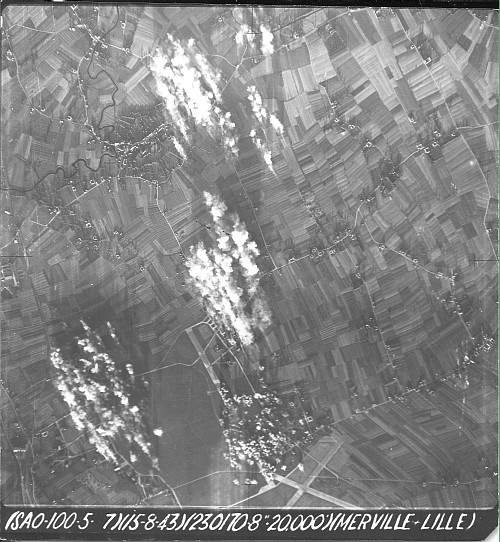
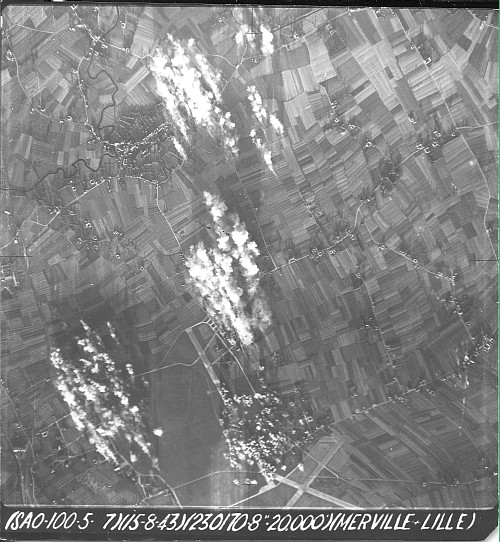
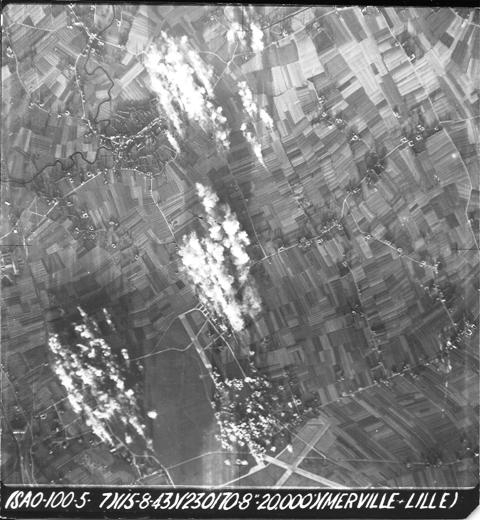
The Second Task Force, including the 100BG, would fly a double-strike mission with two primary targets; the Merville airfield and the Lille-Vendeville airfield, 30 km east of Merville. Those bombers were to drop half of their loads on each target. No secondary target had been designated but any occupied airdrome could be hit as a last resort target.
After the routes in and out were reviewed, again decided by VIII Bomber Command, the S-2 Officer briefed the men on fighter support; three squadrons of P-47s picked up at the enemy coast. The escorts were to remain with the bombers all the way to the targets and back out to the enemy coast. Again, the men were reminded of the importance of making the rendezvous times good.
Readied and in taxi positions, the 100th’s Fortresses took off around 1706 hours. Assembled, the Group fell in behind the 95BG at 16000 feet over splasher #6. Successfully formed into the 402CBW, it fell in behind the 403CBW. The high winds encountered caused the 100BG to overtake the 95th’s formation but by mid-channel, a good defensive formation was formed.
Reaching the enemy coast, the rendezvous times with the P-47s were made on time and “excellent support was given throughout the mission.”
Arriving at the IP, the turn was made but a shorter than planned bomb run was required due to the winds. Bomb bay doors were opened and the 100BG was soon over the target at Merville where the flak was reported as “continuous, following” but “meagre and inaccurate.” At the bombing altitude of 20000 feet on a 90 second bomb run, half of the 100BG’s bombs were released at 1933 hours, with twenty aircraft dropping on its leader. Four minutes later over the Lille airfield, flying through moderate, continuous following flak, the 100th’s remaining bombs were away.
Just after the bomb release, enemy fighters were encountered. “While some 40 enemy fighters were seen, there were only approximately 20 attacks, mostly from ME 109s with a few FW 190s appearing.” The 100th’s gunners were alert and two of the German fighters were shot down, with the 100BG credited with destroying one FW 190 and one ME 109. Bill Ohl, waist gunner in Sam Barr’s lead plane tells us, “We completely demolished the both fields and lost no planes. The five German fighters really gave us a fight but did not hit any of our ships badly enough to bring them down…”
Heading out, the formation neared the enemy coast, where over Calais and Dunkerque, the flak was “predicted concentrations.” Encountering winds, the formation's bombers slowed over the AA gunner positions below. In the B-17 ‘Escape Kit’ flown by Edgar Woodward, flak had knocked out his instruments and put a two inch fragment of flak through his plane’s nose, severely wounding his bombardier, Robert Dibble. Woodward’s navigator Emanuel Cassimatis said they felt like a “sitting duck.” The twenty-seven year old Cassimatis attempted to give aid to Dibble telling us, “We had dropped our bombs and turned back into bad weather, when we seemed completely stopped right over flak batteries that had our range. Shell fragments tore into my arms and legs while I gave first aid to my buddy, Lt. Robert Dibble…who died in my arms. Our instruments were knocked out, but I had directions fixed and we got the damaged plane back to base.”
After just over a four hour mission, all of the 100th’s Fortresses returned safely to base at 2106. At interrogation, some of the men reported very light flak and fighters and were shocked to hear of Dibble’s death from the flak. Red Bowman would record Dibble’s death into the Group’s diary, describing it as “…the 100th’s first visible death in action. Many of the crew asking what has become of the flak suits of which they have read - thinking one might have saved him.”
That evening, there was a ‘Stand Down’ ordered for the base.
Crews flying this mission:
349: Barr with Veal, Van Noy, Roane, Henington
350: Claytor, Scott, Hollenbeck, Braley, Helstrom, Hummel
351: Fienup, Dye, King, Swartout, Hughes
418: Brady, Woodward, Moreno, Wolff
(Missing names)
The 100BG went on alert at 0930 with Field Order #30 received at 1340 that afternoon. This would be the latest start time that the 100th would fly to date.
After chow, twenty-one crews plus spares had been seated in the briefing room. The 349th squadron’s commanding officer, William Veal would be flying the Group lead with Sam Barr’s crew. Seated for their #1 combat mission were the officers from the 351st squadron’s first replacement crew; LTs Robert Hughes, Donald Davis, Leonard Wickens and Richard Elliott. Lt Colonel Beirne Lay was once again seated in the briefing room, flying this mission with Edgar Woodward, whose crew would be flying their #13 mission. Woodward’s bombardier, twenty-three year old Robert E. Dibble, also seated, had just been awarded the Purple Heart the previous day for injuries received on the July 28 mission when an “exploding shell drove glass into his face.” When Dibble was presented the award, Colonel Kessler remarked, “Young man, this is the last one of these I want to give you.” Thanking the Colonel, Dibble replied, “I sure don’t want another one, Colonel.”
The map was unveiled and the briefing officer told the men that they would be targeting Luftwaffe airbases in the Pas de Calais area. The 1st Division, flying as the First Air Task Force would be also in the Pas de Calais area, targeting Vlissingen on the Dutch coast and Amiens and Poix du Nord in France. With a high number of heavy bomber formations in the same area, but with separate targets, hopes ran high that enemy fighters would be split up from executing heavy attacks on any one single force.
The 4th Bombardment Wing would send out two forces, designated the Second and Third Air Task Force. The 403CBW and 402CBW with only the 95BG and the 100BG would comprise the larger force of heavy bombers in the Second Task Force while the Third would be made up of the 401CBW plus the 390BG attached. Lt Colonel Thomas S. Jeffrey, the future commanding officer of the 100BG, would fly as the 390th’s command pilot with the target of Vittey-en-Artois.
The Second Task Force, including the 100BG, would fly a double-strike mission with two primary targets; the Merville airfield and the Lille-Vendeville airfield, 30 km east of Merville. Those bombers were to drop half of their loads on each target. No secondary target had been designated but any occupied airdrome could be hit as a last resort target.
After the routes in and out were reviewed, again decided by VIII Bomber Command, the S-2 Officer briefed the men on fighter support; three squadrons of P-47s picked up at the enemy coast. The escorts were to remain with the bombers all the way to the targets and back out to the enemy coast. Again, the men were reminded of the importance of making the rendezvous times good.
Readied and in taxi positions, the 100th’s Fortresses took off around 1706 hours. Assembled, the Group fell in behind the 95BG at 16000 feet over splasher #6. Successfully formed into the 402CBW, it fell in behind the 403CBW. The high winds encountered caused the 100BG to overtake the 95th’s formation but by mid-channel, a good defensive formation was formed.
Reaching the enemy coast, the rendezvous times with the P-47s were made on time and “excellent support was given throughout the mission.”
Arriving at the IP, the turn was made but a shorter than planned bomb run was required due to the winds. Bomb bay doors were opened and the 100BG was soon over the target at Merville where the flak was reported as “continuous, following” but “meagre and inaccurate.” At the bombing altitude of 20000 feet on a 90 second bomb run, half of the 100BG’s bombs were released at 1933 hours, with twenty aircraft dropping on its leader. Four minutes later over the Lille airfield, flying through moderate, continuous following flak, the 100th’s remaining bombs were away.
Just after the bomb release, enemy fighters were encountered. “While some 40 enemy fighters were seen, there were only approximately 20 attacks, mostly from ME 109s with a few FW 190s appearing.” The 100th’s gunners were alert and two of the German fighters were shot down, with the 100BG credited with destroying one FW 190 and one ME 109. Bill Ohl, waist gunner in Sam Barr’s lead plane tells us, “We completely demolished the both fields and lost no planes. The five German fighters really gave us a fight but did not hit any of our ships badly enough to bring them down…”
Heading out, the formation neared the enemy coast, where over Calais and Dunkerque, the flak was “predicted concentrations.” Encountering winds, the formation's bombers slowed over the AA gunner positions below. In the B-17 ‘Escape Kit’ flown by Edgar Woodward, flak had knocked out his instruments and put a two inch fragment of flak through his plane’s nose, severely wounding his bombardier, Robert Dibble. Woodward’s navigator Emanuel Cassimatis said they felt like a “sitting duck.” The twenty-seven year old Cassimatis attempted to give aid to Dibble telling us, “We had dropped our bombs and turned back into bad weather, when we seemed completely stopped right over flak batteries that had our range. Shell fragments tore into my arms and legs while I gave first aid to my buddy, Lt. Robert Dibble…who died in my arms. Our instruments were knocked out, but I had directions fixed and we got the damaged plane back to base.”
After just over a four hour mission, all of the 100th’s Fortresses returned safely to base at 2106. At interrogation, some of the men reported very light flak and fighters and were shocked to hear of Dibble’s death from the flak. Red Bowman would record Dibble’s death into the Group’s diary, describing it as “…the 100th’s first visible death in action. Many of the crew asking what has become of the flak suits of which they have read - thinking one might have saved him.”
That evening, there was a ‘Stand Down’ ordered for the base.
Crews flying this mission:
349: Barr with Veal, Van Noy, Roane, Henington
350: Claytor, Scott, Hollenbeck, Braley, Helstrom, Hummel
351: Fienup, Dye, King, Swartout, Hughes
418: Brady, Woodward, Moreno, Wolff
(Missing names)
Bombing Results
Bombing Results: GOOD
Aircraft Lost: 0
Crew Lost: 0
Claims of Enemy Losses (CLS): 2
Aircraft Returned: