S/Sgt
Albert M. FREITAS
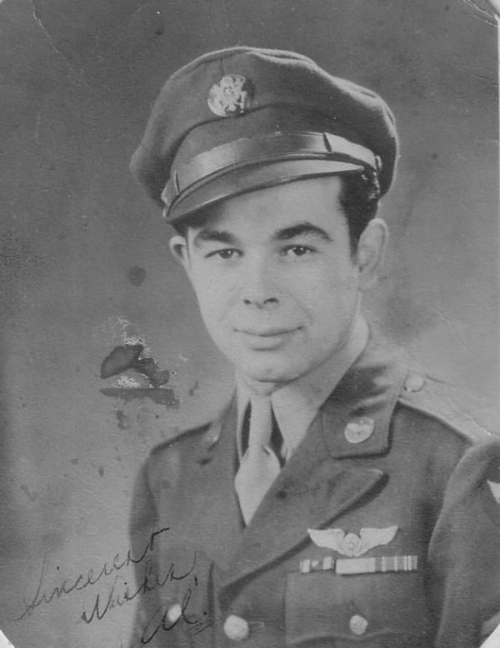
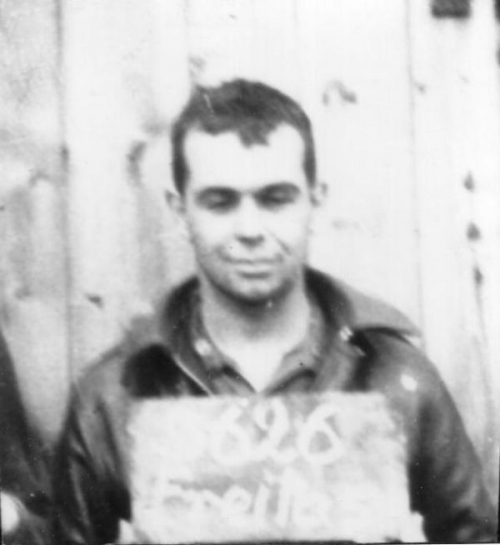
Albert M. Freitas, BTG of the Bernard A. DeMarco crew
Albert M. Freitas, BTG of the Bernard A. DeMarco crew. Detailed Information Photo courtesy of Albert M. Freitas
Hometown During Time of Service: Oakland, CA
Army Serial Number: 06534388
Assigned to the 100th Bombardment Group
Location:
Unit: 350th Bombardment Squadron
Rank:
Position: Ball Turret Gunner
Beginning Date of 100th Service: Unknown
Time of Service at Thorpe Abbotts: Unknown - Unknown
Additional 100th Service Notes
Status: POW
MACR: 04234
CR: 04234
Comments: 28 APR 44 SOTTEVAST (FLAK) Original 100th, Crew #15
Media Articles
Use your thumb to scroll through the results box below.
| Media Item | Type | Page | Volume/Issue | Broadcast Source | Time | Description | File |
|---|---|---|---|---|---|---|---|
| Albert Freitas bags Nazi on raid | Oakland Tribune July 26 1943 | 12:00 am | |||||
| Albert Freitas POW with photo | Oakland Tribune June 6 1944 | 12:00 am | |||||
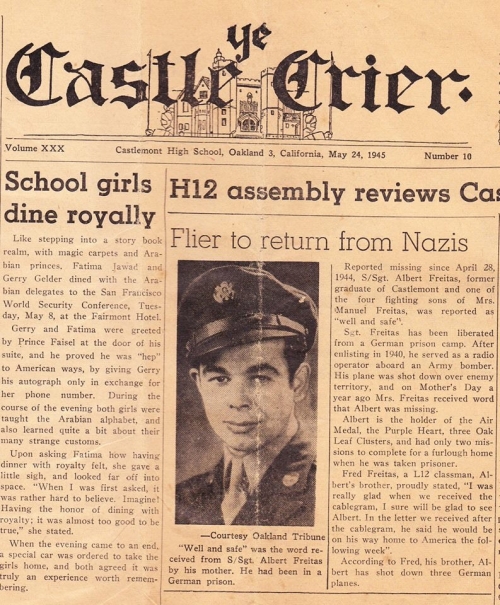
| Albert Freitas freed | Oakland Tribune May 20 1945 | 12:00 am |
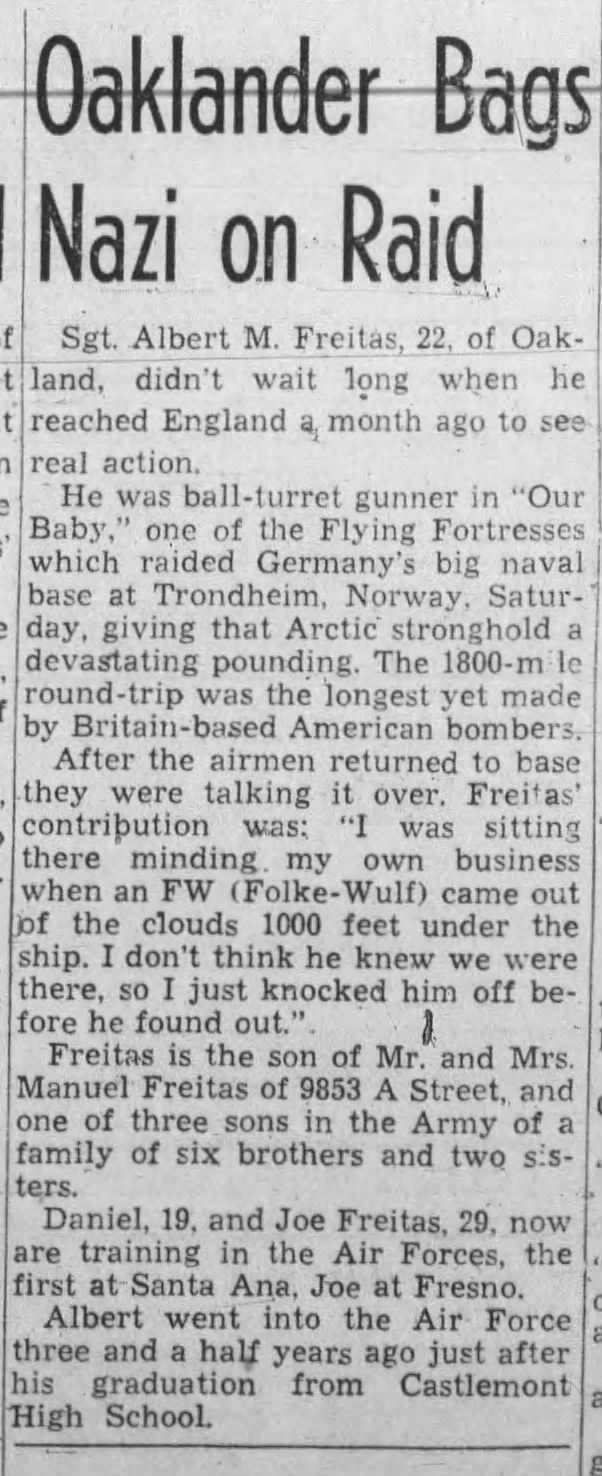
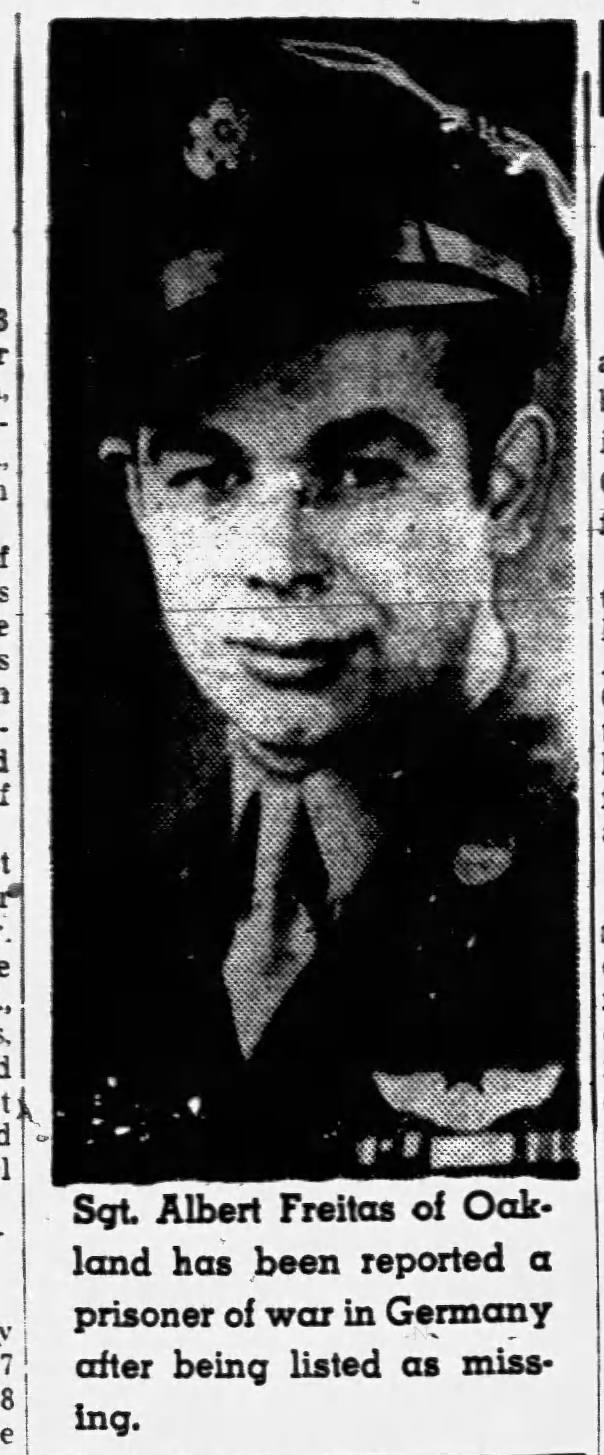
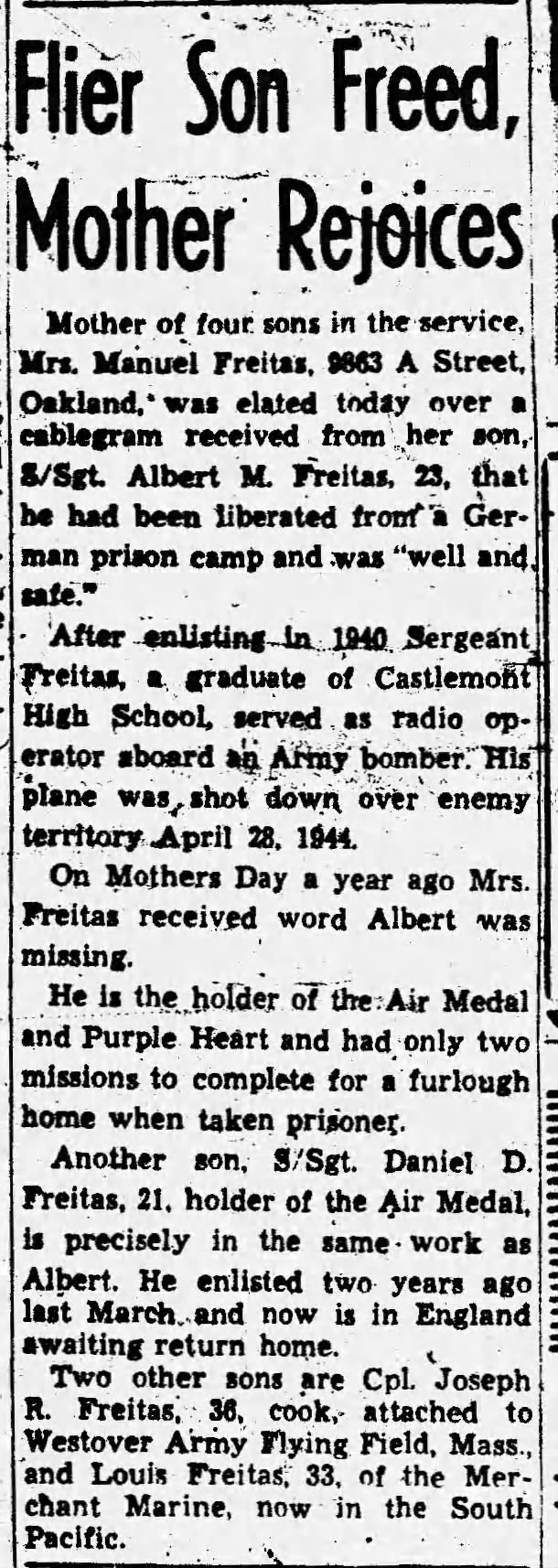
Comments and Notes
Memo 1:
CREW


1ST LT BERNARD A. DeMARCO              P POW 08 OCT 43 BREMAN

F/O JAMES P. THAYER                        CP POW 08 OCT 43 BREMEN

1ST LT JOHN W.DOWNS                  NAV POW 08 OCT 43 BREMEN

2ND LT FRANCIS C. HARPER              BOM POW 08 OCT 43 BREMEN

CPL THORNTON STRINGFELLOW        ROG POW 08 OCT 43 BREMEN

T/SGT BENJAMIN J. BARR                  TTE POW 08 OCT 43 BREMEN

S/SGT ALBERT M. FREITAS                BTG POW 28 APR 44 SOTTEVAST (with Capt. Lakin and Col Kelly, see below)

CPL LEO T. CALLAHAN                       WG POW 21 FEB 44 BRUNSWICK

S/SGT HARRY C. CALHOUN                 WG POW 08 OCT 43 BREMEN

S/SGT LEON A. CASTRO                      TG APPOINTED AVIATION CADET.


350TH SQDN.  THIS IS AN "ORIGINAL" 100TH CREW.


LEON CASTRO HAD BEEN SHIPPED BACK TO THE STATES FOR CADET TRAINING PRIOR TO 8 OCT 43; HE WAS REPLACED BY JEROME FERROGGIARO FROM THE N.H. SCOTT CREW.  ALBERT FREITAS AND LEO CALLAHAN WERE RECOVERING FROM WOUNDS RECIEVED ON THE 6 SEP 43 (STUTTGART) MISSION AND WERE REPLACED BY WILLIAM J. WILLIAMS OF CAPT MARK CARNELL'S CREW AND WILLIAM R. WOODBURY, A REPLACEMENT GUNNER.


GALE W. (BUCKY) CLEVEN, 350TH CO, FLEW AS COMMAND PILOT.


Note from..jb


Flak and Fighters over target. This ship leading the 350th.  Hit by flak & fighters and forced to leave formation. three men

injured, all eleven (11) bailed out and landed near Essen, Germany.  Taken to Frankfurt for interrogartion. Downs (Lt John W. Downs)

says bailed out near Oldenburg. Cleven (Maj. Gale W. Cleven) says bail out near Osnabruck.


CREW


350TH CREW #10  A/C #42-30047 "SWEATER GIRL"


CAPT    MARK E. CARNELL                      P: CPT   ORGINAL 100TH PILOT

2ND LT  EDWARD K. MOFFLY                CP: CPT

1ST LT  ANTHONY P. GOSPODAR        NAV: CPT   11 DEC 43 EMDEN

1ST LT  JAMES P. FITTON                   BOM: CPT

T/SGT   VERN M. BEST                         TTE: CPT

S/SGT   WILLIAM J. WILLIAMS   WG: POW  8 OCT 43 BREMEN (CREW #15 LT BERNIE DeMARCO)

SGT     EDMUND A. OLIVER                ROG: POW   10 JUL 43 PARIS (CREW #12 LT CHARLES DUNCAN)

S/SGT   STEVE BOSSER                     BTG: CPT

S/SGT   PAUL A. VRABEC, JR              WG: CPT   24 DEC 43 ST JOSEPH(NOBALL)

S/SGT   FLOYD P. BULLARD                  TG: CPT       24 DEC 43 ST JOSEPH(NOBALL)


NOTE: PAUL VRABEC NOT ONLY COMPLETED 25, BUT VOLUNTEERED AND FLEW FIVE ADDITIONAL MISSIONS.


On 10 July 1943, radio operator Ed Oliver flew with Crew #12 which was lost that day and Oliver became a POW.  He was soon replaced on the crew by George Rudden from Crew #17 which went down over Kiel on 25 July.  On 8 October 1943, William Williams flew with Crew #15 and went down over Bremen.


Accordinq to a letter from Vern Best in 1980, Mark Carnell suffered a broken arm in a bicycle accident on the field and was unable to fly for a considerable length of time.  He was replaced by Bill Desanders whose crew (#17) had been lost on 25 July.  Best also says that Paul Vrabec not only completed  25 missions but volunteered for five additional and finished those.


CREW(28 Apr 44)


COL  ROBERT H. KELLY                     COM KIA   28 APR 44 SOTTEVAST (NO BALL)

CAPT WILLIAM G. LAKIN                        P KIA   28 APR 44 SOTTEVAST (NO BALL)

LT HERBERT ALF                               CP POW 28 APR 44 SOTTEVAST (NO BALL) flew as formation officer in tail

CAPT  JOSEPH  H. "BUBBLES" PAYNE      NAV KIA    28 APR 44 SOTTEVAST (NO BALL)

LT MAURICE H. CAIN                         BOM POW 28 APR 44 SOTTEVAST (NO BALL)

T/SGT LEO  R. CANNON                     ROG POW 28 APR 44 SOTTEVAST (NO BALL

T/SGT JAMES C. BROWN                    TTE KIA   28 APR 44 SOTTEVAST (NO BALL)

S/SGT ALBERTM. FREITAS                  BTG POW 28 APR 44 SOTTEVAST (NO BALL)

S/SGT JOHN N. SPIKER                       WG KIA   28 APR 44 SOTTEVAST (NO BALL)

S/SGT JOSEPH  A. RICHARD                WG POW 28 APR 44 SOTTEVAST (NO BALL

S/.SGT DELBERT E. BARNHART               TG KIA   28 APR 44 SOTTEVAST (NO BALL) flew in radio room, manned 50 cal.


350th BS


COL KELLY COMMANDED THE 100TH FOR ONE WEEK AND TWO DAYS.  HE WAS LOST ON HIS FIRST MISSION TO SOTTEVAST. AT TAKE-OFF TIME THE NEW COMMANDER ELECTED TO BUMP THE 100TH'S BEST FLIGHT LEADER (CAPT JACK SWARTOUT) AND LEAD HIMSELF. THE RESULTS WERE A DISASTER, TWO SHIPS WERE LOST WHEN THE COL ELECTED TO MAKE A SECOND RUN OVER THE TARGET AT THE SAME ALTITUDE AND ON THE SAME HEADING. AMOUNG THE KIA'S WAS THE 100TH BELOVED LEAD NAVIGATOR JOSEPH "BUBBLES" PAYNE; SAID BY JIM BROWN AND HARRY CROSBY TO HAVE BEEN THE BEST.


This was what can best be called a "pick-up" crew of veteran airmen, with the exception of Col. Kelly fresh from the States

and had became the 100th's Commanding Officer only nine days prior to the mission. Joe "Bubbles" Payne was

a member of the original air echelon of the Group as were T/Sgt James C. Brown and S/Sgt Albert M. Freitas.

With the exception of Magee Fuller, they were the last of the "Original 100th" to become casualties. T/Sgt Leo R. Cannon joined the Group in August 1943, his orginal crew (F.H. Meadows) was shot down at Bremen 08 Oct 1943. Capt William G. Lakin had been with the Group prior to October 1943.  Lt Maurice H. Cain was from Lt John P. Gibbons Crew.


The following from MACRs:  "....On 02 May 1944, at 0730 hours an American Airman was captured by two German soldiers on the street of Rochville, Sottevast, France. The Germans record the following data: Name: Cain, Maurice # 0-681859. According to his statement he rescued himself from the burning aircraft on 28 April 1944. Sent to Airbase Command, Paris, France..Date 3 May 1944 @ 1320 hours."  The Originating German Officer is not identified..pw


EMAIL = cannon@rabun.net

UNAME = Michael A. Cannon

CONNECTION = I am a relative of a 100th veteran

TAPS_PERSON = Leo R. Cannon

TAPS_DATE = October 24, 1997

TAPS_UNIT = 350th

TAPS_POSITION = Radio Operator

TAPS_RELATION = Child

QUESTION = Question:

FEEDBACK = Feedback:Leo R. Cannon joined his second crew after his 1st was shot down. He was in the hospital with the flue when his 1st crew was shot down.


Mr. Faley

Yes, I do have a copy of my Dad's first crew. He was assigned to this crew when they were first organized in the states. I know that he told me that his second crew was a pick up crew, but I do not know if he had flown with them since his first crew was shot down. His first crew was shot down on their 8th mission. My Dad was shot down on his 14th mission. Therefore he flew 7 mission after his first crew was shot down.  I will send individual pictures of the first crew later. A fact that you may not know. Delbert Barnhart was not the Tail Gunner on the last crew. He was an extra crew member. He was in the Radio Room with my Dad using the gun in that compartment. When the plane was first hit, they both were not hit. They were attempting to get out when the plane was hit a second time. At this time my father was hit. He fell on the floor & Barnhart fell on top of him. When he awoke some time later Barnhart was gone and so was the rest of the plane about six feet from his head. He some how got out of the plane, pulled his rip cord,  made one oscillation & hit the ground. And was later captured by two German officers. Thanks Mike Cannon
Memo 2:
Was recuperating from wounds when his original Crew went down on 8 Oct 43.  One of the last Original cadre to be shot down. Magee Fuller would be the Last.


The 100th Bomb Group of the Eighth Air Force was not a great place to be assigned if you wanted to stay alive very long.


That’s where Oakland native Albert Freitas found himself in 1943, part of a wave of long-range bomber units arriving in England during World War II. His job was as a radio operator on the famed B-17 Flying Fortress.


Sean Scully, Register

He also manned the “ball turret,” the spherical gun turret slung under the belly of the huge plane. He was jammed tight inside the small glass and metal ball, which swiveled and rotated to fire its dual machine guns at incoming fighters. It was incredibly dangerous work.


“I got 23 missions in; most people when they got in there, about five missions, they got shot down,” said Freitas, now 98 and living in the Veterans Home in Yountville. “By the time four months was gone, there were completely new guys coming in and I was an old experienced (crewman)" The work was so dangerous that the Army Air Corps promised to send home any crew that made it to 25 missions.


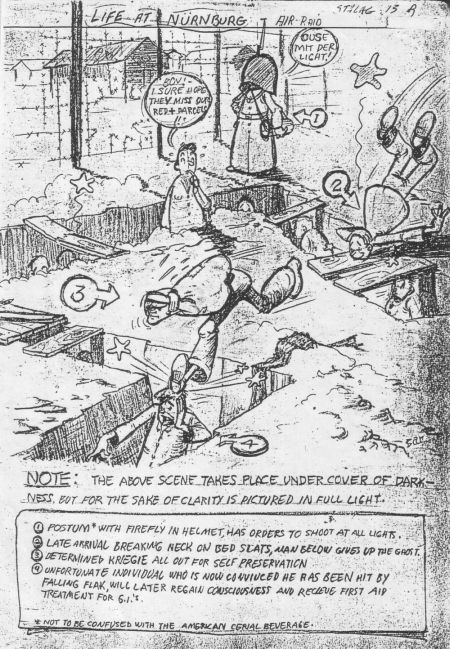
On mission 23, Freitas’s improbable run of luck ran out. On a mission to bomb a German rocket base in France, near Cherbourg, on April 28, 1944, his plane was hit twice by German anti-aircraft fire. Half the crew was killed. Freitas, however, was able to open the escape hatch on the ball turret as the aircraft broke up and pull the chord on his parachute. Unfortunately, the chute was only hooked to one buckle on his flight suit, not the two that it required. That left him dangling in a precarious, off-balance position as he floated down.


“Down below was just clouds and I started coming down,” he said. “It took forever to get down through the clouds. It was April and there was all kinds of animals and cows and everything down there.”He landed in a farmer’s field, but since he was off balance, he struck his head hard on the ground, knocked out cold for a while. The Germans quickly captured him and shipped him to a hospital in Paris and then later a processing center in Frankfurt.


“You go in there and they interrogate you and they threaten that you’re a spy and so forth,” he said.

After about three days, they loaded a bunch of captured allied troops into box cars and shipped them to a camp near the Lithuanian border. But that was not far from the Eastern Front, where Russians were steadily pushing German troops back toward Berlin.


“When the Russians got close, the Germans moved us,” he said. “We finally got moved to the Baltic Sea … they put us on ships, big grain ships, and they took us to Denmark.” “From then on we just marched; we marched all the way to Bavaria,” he said. “We’d spend the night in barns; we’d pick up food and eat them and everything. We kept doing that.”


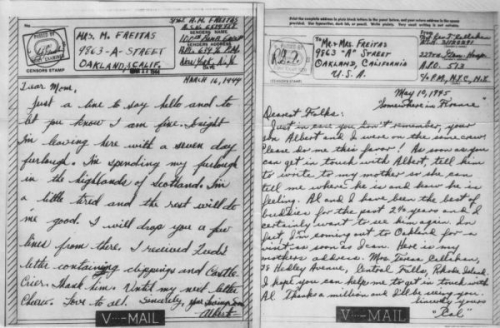
He said the Germans generally treated him and his fellow prisoners well. Despite their legendarily savage treatment of Russian prisoners and inmates in concentration camps, he said the Germans treated American and British prisoners in strict conformance with the Geneva Conventions, which meant decent treatment and the occasional letters to and from home. “We have two hot meals a day plus a light breakfast,” he wrote his parents on May 12, 1944. “We are rationed to a small amount of cigarettes a week.”“Please don’t worry about me, as I am taking good care of myself,” he told them.


The war ended in May of 1945, but there was about a week between the time their German guards abandoned the prisoners deep in Bavaria and when American troops came to recover them. He recalls that as an unsettling time, with German locals looking to the newly freed prisoners for protection.


“For a week, we were all by ourselves. There weren’t any Germans there, there weren’t any Americans there, so we’d knock on people’s doors,” he said. “And the only reason they would let us in was that there were a lot of Russian prisoners there and they were raping women.”Finally, he was evacuated to France and eventually returned to the United States.“My family met me, all my cousins were there” upon his return to Oakland, he said. “God, they treated me like a hero, and I remember I started crying. I had never got that emotional before ... That was the war for me.”


His only major injury – at least as far as he was aware at the time — was a case of frostbite. At the altitudes where bombers flew, the air was cold enough to freeze skin.“I’m on the bottom (of the plane), on my back and even though I had a heated suit and everything, that cold would penetrate,” he remembers. “And I would always have to urinate. You could call me stinky when we’d land. We were up so high but I had to go so bad I said ‘To hell with it’ so I just let it go. So much relief.”But then, he said, with his backside pressed against the icy cold metal and glass of the ball turret, “it froze like ice so when we landed my rear end was like burns. Guys were coming out checking my ass out – ‘Hey Freitas, how’s your ass?’ And they say, ‘I can’t believe it.’ And I got a purple heart for that. And this one guy he was really jealous and he said ‘you got a purple heart … and you pissed in your pants.’”


His life was possibly saved by that injury, however embarrassing it may have been. While he was in the hospital recovering, his regular aircraft was shot down. He spent the rest of his time in England as a substitute for other crews who were short on a crew member for some reason. His only other injury didn’t become obvious for many years. When he was about 40, he began suffering unexplained seizures. Doctors eventually concluded that the cause was the blow to his head upon landing in that French field. The government awarded him 10 years of back disability payments. His then-wife wanted to use the money for a trip to Hawaii, but his six kids prevailed on him to build a swimming pool at their Terra Linda home.


After the war, Freitas used the GI bill to go to college, studying to be a graphic designer. He worked a variety of related jobs, including in marketing for Kay Jewelers and framing artwork, but eventually retired.


He moved to the Veterans Home 12 years ago to be near his daughter, Lori Piombo, who lived in Napa.

He says he remains in good health and takes the bus just about every day to Napa, where he is a frequent sight at Trader Joe’s and Peet’s Coffee.Freitas says he doesn’t really think about the war much anymore, unless someone asks him to retell his stories. But he seems happy and proud to have served on the B-17.


“I was very fortunate,” he said.
KIA / MIA / EVA / INT Information:
Target:
Sottevast
Aircraft:
(42-107024)
Date:
1944-04-28
Cause:
FLAK
Photos
Click here to see album - 11 items
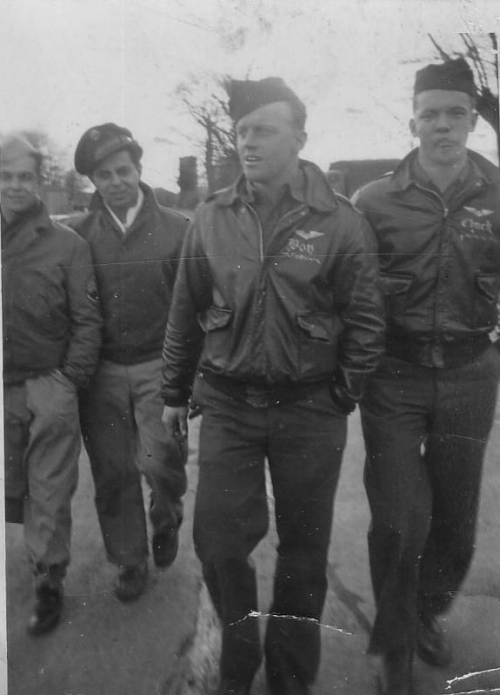
Click here to see album - 11 items
Click here to see album - 11 items
Click here to see album - 11 items
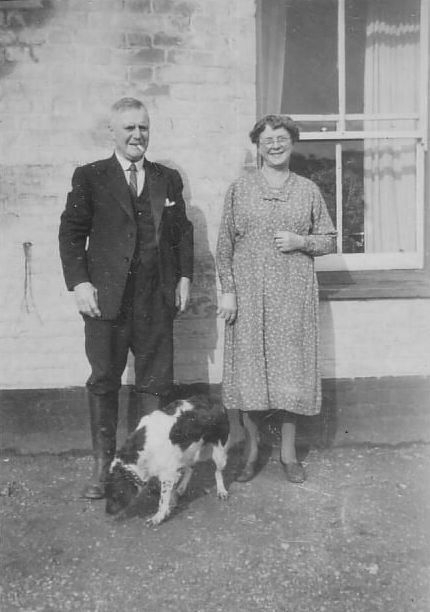
Click here to see album - 11 items
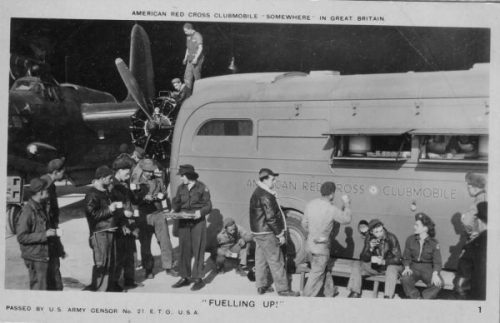
Click here to see album - 11 items
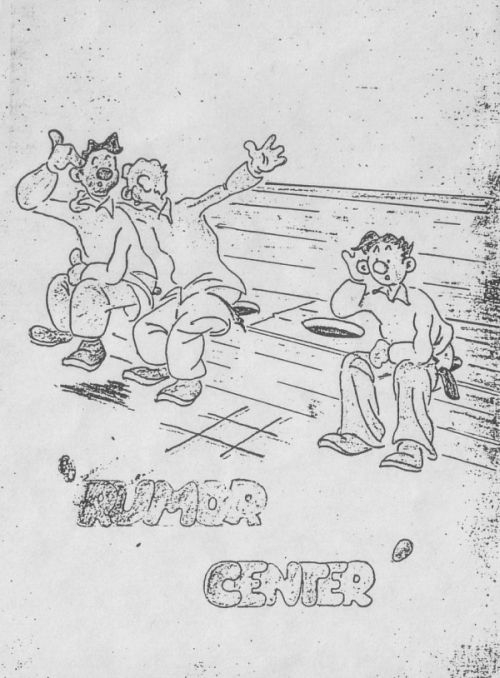
Click here to see album - 11 items
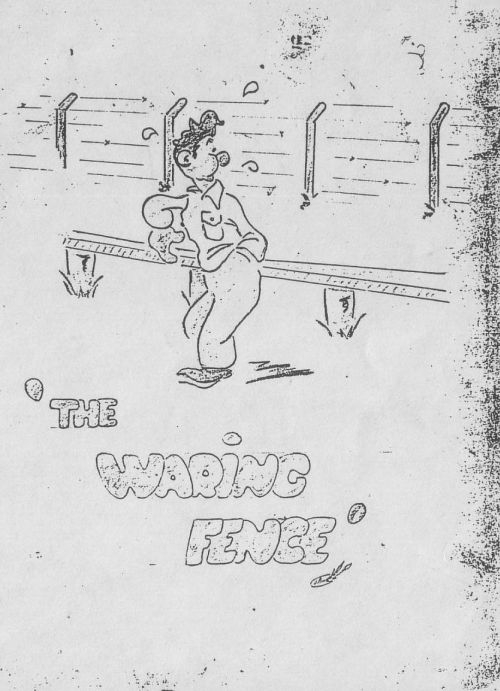
Click here to see album - 11 items
Click here to see album - 11 items
Click here to see album - 11 items
Click here to see album - 11 items
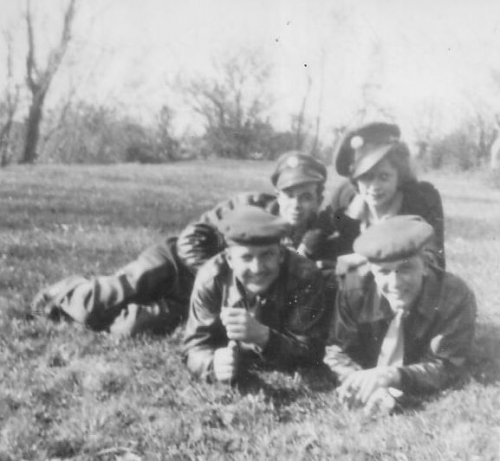
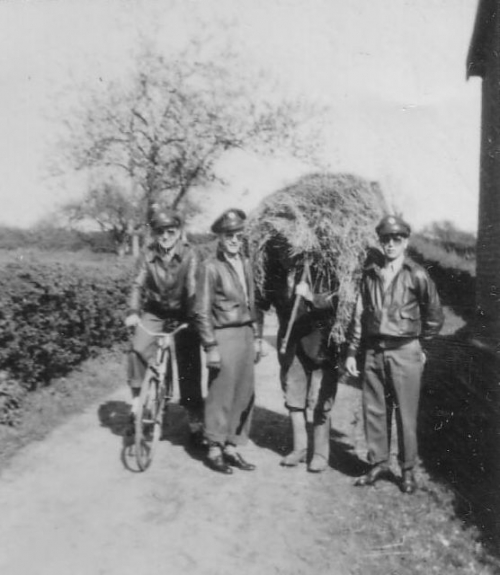
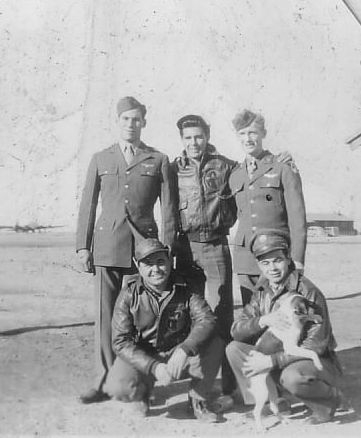
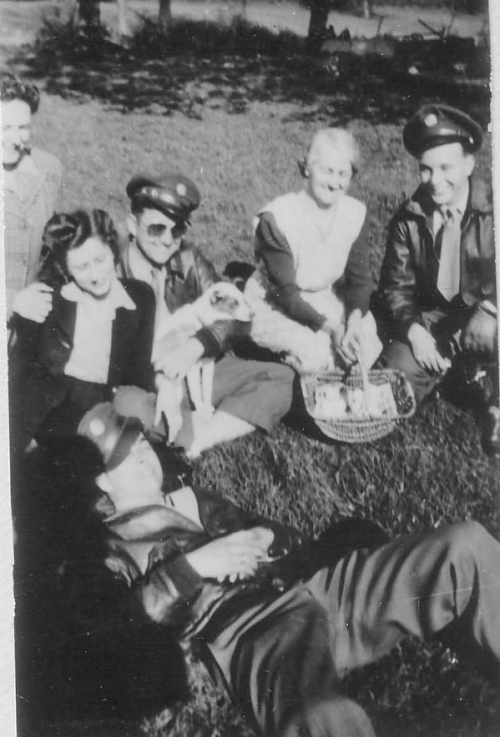
Crew List
1st Crew List
Use your thumb to scroll through the results box below.
| Rank | Name | Pos | Status |
|---|---|---|---|
| Maj | CLEVEN, Gale W. | COM | ESC |
| Capt | DEMARCO, Bernard | P | POW |
| F/O | THAYER, James P. | CP | POW |
| Lt | DOWNS, John W. | NAV | POW |
| Lt | HARPER, Francis | BOM | POW |
| T/Sgt | BARR, Benjamin J. | TTE | POW |
| T/Sgt | CALLAHAN, Leo T. | TTE | POW |
| S/Sgt | STRINGFELLOW, Thornton | ROG | POW |
| S/Sgt | FREITAS, Albert M. | BTG | POW |
| S/Sgt | CALHOUN, Harry C. | WG | POW |
| Sgt | WOODBURY, William R. | WG | POW |
| S/Sgt | CASTRO, Leon | TG | XFR |
2nd Crew List
Use your thumb to scroll through the results box below.
| Rank | Name | Pos | Status |
|---|---|---|---|
| Col | KELLY, Robert | COM | KIA |
| Capt | LAKIN, William | P | KIA |
| Capt | PAYNE, Joseph H. | NAV | KIA |
| Lt | CAIN, Maurice H. | BOM | POW |
| T/Sgt | BROWN, James C. | TTE | KIA |
| T/Sgt | CANNON, Leo | ROG | POW |
| S/Sgt | FREITAS, Albert M. | BTG | POW |
| SGT | RICHARD, Joseph A. | WG | POW |
| Sgt | SPIKER, John N. | WG | KIA |
| S/Sgt | BARNHART, Delbert E. | TG | KIA |