
King Bee
Aircraft Serial #: 42-3474
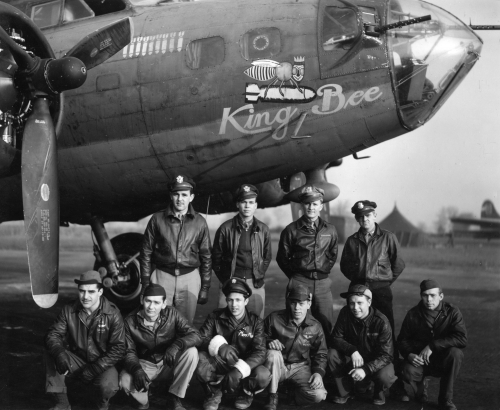
Names: King Bee
Squadron: 351st | Squadron Marking: EP | Tail Marking: B
Pilot: N/A N/A
Notes
The name "Queen Bee" appears on a teletype list sent from 100th BG to Headquarters but has not been confirmed by other sources. --- King Bee
Crew Information
N/A
History
Use your thumb to scroll through the results box below.
| Date | Event |
|---|---|
| June 1, 1943 | Denver (Date uncertain) |
| June 1, 1943 | Accepted into inventory |
| August 10, 1943 | Presque Isle |
| August 30, 1943 | Assigned to UK |
| October 4, 1943 | REM - #2 prop feathered |
| October 20, 1943 | REM |
| November 13, 1943 | REO |
| November 19, 1943 | REM |
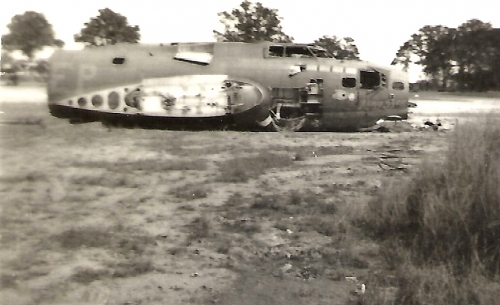
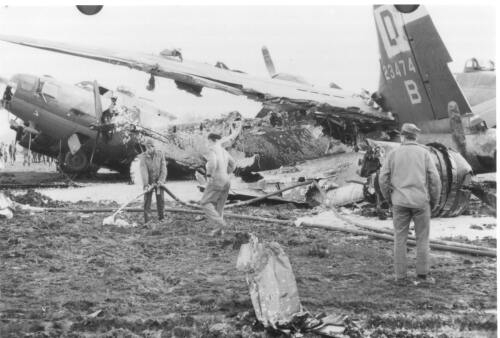
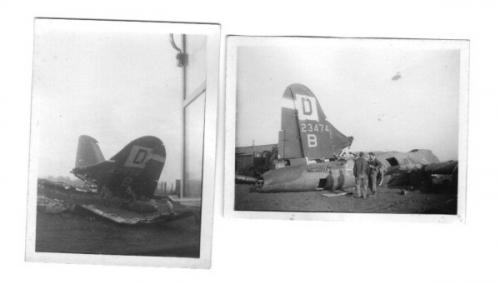
| December 27, 1943 | NCS - landing accident with 26094 and 237772 |
| January 31, 1944 | Salvaged |
| January 31, 1944 | Salvaged |
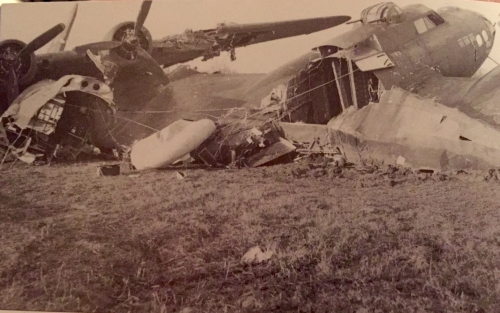
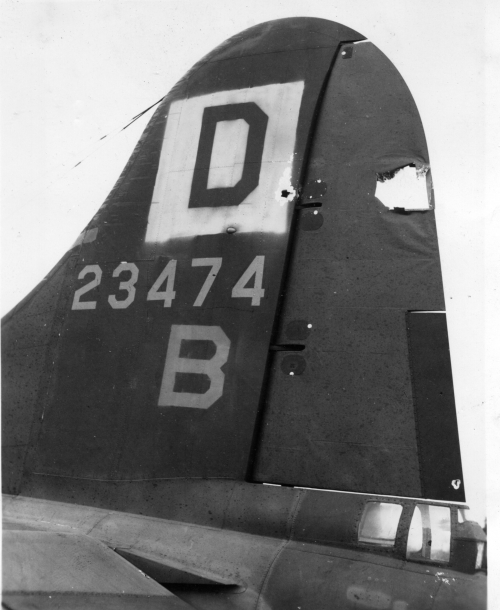
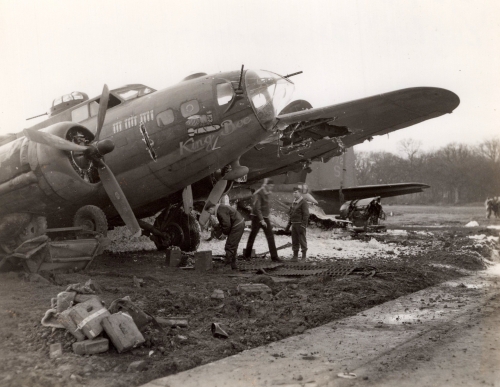

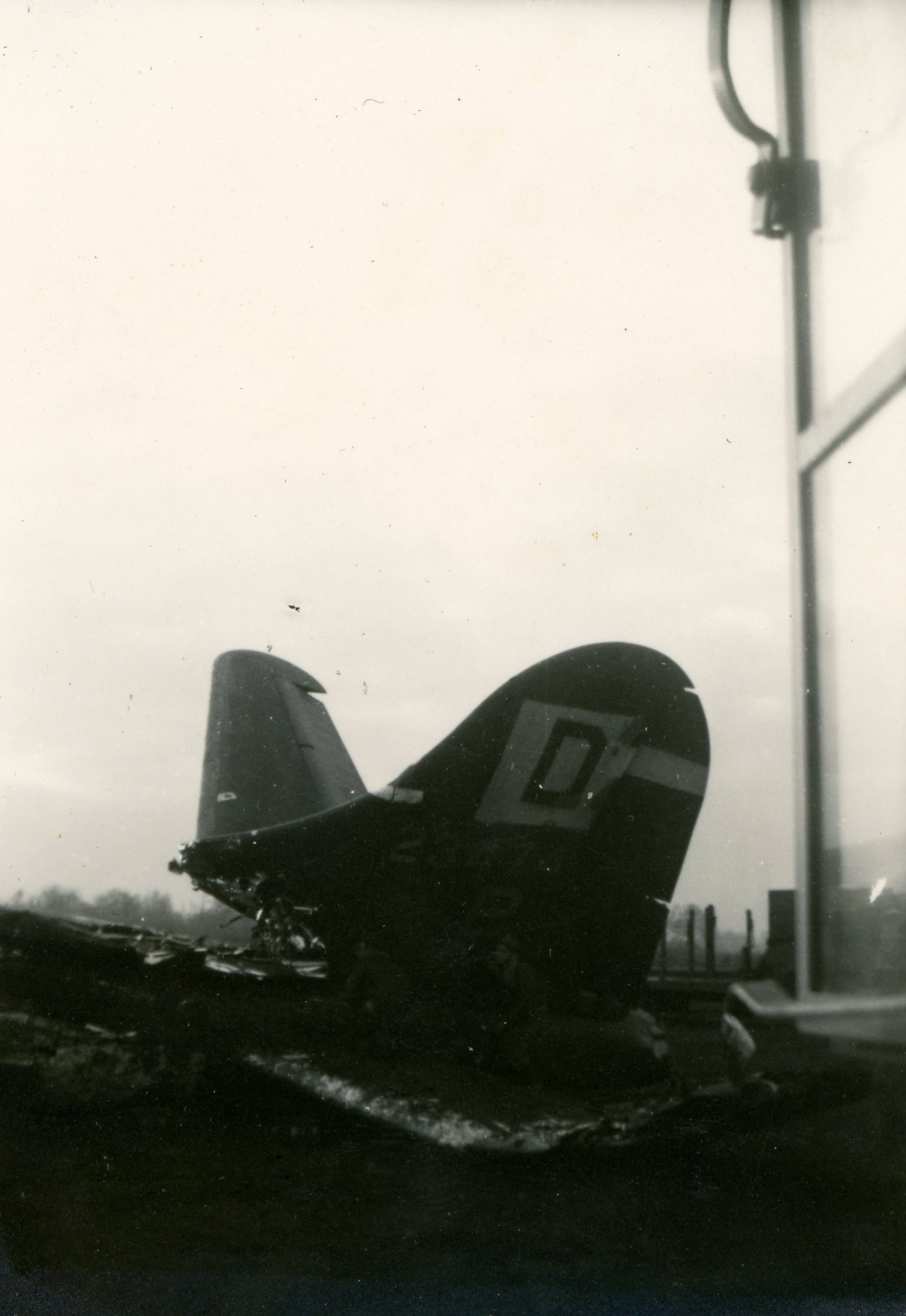
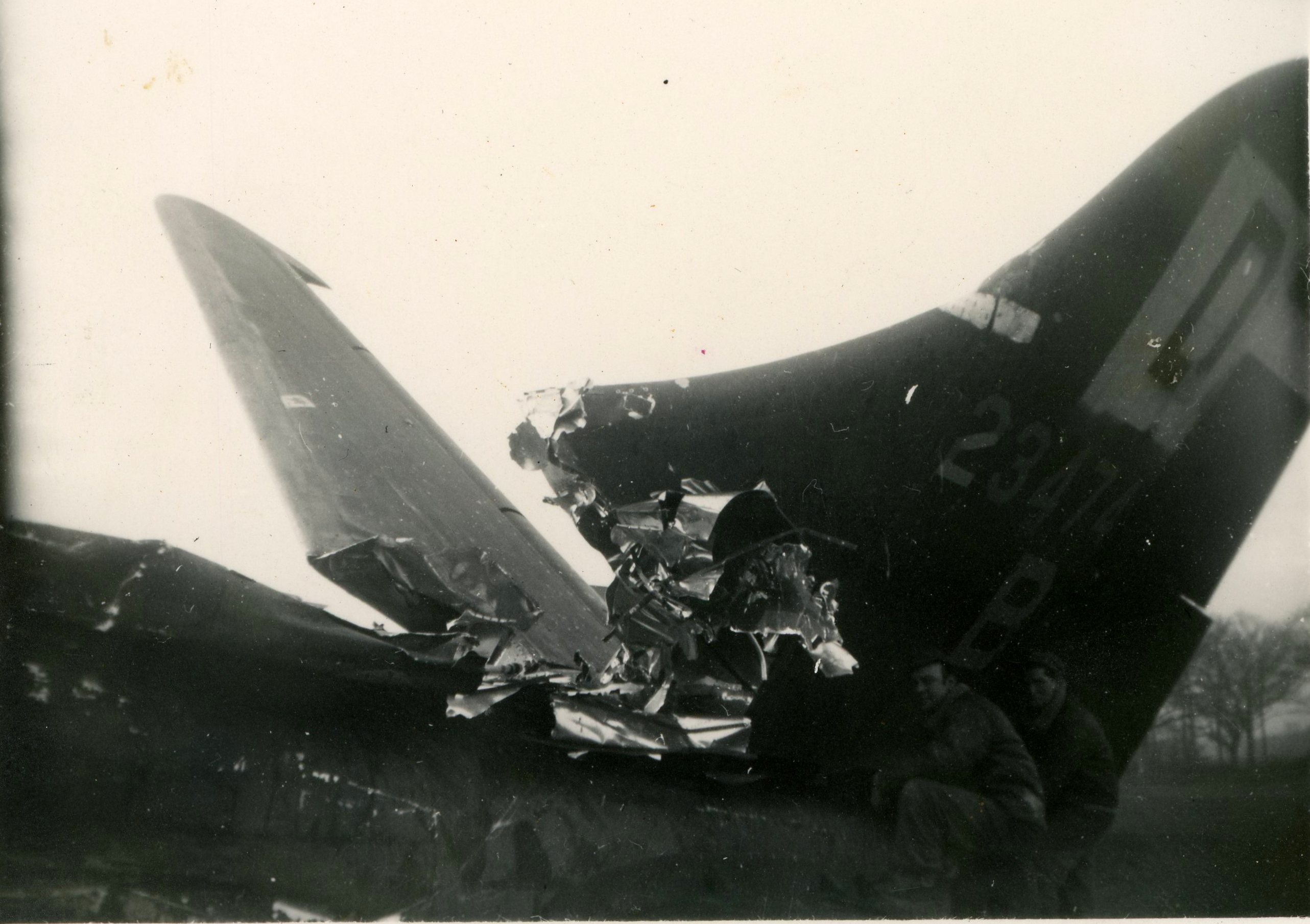
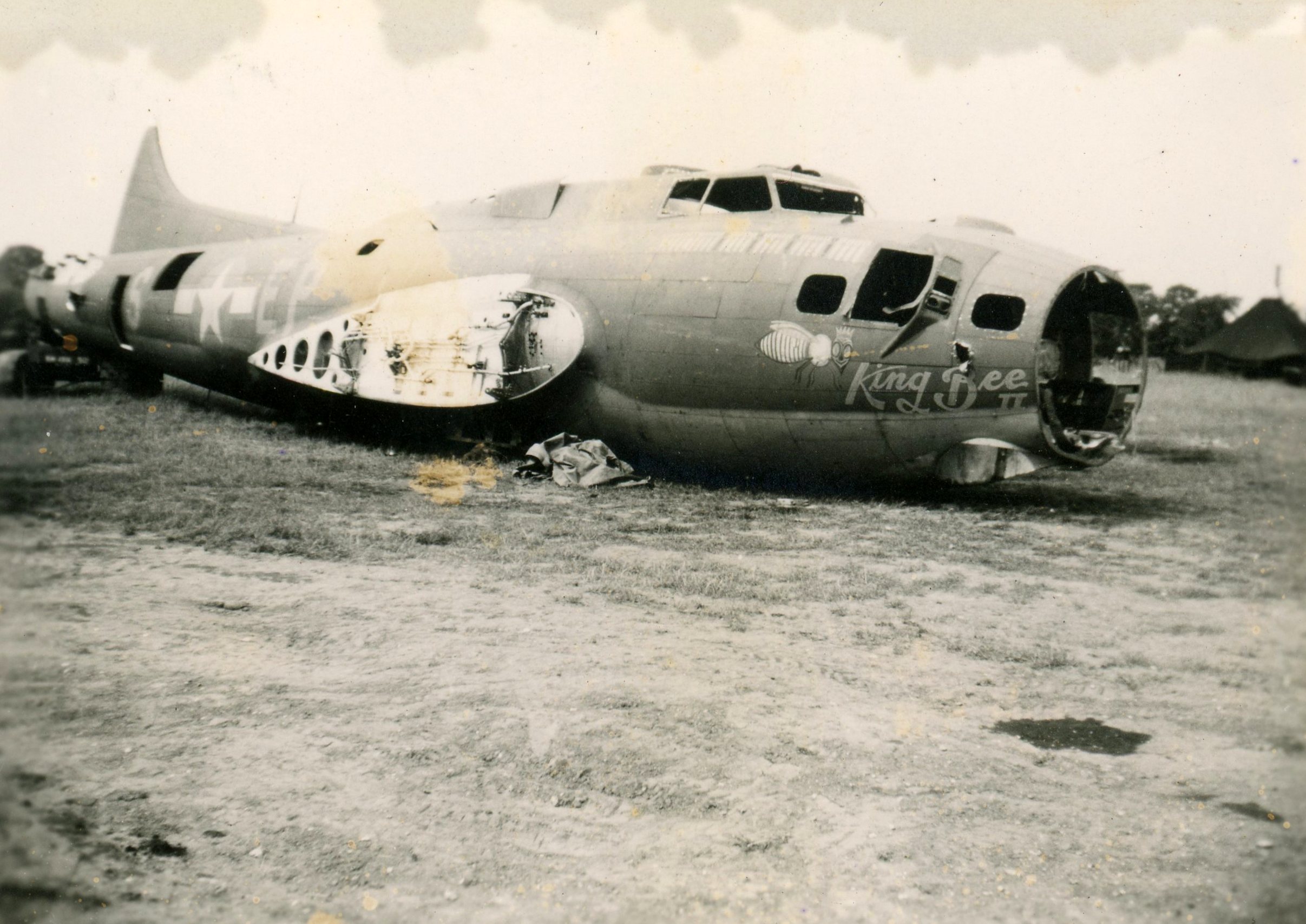
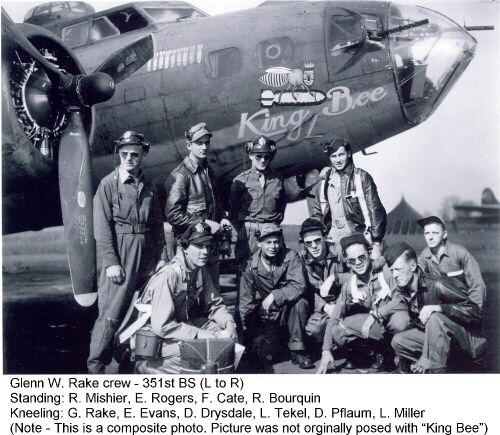
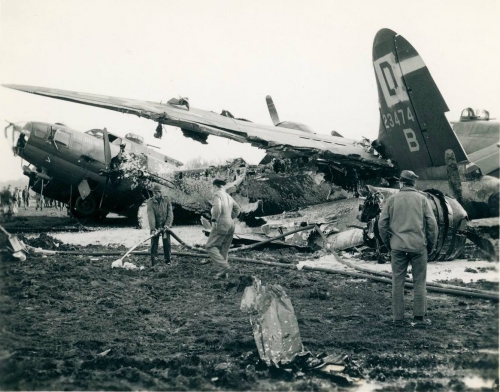
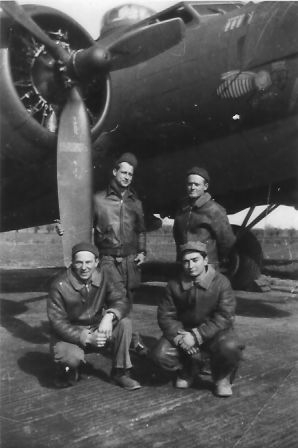
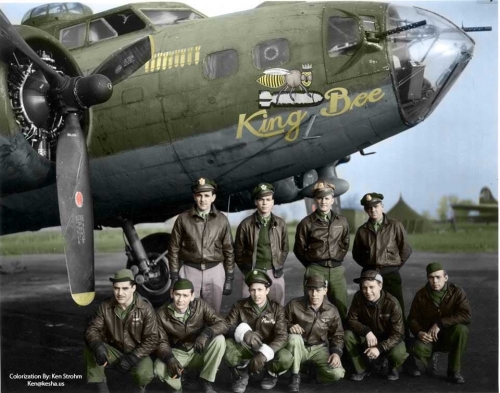

King Bee had arrived in England on the last day of August 1943 and made its first operational sortie on 26th September, to Paris. It is not clear from available records if the ship completed the mission to Saarlautern on 4th October. It failed to bomb the target due to an overheated No. 3 engine but no indication is given as to whether the mission was credited or not. Four days later, flak caused serious damage when Maurice Beatty took King Bee over Bremen. (Source: Plane Names and Bloody Noses, The 100th Bomb Group (Heavy), United States Army Air Force, Thorpe Abbotts, England, 1943-1945 by Ray Bowden, Plane Names Vol. 2, 2000, Design Oracle Partnership, Dorset, England; p. 123)
Two more early returns are recorded in the files. Ice caused a turn back from Bremen on 13th November and another overheating engine six days later prevented an unknown crew from bombing the target at Gelsenkirchen.
In mid-December, the infamous Frank Valesh took the plane to Emden as a replacement for one of his several damaged Hang the Expense ships. Navigator on the crew, John Johnson, noted, The flak was inaccurate, there were no fighters (friend or foe) so why did we miss? Once again the bombay doors would not close and had to be cranked shut by hand. Salvaged before the year was out, King Bee was almost certainly one of the 351st Squadrons B17s embellished by Sgt. Frank Stevens who later applied a nearly identical nose art to the planes namesake. (Source: (Source: Plane Names and Bloody Noses, The 100th Bomb Group (Heavy), United States Army Air Force, Thorpe Abbotts, England, 1943-1945 by Ray Bowden, Plane Names Vol. 2, 2000, Design Oracle Partnership, Dorset, England; pp. 123-124.)