Mission Date: May 11, 1944
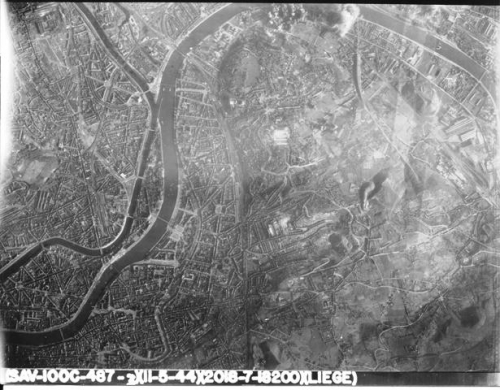
LIEGE, MY
100th BG Mission #: 115
Mission Summary
ON THIS DAY...MAY 11, 1944
The 100th was alerted at 1030 hours that a mission would go off that afternoon. The thirty-six crews in attendance at the 1230 briefing were told by the S-2 Officer, Captain Paul Mackesey, that the target for the day would be Liege, Belgium. The bombers were to attack its marshaling yards where “over 1500 goods wagons can pass through these yards every 24 hours. The sidings consisting of 16 tracks can accommodate 2000 wagons.” Their Secondary target would be Aachen.
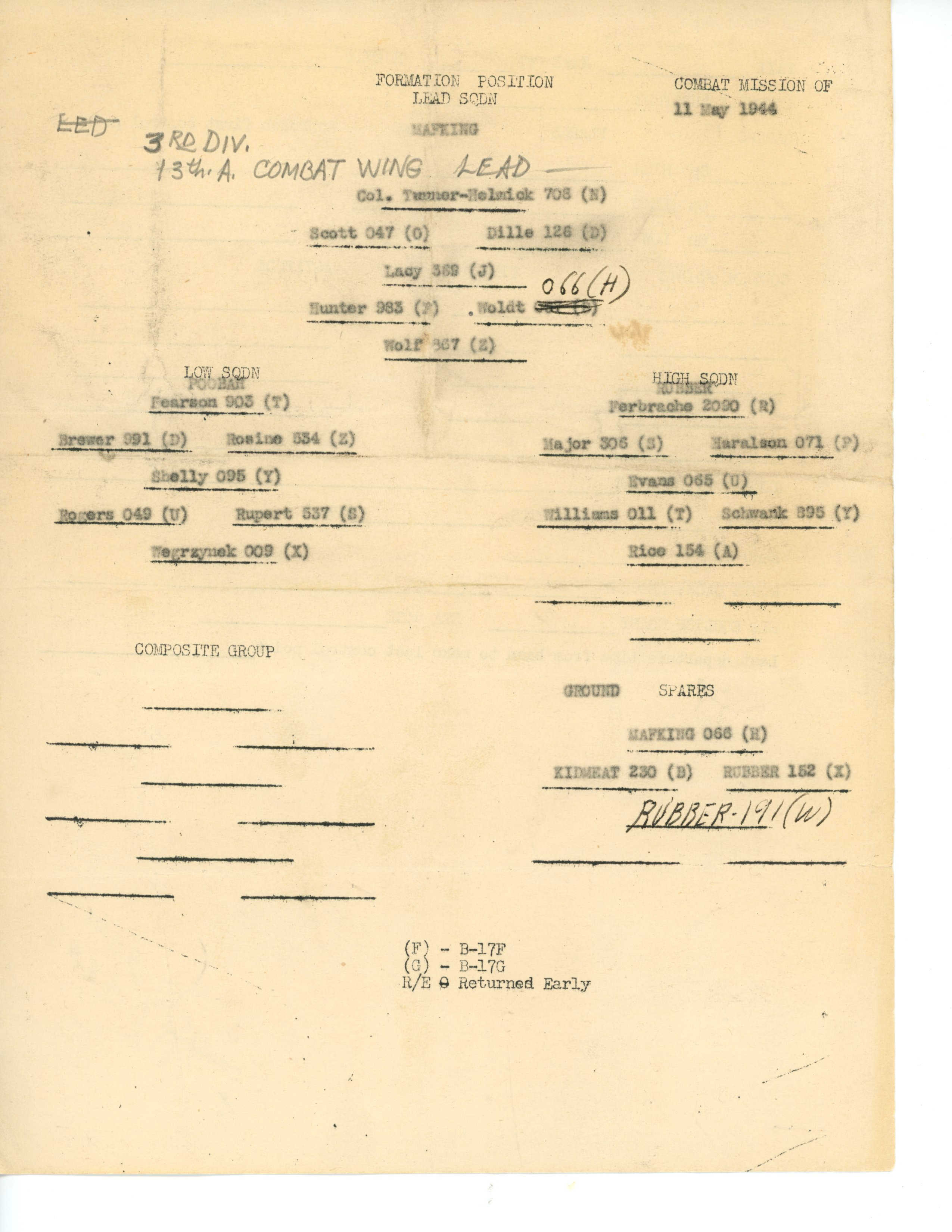
Leading the 3rd Division and the 13A formation would be the 100BG with LT Colonel Ollen Turner flying with Command Pilot Richard Helmick. Elmer Ferbrache would lead its High Squadron and Delbert Pearson the Low. Led by Harry Bethea, the 100th would also supply six aircraft to fly with the 95A in the same Wing formation.
The 13B formation would follow next, led by the 390BG, with the 388BG flying as its High and the 390BG also as its Low. An additional nine ships from the 100BG would fly in the 13B and would be led by Ferdinand Herres.
Dangerous flak defenses were a concern and MacKesey then warned the men that the heavy defenses at Antwerp and those at Woensdrecht were to be avoided. Defenses at Herenthals were to the right of their course at maximum range and the target area at Liege was defended by sixteen heavy guns.
Take-off was at 1500 hours and all ships successfully departed from Thorpe Abbotts. Carrying twelve 500 lb GP bombs, Henry Rosine flying in the main formation returned early to change out his ship, #534. After taking-off again with a new ship, #230, he reached the formation at 20000 feet altitude at 1735 hours. However, with no open vacancy in the formation, he turned back for Thorpe Abbotts a second time, still loaded with bombs. Robert Schomp, scheduled to fly with the 95A Group and carrying six 1000 lb GP bombs, also returned early but jettisoned his bombs.
A heavy haze was seen over most of the continent but visibility was eight to ten miles in the target area. Three minutes before the IP was reached and for eleven minutes after, chaff was thrown from the bomb bays of each of the 100th’s planes in the 13A’s formation. Hoping to jam the aiming radar of the enemy guns below, the flak in the target area was reported as ‘intense, accurate, following and barrage’ with a few bursts of white flak reported bursting above the formation.
The 100BG flew through the accurate flak to the target. TG William Hohman in Martin Rupert’s ship tells us, “The mission was fairly rough; the flak was accurate – there was not a lot, but it hit up pretty hard and knocked out the number four engine. We turned back as we had started to lose altitude.” Salvoing their bombs, they too returned to base. Ultimately, seven of the 100th’s B17s would absorb the exploding flak, four with serious damage and three with slight damage.
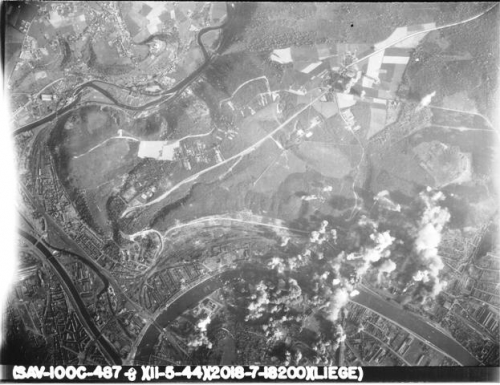
Bombs were away between 1831-1835 hours from 18200-20000 feet. Immediately after dropping bombs, one of the Lead Squadron ships, ‘Katie’ flown by Jack Hunter and George Shoesmith, received a direct flak hit in its wing at the #1 engine. Copilot Richard Heh remembered, “The plane received a direct hit by flak which knocked off part of the right wing and set fire to the plane. The plane started spinning and the centrifugal force was so great I could not move to bail out. After a few seconds the gas tanks exploded and blew the bombardier and myself out of the plane.” Flying behind Hunter, Ed Wolf remembered, “Statchel saw the plane on fire and in the blink of an eye, it was gone.”
Heading for the Rally Point after bombs away, the 100th’s ships followed the briefed route back, landing at Thorpe Abbotts at 2010 hours. Flares from Ferbrache's ship indicated wounded on board. BTG William Behr’s arm had been hit by flak, requiring hospitalization upon landing.
Returning with serious battle damage was Pearson, Wegrzynek, Bethea and Jespersen while Major and Williams would return with slight flak damage. Not returning at all would be Hunter and Brewer but fortunately, Brewer would later report in having landed at Honington with serious battle damage and another wounded man onboard.
During Interrogation, many of the crews complained about the bombing altitude, feeling that it should have been much higher with so many guns aimed at them. With the Interrogation occurring at such a late hour, the next mission alert came in while the Group’s Officers were still taking notes from the crews.
Red Bowman recorded into his Group Diary, “During the day, PR photos of raid on No-ball May 8 and targets of May 9 came in, showing Hundredth distinguished itself by hitting the Mean Point of Impact. Gratifying, since Group has been consistently good in everything except bombing, its prime reason for existence." The new CO, Colonel Thomas Jeffrey’s plan was to change the 100th’s inconsistency.
Crews flying that day:
Main formation: Brewer, Dille, Evans, Ferbrache, Haralson, Helmick, Hunter, Lacy, Major, Pearson, Rice, Rogers, Rosine, Rupert, Schwank, Scott, Shelly, Wegrzynek, Williams, Woldt, Wolf
Flying with 95BG: Bethea, Mylius, Schomp, Siewert, Simmons, Zapf
Flying with 390BG: Herres, Jesperson, Keys, Kinder, Mullen, Roeder, Roth, Stout, Williamson
The 100th was alerted at 1030 hours that a mission would go off that afternoon. The thirty-six crews in attendance at the 1230 briefing were told by the S-2 Officer, Captain Paul Mackesey, that the target for the day would be Liege, Belgium. The bombers were to attack its marshaling yards where “over 1500 goods wagons can pass through these yards every 24 hours. The sidings consisting of 16 tracks can accommodate 2000 wagons.” Their Secondary target would be Aachen.
Leading the 3rd Division and the 13A formation would be the 100BG with LT Colonel Ollen Turner flying with Command Pilot Richard Helmick. Elmer Ferbrache would lead its High Squadron and Delbert Pearson the Low. Led by Harry Bethea, the 100th would also supply six aircraft to fly with the 95A in the same Wing formation.
The 13B formation would follow next, led by the 390BG, with the 388BG flying as its High and the 390BG also as its Low. An additional nine ships from the 100BG would fly in the 13B and would be led by Ferdinand Herres.
Dangerous flak defenses were a concern and MacKesey then warned the men that the heavy defenses at Antwerp and those at Woensdrecht were to be avoided. Defenses at Herenthals were to the right of their course at maximum range and the target area at Liege was defended by sixteen heavy guns.
Take-off was at 1500 hours and all ships successfully departed from Thorpe Abbotts. Carrying twelve 500 lb GP bombs, Henry Rosine flying in the main formation returned early to change out his ship, #534. After taking-off again with a new ship, #230, he reached the formation at 20000 feet altitude at 1735 hours. However, with no open vacancy in the formation, he turned back for Thorpe Abbotts a second time, still loaded with bombs. Robert Schomp, scheduled to fly with the 95A Group and carrying six 1000 lb GP bombs, also returned early but jettisoned his bombs.
A heavy haze was seen over most of the continent but visibility was eight to ten miles in the target area. Three minutes before the IP was reached and for eleven minutes after, chaff was thrown from the bomb bays of each of the 100th’s planes in the 13A’s formation. Hoping to jam the aiming radar of the enemy guns below, the flak in the target area was reported as ‘intense, accurate, following and barrage’ with a few bursts of white flak reported bursting above the formation.
The 100BG flew through the accurate flak to the target. TG William Hohman in Martin Rupert’s ship tells us, “The mission was fairly rough; the flak was accurate – there was not a lot, but it hit up pretty hard and knocked out the number four engine. We turned back as we had started to lose altitude.” Salvoing their bombs, they too returned to base. Ultimately, seven of the 100th’s B17s would absorb the exploding flak, four with serious damage and three with slight damage.
Bombs were away between 1831-1835 hours from 18200-20000 feet. Immediately after dropping bombs, one of the Lead Squadron ships, ‘Katie’ flown by Jack Hunter and George Shoesmith, received a direct flak hit in its wing at the #1 engine. Copilot Richard Heh remembered, “The plane received a direct hit by flak which knocked off part of the right wing and set fire to the plane. The plane started spinning and the centrifugal force was so great I could not move to bail out. After a few seconds the gas tanks exploded and blew the bombardier and myself out of the plane.” Flying behind Hunter, Ed Wolf remembered, “Statchel saw the plane on fire and in the blink of an eye, it was gone.”
Heading for the Rally Point after bombs away, the 100th’s ships followed the briefed route back, landing at Thorpe Abbotts at 2010 hours. Flares from Ferbrache's ship indicated wounded on board. BTG William Behr’s arm had been hit by flak, requiring hospitalization upon landing.
Returning with serious battle damage was Pearson, Wegrzynek, Bethea and Jespersen while Major and Williams would return with slight flak damage. Not returning at all would be Hunter and Brewer but fortunately, Brewer would later report in having landed at Honington with serious battle damage and another wounded man onboard.
During Interrogation, many of the crews complained about the bombing altitude, feeling that it should have been much higher with so many guns aimed at them. With the Interrogation occurring at such a late hour, the next mission alert came in while the Group’s Officers were still taking notes from the crews.
Red Bowman recorded into his Group Diary, “During the day, PR photos of raid on No-ball May 8 and targets of May 9 came in, showing Hundredth distinguished itself by hitting the Mean Point of Impact. Gratifying, since Group has been consistently good in everything except bombing, its prime reason for existence." The new CO, Colonel Thomas Jeffrey’s plan was to change the 100th’s inconsistency.
Crews flying that day:
Main formation: Brewer, Dille, Evans, Ferbrache, Haralson, Helmick, Hunter, Lacy, Major, Pearson, Rice, Rogers, Rosine, Rupert, Schwank, Scott, Shelly, Wegrzynek, Williams, Woldt, Wolf
Flying with 95BG: Bethea, Mylius, Schomp, Siewert, Simmons, Zapf
Flying with 390BG: Herres, Jesperson, Keys, Kinder, Mullen, Roeder, Roth, Stout, Williamson
Bombing Results
Bombing Results: FAIR
Aircraft Lost: 1
Crew Lost: 10
Claims of Enemy Losses (CLS): 0
Aircraft Returned: