Mission Date: June 21, 1944
RUHLAND, START OF RUSSIAN SHUTTLE
100th BG Mission #: 145
Mission Summary
ON THIS DAY…JUNE 21,1944
By the evening of June 20, the rumored Russian shuttle mission under the code name ‘Operation Frantic’ had been green lighted and the S-2 Officers began final preparations for the next day’s complicated mission under Field Orders 281 and 281A. Harry Crosby wrote about the shuttle crews preparation. “All night long crewman gathered equipment ‘to last a week’…What a scramble!…”Where is my escape kit?…How much is a ruble? How cold is Russia? Did you hear that Major Revegno, the Engineering Officer, and Captain Bowman, the intelligence Officer, are going?… No chance to get any sleep tonight – too much to do.”
A total of forty-eight crews from the 100th had been marked to fly the next day. Between 2000-2500 combined forces of the RAF and US bombers were to fly in four forces to attack various targets in Berlin and its surrounding area, with the first force flying on to bases in Russia after hitting its target. With the base and crews under a restricted status for security purposes, there would be two briefings: one for the 100th’s shuttle crews and another for the crews flying in the diversionary fourth force to Basdorf.
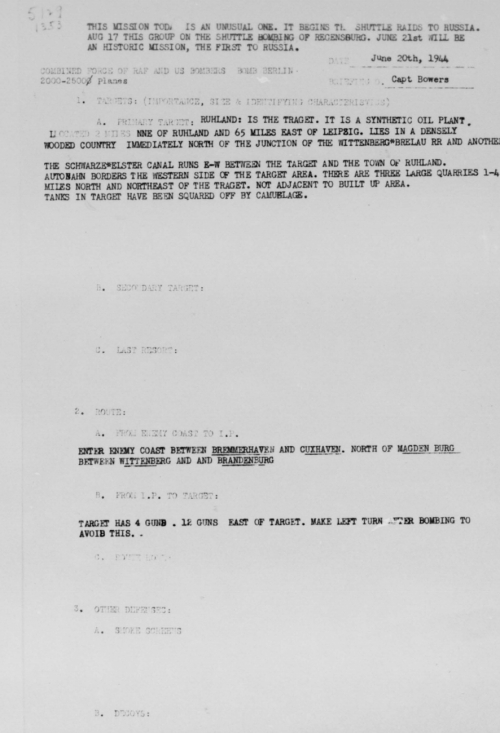
The thirty crews to fly the shuttle mission were seated in the first briefing where they were told of the historic nature of their mission. The 45CBW, along with the 13A and 13B wings would fly in the first force of bombers to attack an oil refinery in Ruhland, south of Berlin and thirty-four miles north of Dresden. After attacking at Ruhland, they were to fly on to Russian bases, from where they would fly their next mission.
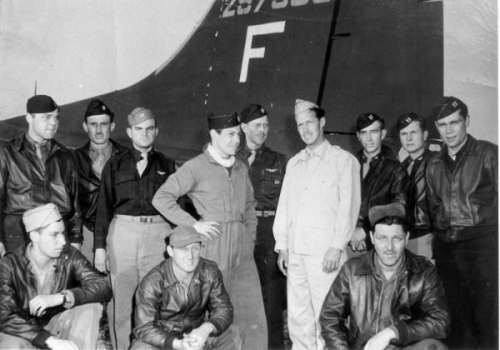
Within the first force, the 13A would be led by the 95A, with the 390A flying as its High group and the 390B as its Low. The 13B wing, commanded by the 100th’s Lt Colonel Thomas Jeffrey, would lead three groups: the 100A in the Lead, the 452BG in the High and the 100B group flying the Low, with Major Magee Fuller flying as Command pilot with Kincannon.
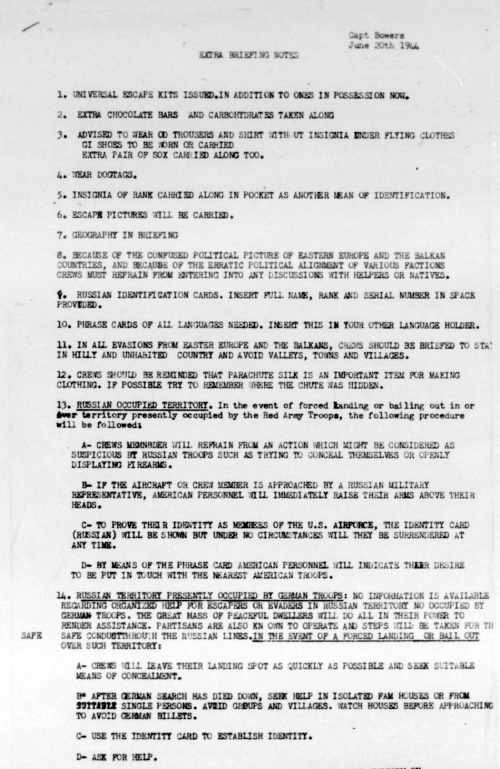
After briefing the men on the mission, S-2 Officer Bowers also reviewed Russian military ranks with the men. Amid other orders, they were advised to wear old trousers and shirts without any insignia under their flying clothes, to carry their rank insignia in their pockets as another form of identification, escape pictures, ID cards and Russian phrase cards. Copilot, Keith Lamb remembered, “We were excited about it, as we would be the first to go from England, bombing Germany and landing in Russia. Then we would bomb Hungary or a similar target on the way back, landing in Italy. From there we would bomb France and finally, back to England. It was also designed as a good will gesture toward Russia, so we were instructed carefully regarding protocol--what to say and do. The Colonel took along 30 cases of bourbon to reinforce the "good-will" part. We received identification passes and Russian dictionaries to use in case we were forced down inside Russia.”
Meanwhile, eighteen additional crews had been checked in for the second briefing given by Paul Mackesey. These crews, scheduled to fly in the fourth force would fly in the 13C wing between the 4CBW and 45CBW. Their primary target would be an aero engine plant at Basdorf, only fifteen miles north of the center of Berlin and capable of producing two hundred engines per month. Their Secondary target would be the Friedrichstrasse Station in the center of the city.
Flying as the Low group in their wing, the 100C’s eighteen bombers would be led by Andrew Gorski flying as Command Pilot with Charles Harris. The 95B would fly Lead and the 390C would fly as the High. With the shuttle B17s expected to be away for days, maintenance repairs were planned for the bases’s perimeter taxiways and runways so the crews were also briefed to land at the 95BG in Framlingham where they would be met by S-2 Officers who would handle the post-mission Interrogations.
In the early morning darkness, the twenty-eight ships scheduled for the first force took off from Thorpe Abbotts, loaded up with eight 500 lb bombs and “topped off” gas tanks. Harry Crosby tells us, “Each ship had some particular item to take care of for the group. Some groups carried the engineering kits, some the field rations, others the luggage of the P-51 Mustang pilots who were going to escort us all the way. The plane whose safe arrival was most desired was the one which carried our entire supply of toilet paper.” Two B17s however, never made the take-off due to a taxiing accident.
With the wing assembly made at 0410 hours, the first force crossed the North Sea and entered the enemy coast. Flying straight towards Berlin, a turn southward and west of the city was made and the formation continued towards Ruhland.
Meanwhile, the 100C's pilots had assembled their bombers into the 13C wing. Falling into the Division line, they headed for Basdorf. With the wing lead having navigational difficulties as they neared the target, many were not happy with them. “We circled around far SE of our course, lost about 30 minutes and were almost lead into the heavy Berlin defenses. Wing formation was broken during these maneuvers.”
Once in the target area, intense, accurate and tracking flak was encountered. NAV John Johnson, flying with Frank Valesh in the lead PFF ship in the High group wrote, “Clouds covered the target on the first run so we opted to make a 360 degree and try again. The target was plainly visible on the second run…The flak was heavy and accurate on that second run, knocking out the #1 engine, which was feathered and rendering the #3 blower inoperative. How Valesh and Booth held that thing up there for the entire bomb run I’ll never know.” Separated from the wing leader due to “persistent contrails and high cirrus,” Gorski and Harris led the 100th’s formation through the flak to the target where bombs were away at 1048 hours from 24000 feet. Gorski’s and Major’s Fortress both received serious battle damage with Gorski being wounded in the leg. The ships flown by Rowland, Forsythe, Herres, Gallagher, Johnson, Woodall, Howard, Kassebaum, Lambert and Delaney received "slight" damage.
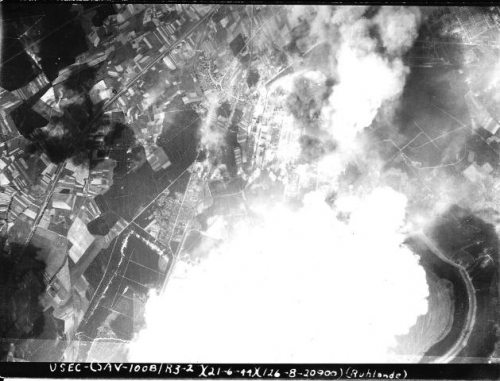
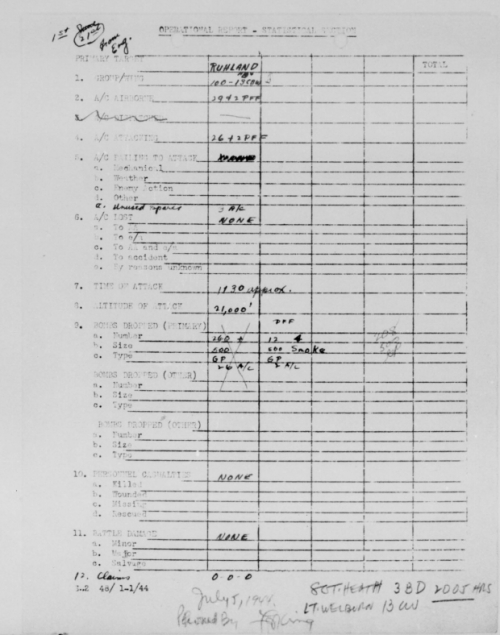
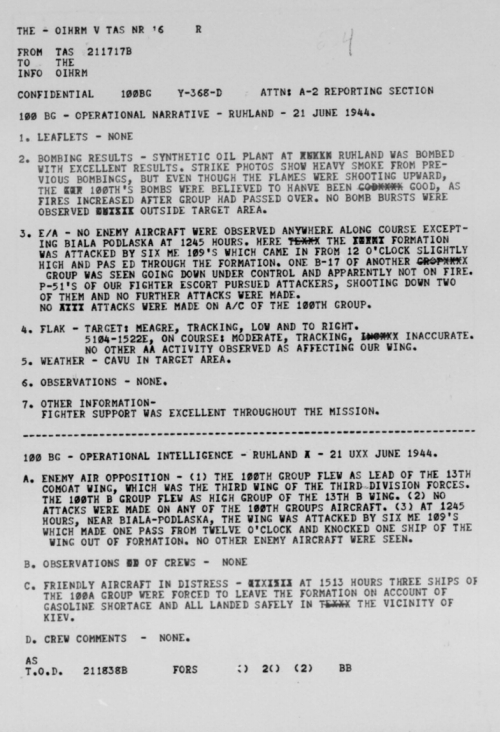
Meanwhile, the first force, encountering no flak on its route to Ruhland made the IP good. Hitting their Primary target, bombs were away at 1130 hours, from 21000 feet. With orders to maintain the Division formation integrity after bombs were away, the 13B’s turn at the Rally Point required some maneuvering and faster speeds to catch up to the other formation. At Bealapodalska, near Warsaw, Poland, a heavy flak barrage was encountered and at 1245 hours, the 13B Wing was attacked by twelve ME-109s. The escorting P-51s shot down half of them, chased the others away and according to Red Bowman, “we had no more trouble.”
When the Division formation was one hundred miles from Russia, it broke up due to the clouds and severe prop wash. S-2 Officer Red Bowman wrote, “Cloud deck formed below and began getting higher - Combat Wing milled around for a time, pretty well lost. Finally found the Dnieper river after letting down to 2,000 feet and then located Kiev.” Emmett Schmitt on Ransom’s crew remembered the sight of Kiev, “We crossed the Dnieper River and saw the town of Kiev, Russia, was all badly shot up and there were fox holes, trenches and gun emplacements in every field. Lots of Shell holes and bomb craters.”
Once in Russian territory, four of the 100th’s pilots with ships low on gas, made forced landings: Chadwick, Simmons, Mylius and Williams. Only Williams’ ship would be able to obtain gas and fly on to meet the Group later at Mirgorod. Landing in a wheat field in Poltava, Williams’ TG, twenty year-old Ralph Greenwood tells us, “The force landing was supposed to be a wheels up landing, but the pilot decided to put the wheels down…Russian peasants were around when the plane landed and the ball turret operator (Gospodin Gospodinoff) could speak a little bit of Russian. The people were happy they were Americans. It rained and they had to wait until it was dry enough for the plane to take off again…” After obtaining gas, Greenwood continued, “When they were ready to take off, one of the Americans stationed in Russia told the pilot that someone needed to have a drink with the Russians, as was the custom. Lt Williams told “Greenwood” to have the drink. They poured a large canteen of Vodka and Ralph looked for a chaser. The chaser happened to be a green onion and a can of butter.”
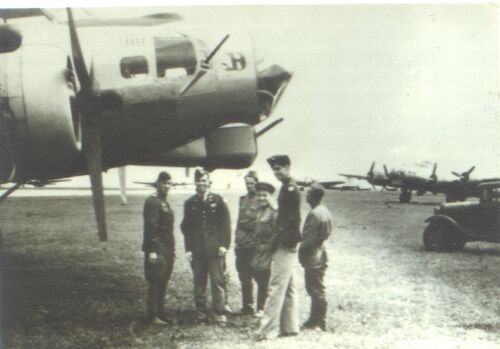
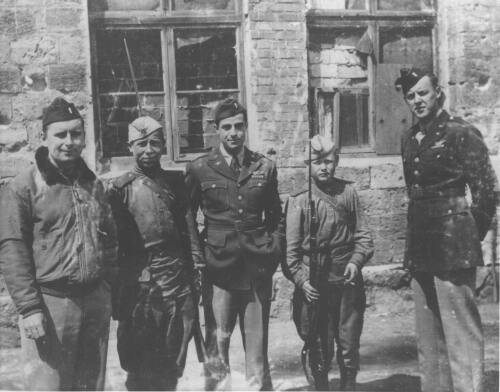
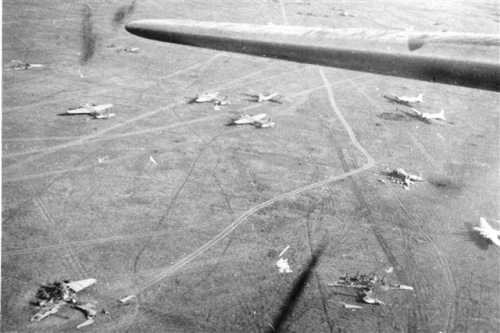
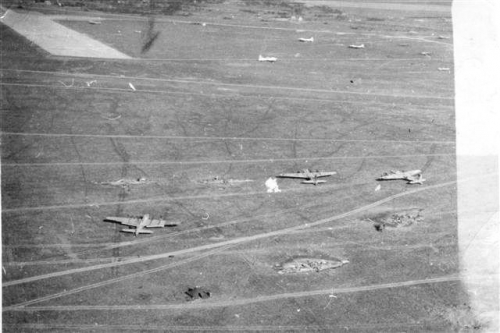
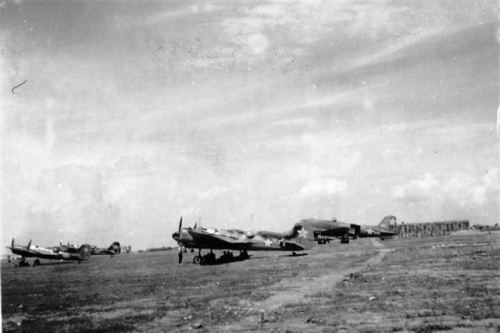
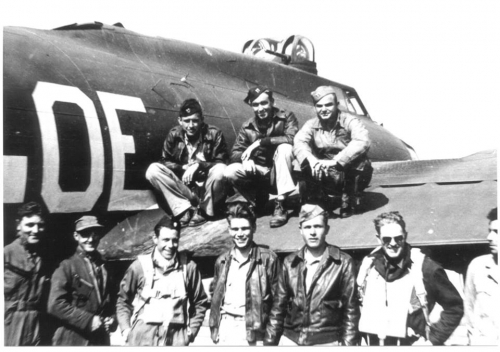
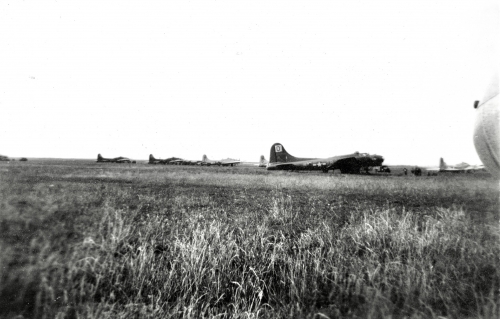
The remaining bombers had landed safely at Mirgorod while four ships landed at Poltava. Harry Crosby wrote, “The relief was tremendous when after about eleven hours of flying we landed at our destination. Each plane was met by an American Master Sergeant and a Russian enlisted man. For all we knew he was a General, so everybody saluted everybody else and shook hands all around.” After being interrogated by Colonel Wittan, the 13CBW’s Commanding Officer, some of the flying crews were trucked into town while others slept on the field in a tent, all falling asleep exhausted.
Work, however, was just beginning for the twenty other personnel who flew with along with the air crews. Photo men had photos to develop. Butch Rovegno, who had flown on Kincannon’s lead ship worked with his flight chiefs Strain, Gentry, Warfield and Picard while Armament Sergeants Swank and Booth worked on guns.
A red alert that night was sounded due to a German reconnaissance plane spotted, and the anti-aircraft firing barely waked the exhausted fliers.
Meanwhile back at Thorpe Abbotts, orders were coming in for another mission.
By the evening of June 20, the rumored Russian shuttle mission under the code name ‘Operation Frantic’ had been green lighted and the S-2 Officers began final preparations for the next day’s complicated mission under Field Orders 281 and 281A. Harry Crosby wrote about the shuttle crews preparation. “All night long crewman gathered equipment ‘to last a week’…What a scramble!…”Where is my escape kit?…How much is a ruble? How cold is Russia? Did you hear that Major Revegno, the Engineering Officer, and Captain Bowman, the intelligence Officer, are going?… No chance to get any sleep tonight – too much to do.”
A total of forty-eight crews from the 100th had been marked to fly the next day. Between 2000-2500 combined forces of the RAF and US bombers were to fly in four forces to attack various targets in Berlin and its surrounding area, with the first force flying on to bases in Russia after hitting its target. With the base and crews under a restricted status for security purposes, there would be two briefings: one for the 100th’s shuttle crews and another for the crews flying in the diversionary fourth force to Basdorf.
The thirty crews to fly the shuttle mission were seated in the first briefing where they were told of the historic nature of their mission. The 45CBW, along with the 13A and 13B wings would fly in the first force of bombers to attack an oil refinery in Ruhland, south of Berlin and thirty-four miles north of Dresden. After attacking at Ruhland, they were to fly on to Russian bases, from where they would fly their next mission.
Within the first force, the 13A would be led by the 95A, with the 390A flying as its High group and the 390B as its Low. The 13B wing, commanded by the 100th’s Lt Colonel Thomas Jeffrey, would lead three groups: the 100A in the Lead, the 452BG in the High and the 100B group flying the Low, with Major Magee Fuller flying as Command pilot with Kincannon.
After briefing the men on the mission, S-2 Officer Bowers also reviewed Russian military ranks with the men. Amid other orders, they were advised to wear old trousers and shirts without any insignia under their flying clothes, to carry their rank insignia in their pockets as another form of identification, escape pictures, ID cards and Russian phrase cards. Copilot, Keith Lamb remembered, “We were excited about it, as we would be the first to go from England, bombing Germany and landing in Russia. Then we would bomb Hungary or a similar target on the way back, landing in Italy. From there we would bomb France and finally, back to England. It was also designed as a good will gesture toward Russia, so we were instructed carefully regarding protocol--what to say and do. The Colonel took along 30 cases of bourbon to reinforce the "good-will" part. We received identification passes and Russian dictionaries to use in case we were forced down inside Russia.”
Meanwhile, eighteen additional crews had been checked in for the second briefing given by Paul Mackesey. These crews, scheduled to fly in the fourth force would fly in the 13C wing between the 4CBW and 45CBW. Their primary target would be an aero engine plant at Basdorf, only fifteen miles north of the center of Berlin and capable of producing two hundred engines per month. Their Secondary target would be the Friedrichstrasse Station in the center of the city.
Flying as the Low group in their wing, the 100C’s eighteen bombers would be led by Andrew Gorski flying as Command Pilot with Charles Harris. The 95B would fly Lead and the 390C would fly as the High. With the shuttle B17s expected to be away for days, maintenance repairs were planned for the bases’s perimeter taxiways and runways so the crews were also briefed to land at the 95BG in Framlingham where they would be met by S-2 Officers who would handle the post-mission Interrogations.
In the early morning darkness, the twenty-eight ships scheduled for the first force took off from Thorpe Abbotts, loaded up with eight 500 lb bombs and “topped off” gas tanks. Harry Crosby tells us, “Each ship had some particular item to take care of for the group. Some groups carried the engineering kits, some the field rations, others the luggage of the P-51 Mustang pilots who were going to escort us all the way. The plane whose safe arrival was most desired was the one which carried our entire supply of toilet paper.” Two B17s however, never made the take-off due to a taxiing accident.
With the wing assembly made at 0410 hours, the first force crossed the North Sea and entered the enemy coast. Flying straight towards Berlin, a turn southward and west of the city was made and the formation continued towards Ruhland.
Meanwhile, the 100C's pilots had assembled their bombers into the 13C wing. Falling into the Division line, they headed for Basdorf. With the wing lead having navigational difficulties as they neared the target, many were not happy with them. “We circled around far SE of our course, lost about 30 minutes and were almost lead into the heavy Berlin defenses. Wing formation was broken during these maneuvers.”
Once in the target area, intense, accurate and tracking flak was encountered. NAV John Johnson, flying with Frank Valesh in the lead PFF ship in the High group wrote, “Clouds covered the target on the first run so we opted to make a 360 degree and try again. The target was plainly visible on the second run…The flak was heavy and accurate on that second run, knocking out the #1 engine, which was feathered and rendering the #3 blower inoperative. How Valesh and Booth held that thing up there for the entire bomb run I’ll never know.” Separated from the wing leader due to “persistent contrails and high cirrus,” Gorski and Harris led the 100th’s formation through the flak to the target where bombs were away at 1048 hours from 24000 feet. Gorski’s and Major’s Fortress both received serious battle damage with Gorski being wounded in the leg. The ships flown by Rowland, Forsythe, Herres, Gallagher, Johnson, Woodall, Howard, Kassebaum, Lambert and Delaney received "slight" damage.
Meanwhile, the first force, encountering no flak on its route to Ruhland made the IP good. Hitting their Primary target, bombs were away at 1130 hours, from 21000 feet. With orders to maintain the Division formation integrity after bombs were away, the 13B’s turn at the Rally Point required some maneuvering and faster speeds to catch up to the other formation. At Bealapodalska, near Warsaw, Poland, a heavy flak barrage was encountered and at 1245 hours, the 13B Wing was attacked by twelve ME-109s. The escorting P-51s shot down half of them, chased the others away and according to Red Bowman, “we had no more trouble.”
When the Division formation was one hundred miles from Russia, it broke up due to the clouds and severe prop wash. S-2 Officer Red Bowman wrote, “Cloud deck formed below and began getting higher - Combat Wing milled around for a time, pretty well lost. Finally found the Dnieper river after letting down to 2,000 feet and then located Kiev.” Emmett Schmitt on Ransom’s crew remembered the sight of Kiev, “We crossed the Dnieper River and saw the town of Kiev, Russia, was all badly shot up and there were fox holes, trenches and gun emplacements in every field. Lots of Shell holes and bomb craters.”
Once in Russian territory, four of the 100th’s pilots with ships low on gas, made forced landings: Chadwick, Simmons, Mylius and Williams. Only Williams’ ship would be able to obtain gas and fly on to meet the Group later at Mirgorod. Landing in a wheat field in Poltava, Williams’ TG, twenty year-old Ralph Greenwood tells us, “The force landing was supposed to be a wheels up landing, but the pilot decided to put the wheels down…Russian peasants were around when the plane landed and the ball turret operator (Gospodin Gospodinoff) could speak a little bit of Russian. The people were happy they were Americans. It rained and they had to wait until it was dry enough for the plane to take off again…” After obtaining gas, Greenwood continued, “When they were ready to take off, one of the Americans stationed in Russia told the pilot that someone needed to have a drink with the Russians, as was the custom. Lt Williams told “Greenwood” to have the drink. They poured a large canteen of Vodka and Ralph looked for a chaser. The chaser happened to be a green onion and a can of butter.”
The remaining bombers had landed safely at Mirgorod while four ships landed at Poltava. Harry Crosby wrote, “The relief was tremendous when after about eleven hours of flying we landed at our destination. Each plane was met by an American Master Sergeant and a Russian enlisted man. For all we knew he was a General, so everybody saluted everybody else and shook hands all around.” After being interrogated by Colonel Wittan, the 13CBW’s Commanding Officer, some of the flying crews were trucked into town while others slept on the field in a tent, all falling asleep exhausted.
Work, however, was just beginning for the twenty other personnel who flew with along with the air crews. Photo men had photos to develop. Butch Rovegno, who had flown on Kincannon’s lead ship worked with his flight chiefs Strain, Gentry, Warfield and Picard while Armament Sergeants Swank and Booth worked on guns.
A red alert that night was sounded due to a German reconnaissance plane spotted, and the anti-aircraft firing barely waked the exhausted fliers.
Meanwhile back at Thorpe Abbotts, orders were coming in for another mission.
Bombing Results
Bombing Results: GOOD
Aircraft Lost: 0
Crew Lost: 0
Claims of Enemy Losses (CLS): 0
Aircraft Returned:
Media Articles
Use your thumb to scroll through the results box below.
| Media Item | Type | Page | Volume/Issue | Broadcast Source | Time | Description | File |
|---|---|---|---|---|---|---|---|
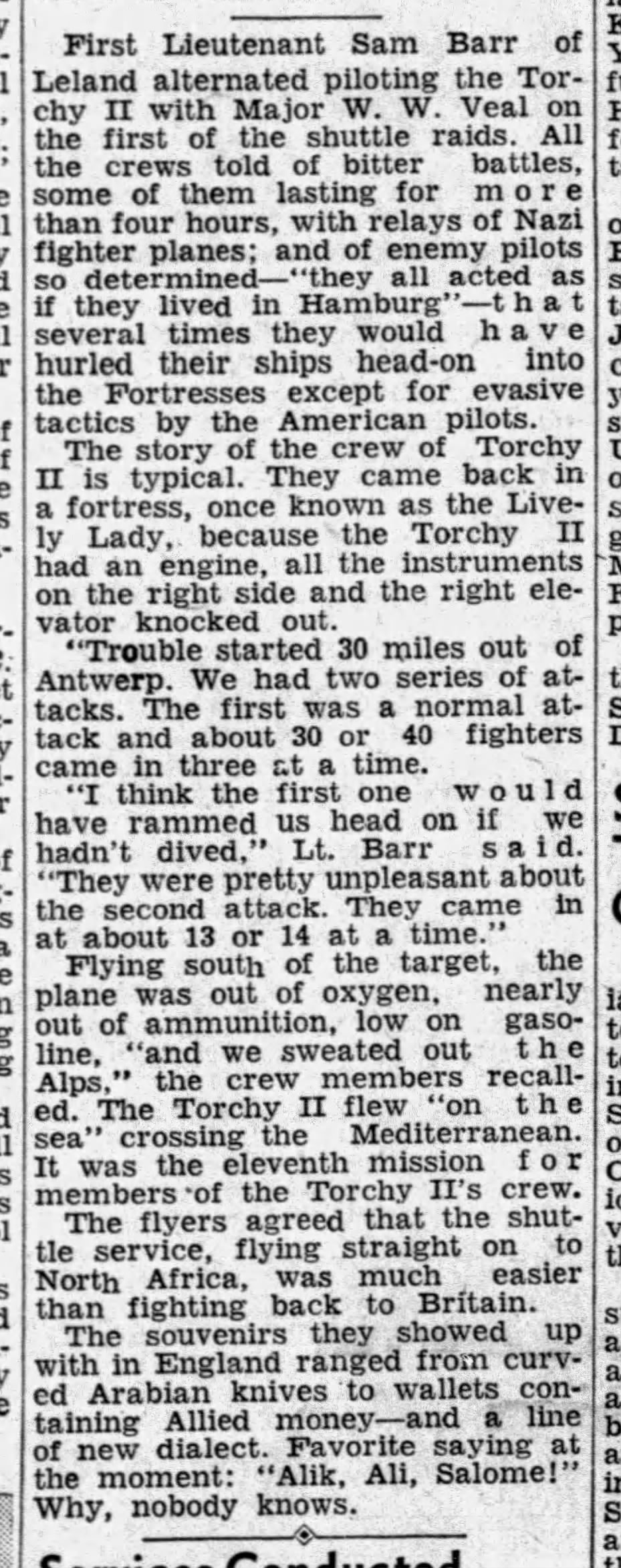
| Sam Barr 1st shuttle raid | Clarion-Ledger Oct 8 1943 | 12:00 am | |||||
| Frank Gregory shuttle mission part 1 | Greeley Daily Tribune July 8 1944 | 12:00 am | |||||
| Frank Gregory shuttle mission part 2 | Greeley Daily Tribune July 8 1944 | 12:00 am | |||||
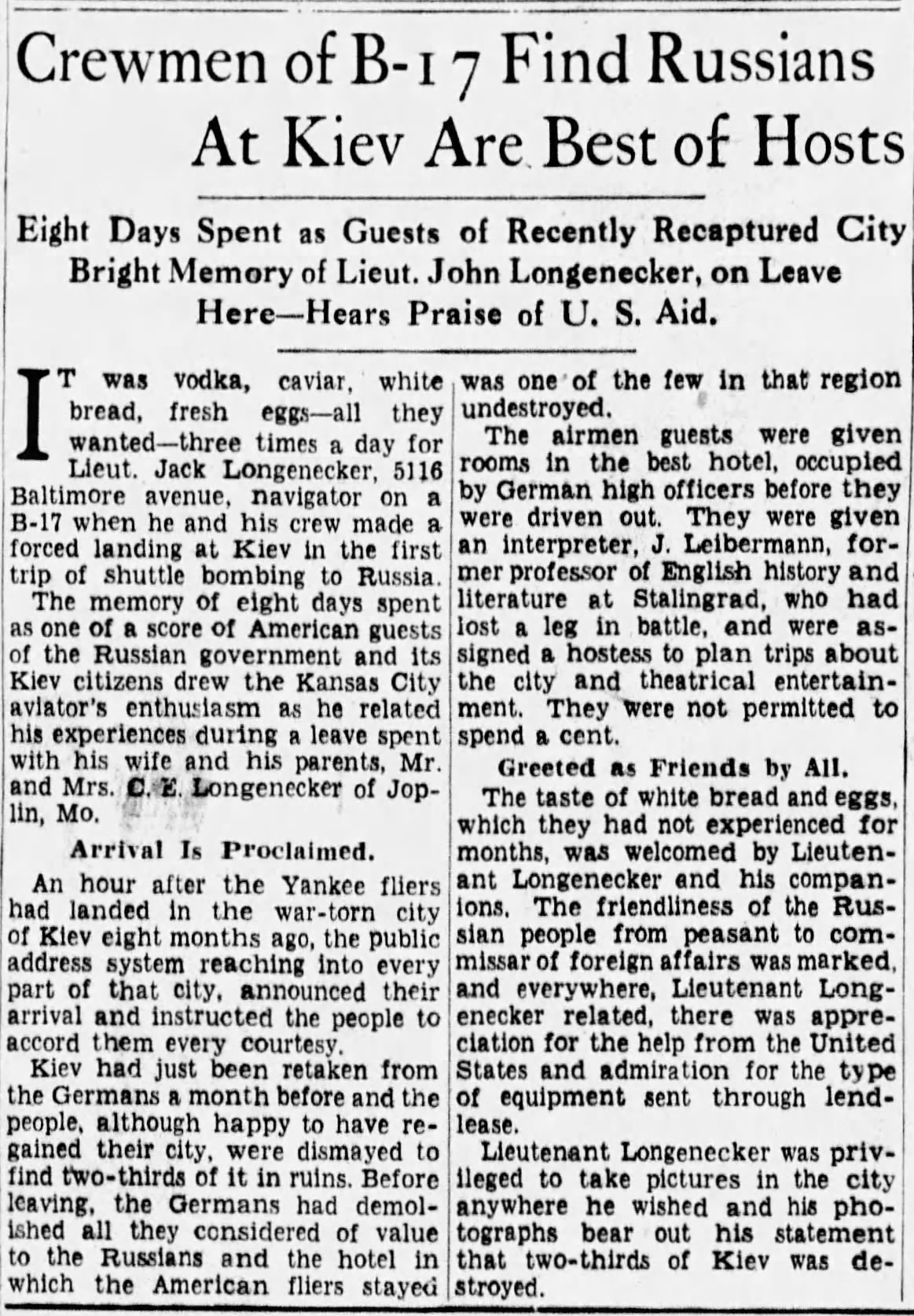
| Jack Longenecker tells of landing in Kiev | The Kansas City Star Sept 1 1944 | 12:00 am |


Photos
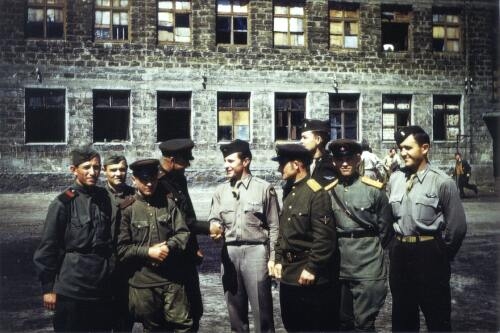
Click here to see album - 16 items
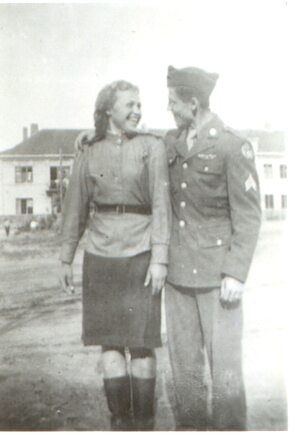
Click here to see album - 16 items
Click here to see album - 16 items
Click here to see album - 16 items
Click here to see album - 16 items
Click here to see album - 16 items
Click here to see album - 16 items
Click here to see album - 16 items
Click here to see album - 16 items
Click here to see album - 16 items
Click here to see album - 16 items
Click here to see album - 16 items
Click here to see album - 16 items
Click here to see album - 16 items
Click here to see album - 16 items

Click here to see album - 16 items