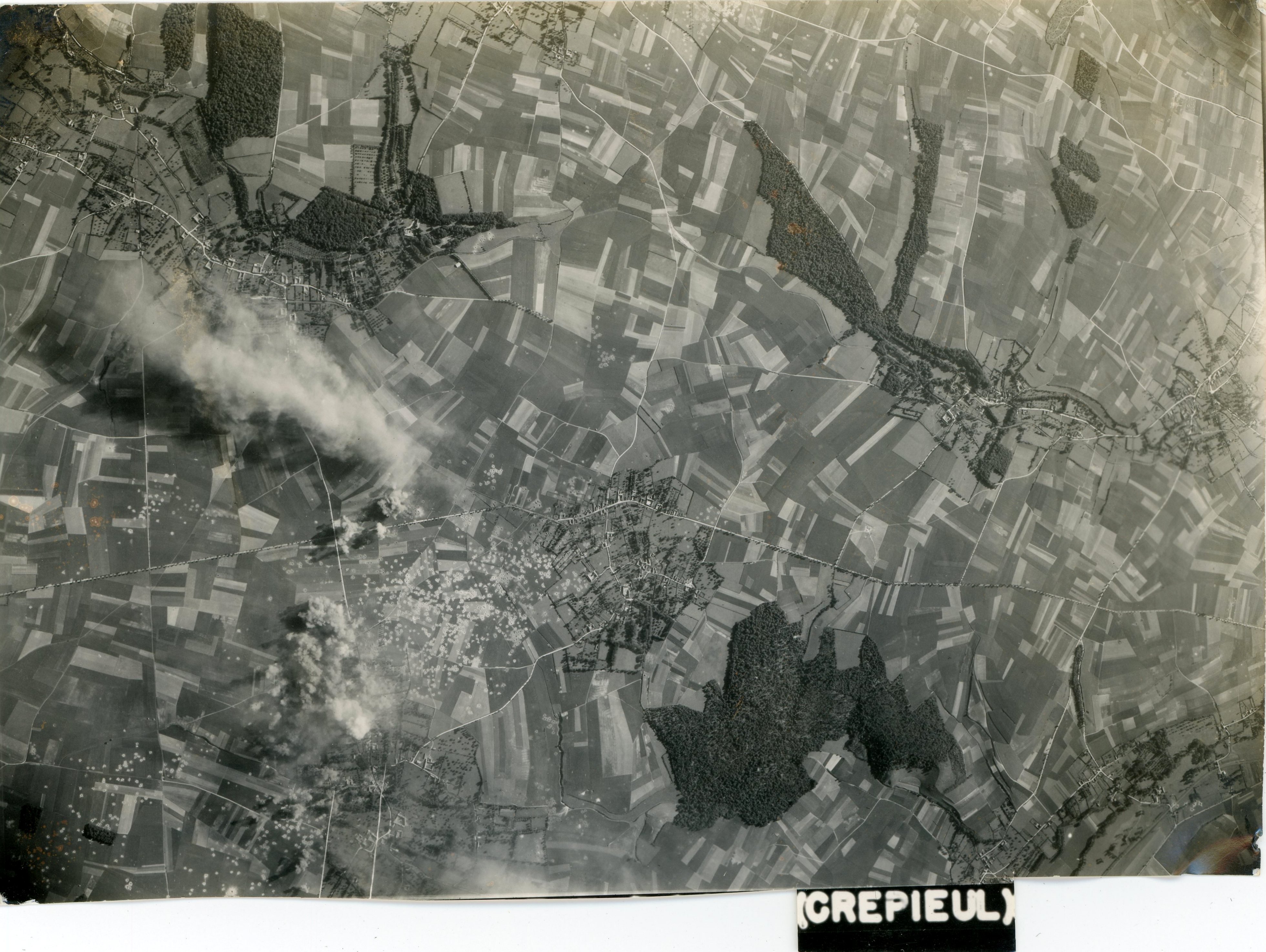
Mission Date: July 6, 1944
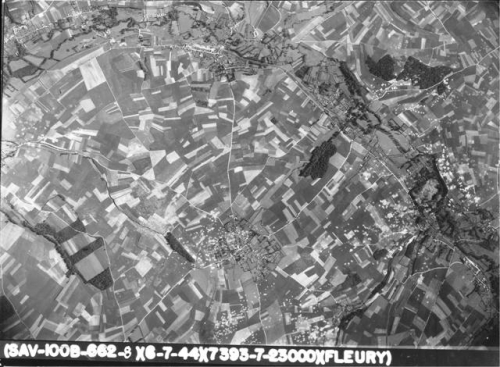
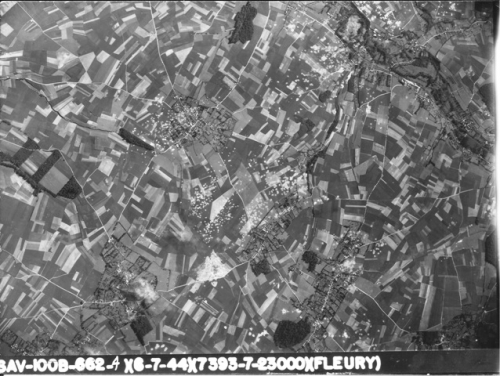
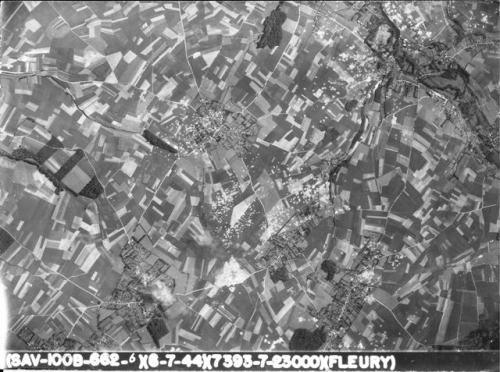
FLEURY, CREPEUIL (NOBALL)
100th BG Mission #: 154
Mission Summary
ON THIS DAY...JULY 6, 1944
According to the London newspapers on July 4, the German robot bombs or ‘buzz-bombs’ that had been concentrated on that city for the previous three weeks had in total “killed 2752 and sent 8,000 to hospitals...London was evacuating children, as in 1940…An unstated number of American soldiers have been killed. Schools, hospitals and churches were among the buildings hit by the robots, which carry 2,200 pounds of explosives.” Prime Minister Churchill was taking a great deal of heat in the press from the members of parliament for the postponement of his address to the House of Commons about the bombs, an address rescheduled for July 6.
American air crews were being awakened for the 8th Air Force’s first force of bombers flying that Thursday to eighteen various ‘no-ball’ sites located along the coast and in the Pas de Calais area.
At Thorpe Abbotts, twenty-five crews had already checked in with the attendance man for the 0330 briefing and the room was filled with the nervous banter from the eight green crews of Charles Streed, Jackson Phelps, Albert Trommer, Leslie Roediger, Dale Darby, Donald Waters, Bert Scott and William Kennedy. According to pilot Harvey Dickert, now a veteran flier of seven combat missions, “They had a beauty dreamed up, a strategic mission to Bremen, Germany, but during briefing they changed the target to NoBall. Everyone concerned was a little happier.” With the original Field Order 306 and 307 cancelled, F.O 308 would take the 13CBW on a tactical mission instead to sites located in France and from where the Germans had been launching the ‘buzz-bombs’ aimed at London.
Planning on attacking five separate locations, the field order called for each Group in the 13CBW to fly two formations with the 100BG targeting both the Crepieul and Fleury, France locations. The 95BG’s formations would attack Crepieul and Fiefs while the 390th’s would attack Crepy and Pressin.
Reviewing the formation sheets, the pilots saw that the Crepieul formation would be led by Robert Rosenthal flying as Command Pilot with James Noble with Richard Miller and Stanley Major as his wingmen. The second element lead would be William Ryan with Murray Johnson and Paul Jones. The High flight would be led by Walleck flying with Ferdinand Herres with Charles Streed and Bert Scott as wingmen while the Low would be led by Ernest Zapf with Dale Darby and William Kennedy. Marquard Anderson would fly as the spare for this formation.
The 100th’s formation flying to Fleury would be led by Herbert Howard flying with Austin Dunlap with Albert Trommer and Morris Clark as wingmen. The second element Lead would be Henry Rosine with Donald Waters and Leslie Kassebaum. The High, led by Raymond Monrad would have Lloyd Delaney and Harvey Dickert as his wingmen while the Low would be led by Glenn Rake with Jackson Phelps and Leslie Roediger. Their spare would be flown by Anthony Gallagher.
Conditions over the continent were briefed to be CAVU and the S-2 Officer warned the crews about the German gunners aiming for them from below. For those targeting Crepieul, the IP was on the edge of a flak defense so evasive action was suggested after making their turn at the IP. For the Fleury formation, the run from the IP to the target was on the edge of a twelve gun defense and “on withdrawl, the left turn is the quickest way out of the flak area.”
With the ships loaded up with twenty 250 lb bombs, take-off and assembly into Groups was successful. With no Wing formation flown, the 13CBW’s Groups would fly as single groups and fall in to their respective places within the Divisional line behind the 4 CBW’s Groups and ahead of the 45th’s : 100A, 390A, 100B, 95B, 390B, 95A.
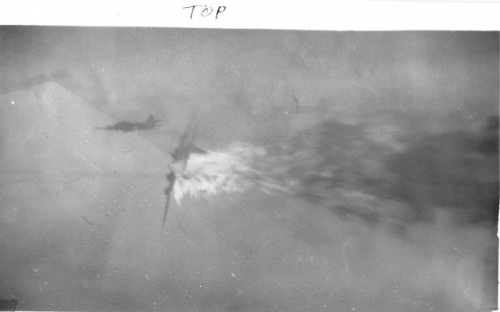
As the English coast was crossed, the unneeded spare ships flown by Anderson and Gallagher returned to base. Pilot Harvey Dickert, flying in the 100th’s formation to Fleury tells us, “Climbed to altitude over England and hit the French coast at 24,000 feet. Picked up two areas of flak, the first we skirted but the other one was a wall across the bomb run. Heavy bursts but not very accurate. No ships damaged and we didn’t pick up any skin holes. Waist gunners only heard one burst, also saw about six rockets. They were close for rockets, only about a 100 yards to our right and level. Dropped twenty 250 pound general purpose bombs. Pretty good hit, haven’t seen the pictures yet. Think results were good though, dropped bombs and headed out to sea again. Mission on five hours long, wish they would all be that way.”
With a shorter mission, the ships were back at base by 0938 hours that morning with pilot Leslie Kassebaum calling it a “nice safe mission.” Thankful to have completed his #1 combat mission was WG Lewis Payne with the Jackson Phelps crew. He recorded into his diary, “Had prayer at 06:15 AM…Got 2 pieces of flak in right wing. This was my first mission on the enemy. We flew purple heart corner.” Albert Trommer’s crew had their #1 mission under their belts. His NAV James “Buddy” Wright recorded, “We flew our first combat mission today. It wasn’t so bad. We only had one hole in the plane. Stayed in barracks the rest of the day. May fly another one in the morning”
Later that day, Churchill would give his “reassuring address” about the pilotless bombs to parliament and the public stating in part, “…I think it only just to the British and American Air Forces to record the delay and diminution in the scale of attack to which we are now exposed by their untiring and relentless efforts…
Here I must saw a word about our American friends and Allies in London, from the highest official to the ordinary soldier whom one meets, they have in every way made common cause with us and been forthcoming as helpers with assistance of very kind. (Cheers) No one can visit a bomb site where an explosion has recently taken place but see how very quickly they are upon the scene to give a helping hand to any one in distress. (Cheers)…
The same is true of the great H.Q. under General Eisenhower, where they are conducting this great battle, where apart from that every conceivable assistance is given to our Forces and Air Services. (Cheers) It will be another tie, I think, between our two people that they should see some of what we go through in London and take a generous part in facing its burden…
I am very careful to be vague about areas. The weather, however, during the month of June has been unfavourable to us for every purpose. In Normandy it has robbed us of a great part of the use of our immense superiorities. These battles we are gaining in Normandy are being won without the extraordinary and overwhelmingly exceptional aid of the vast Air Force we had collected for the purpose, but when the weather improves these great new reinforcements will come into play…It has also reduced the blows we are striking at every available opportunity at the launching stations or suspicious points on the other side of the Channel…
It may be a comfort to some to feel that they are sharing in no small degree the perils of our soldiers overseas, and that the blows which fall on them diminish others which in other forms would have smitten our fighting men and their Allies. But anyhow I am sure of one thing - that London will never be conquered, and will never fall, and that her renown triumphing over every ordeal, will long shine among men.” (Loud cheers.)
Bombing Results
Bombing Results: MISSED
Aircraft Lost: 0
Crew Lost: 0
Claims of Enemy Losses (CLS): 0
Aircraft Returned: