Mission Date: September 11, 1944
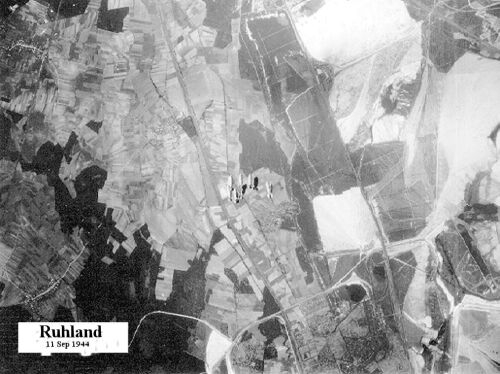
RUHLAND, OIL REFINERY
100th BG Mission #: 195
Mission Summary
ON THIS DAY…SEPTEMBER 11,1944
In the early morning briefing of September 11, aircraft and position assignments were reviewed by the pilots. Leading the 100BG that day would be Major Maurice Youngs, flying with George Fory. The 418th’s John McLaughlin, Richard Miller, Murray Johnson, Wilbert Ivosevic and John Fabian would fly behind Fory in the Lead Squadron.
The 418th’s David Armstrong, Harry Hempy and Donald Jones would as its Low element while the 349th Squadron would supply the high element with Ferdinand Herres, Thomas Kemp and John Furrer.
The 351st would lead the High formation under the command of Neal Scott flying with Leslie Roediger in the second PFF. Robert Jenkins and Dale Darby would complete the first element while the 349th would supply the second element with Robert Chamberlain, Willis Miller and Walter Bailey. The 351st would supply the remainder of the crews of Edward Simmons, Oren Hopkins and Donald Ellison as the High’s high element and Ronald Cumming, Harvey Dickert, Luther Bennett and Paul Kramp flying as the High’s low.
The 350th Squadron would fly the majority of the Low group, led by John Giles as Command Pilot, flying with John Shelly. Completing the lead squadron would be Joseph Raine, Albert Trommer, Harold Taylor, Howard Schulte and Paul Corley. The Low’s low would be led by Wesley Carlton with Hugh Holladay and Lawrence Riegel as his wingmen. Cecil Daniels was assigned the dangerous ‘Tail End Charlie’ slot. The 349th would also supply the Low’s high element with Charles Baker, Raymond Heironimus and Orville Everitt.
The 3rd Division’s B-17s would be targeting three oil refineries located at Ruhland, Böhlen and Brux in Eastern Germany. The Division line, led by the 92CBW in the first wing would target Ruhland-Schwarzheid. The 100BG, flying as the 13A and the 95BG leading a composite wing in 13B would target Ruhland-Schwarzheid, thirty-seven miles northeast of Dresden as their Primary target.
Take-off and assembly was without incident, with good visibility and no clouds over England. Before entering the Divisional line, Cecil Daniels, fortuitously pulled his B-17 out of the Low formation due to a broken ball turret and returned to base.
Departing the English coast at Felixstowe, the 100BG continued its climb over the Channel’s clear skies. Across the Dover Strait, Ronald Cumming was the next to abort due to problems in his #3 engine. Jettisoning his bombs in the sea, he returned to base while Harvey Dickert took over his position as the element lead. After crossing the Belgian coast, Ferdinand Harris pulled his B-17 out of formation due to an engine fire. Heading back across the Channel, the crew was unable to extinguish the fire, so Herres rang the bail out bell. All of the crew, including Herres, parachuted safely into Southern England while his aircraft crashed on the Isle of Sheppey.
Clouds were encountered as the formation headed deeper into Germany. After climbing to 21000 feet, the 100th’s lead ship lost sight of the 92CBW. Continued on course, climbing to 25500 feet through the 8/10 cloud coverage, the 100th’s wing lead notified the formation that bombing would be “blind” due to the cloud coverage.
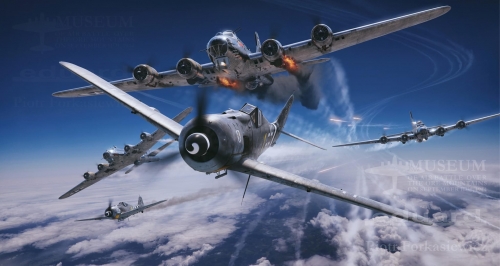
At 1210, as the 100BG neared its IP on the Czech-German border and with no forewarning from the VHF radio, a swarm of FW 190s and ME-109s began a mass attack on the 100th’s Low formation, firing away with 20 mm guns.
Flying in the Low group, nineteen year-old BTG Richard Barnett in Raymond Heironimus’ Fortress was expending his ammo fast. He tells us, “The Germans came in first on our lead bombers and I saw our squadron leader’s plane take a direct hit and go down burning…This happened during the first two waves which came down on us. I was firing my guns constantly. I had got an FW in my sights in the first wave, and he exploded just a little way out. Just a second or so later, another German fighter came straggling down and I opened fire at 600 yards. Our navigator said he saw this fighter go down burning, and so I was credited officially with the enemy fighters in the first two fighters destroyed.”
The Low’s lead ship was heavily damaged and John Giles hit the bail out bell as his wing tips burned and his fuselage broke up. All crew members including Giles jumped from 25500 feet. Behind Gile’s B-17, Joseph Raine’s Fortress “simply exploded.” Albert Trommer’s B-17 was on fire and his CP Timothy Bradshaw tells us, “We were set on fire in the right wing and the bomb bays. The order was given to bail out. I sent Sgt. Severson (TTE) down to make a double check on the Bombardier (Groce) and Navigator (Wright). When I reached the escape hatch Sgt. Severson was trying to release it but it was stuck. I also tried, but failed, to release it. Finally Sgt. Severson and I started kicking on it and finally it fell out. I told Sgt. Severson to go, but because I had been slightly wounded, he asked me to go ahead. As far as I know Sgt. Severson and Lt. Wright followed immediately.”
In the second element, Harold Taylor’s ship was hit in a second pass by the fighters and his plane doing “a wingover, with fiery gas tanks and parts falling off” disappeared into the clouds.
According to his WG Harry Everhart, “As I had received no word to bail out, I stayed with my guns. I heard S/Sgt. P.L.Olson (BTG) exclaim that he had shot a plane himself. When I was aware that our plane was going to crash it was too late to parachute out so I stayed where I was as I supposed the rest of the crew did…”
After being hit by 20 mm shells, pilot Harold Schulte was knocked unconscious and his CP Richard Kiern flew the plane as their gunners continued to fight off the attackers. Their NAV Jerome Hutcheson tells us “From the moment of the first fighter attack, the pilot, Lt Howard R. Schulte, was unconscious, presumably from lack of oxygen. . . After continuing flying, the co-pilot, who was in command of the ship, decided that further attempts to put out the fire and return of our base would be of no avail and the order to bail out was given. The pilot had returned to consciousness, stating he was all right and unwounded to the co-pilot's inquiry. He immediately confirmed the co-pilots decision to abandon ship. I bailed out later. The Bombardier, Lt. Kenneth R. Summers later told me that he saw the pilot, Lt Schulte, and believed him to be the last person aboard the aircraft. When last seen he was flying the aircraft at 7500 feet altitude going down fast. One wing was a mass of flames due to flak damage…”
Severely damaged in the first attack, Paul Corley and CP Howard Pfeffer couldn’t keep their Fortress airborne. With their Fortress ”put out of action and headed for a sure crash, the crew “hit the silk”.
Edward Neu, flying as twenty-three year-old Wesley “Wes” Carlton’s copilot in the lead of the low element tells us, “Our ship was badly hit and on fire. Lt Carlton, who was flying in the right seat suffered wounds on the right side of his face and head. Lt. Carlton had his chute fastened to his harness the last time I saw him. While I was trying to move the Engineer's (Bagdasian) body from the escape hatch the ship exploded and I came to on the ground. Due to the fire in the bomb bay no one from the front of the ship could go to the rear, also the interphone was shot out so no communications in the ship was possible. Lt. Carlton's wounds seemed to be serious from the way he was bleeding. S/Sgt Schaefer (WG) and Watrous (TG) were in the rear of the ship and due to fire and no inter phone we could not communicate with them, although they were ordered by Lt. Carlton and myself to leave the ship before our inter phone was shot out."
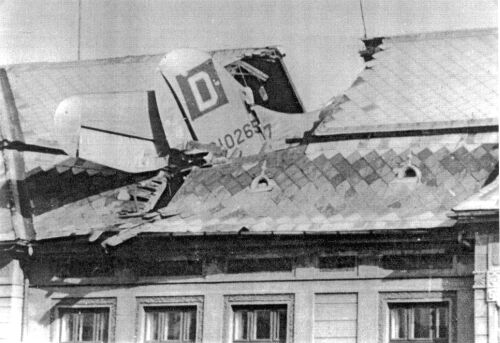
As Carlton’s wingman, Lawrence Riegel’s B-17 was also damaged on the first attack. His twenty-eight year-old BOM Charles Dolby recorded, “After the first attack we had our interphone knocked out and the oxygen supply under the pilots compartment was on fire. Due to lack of interphone we could not carry on a conversation and I know nothing of what took place in the rear of the ship. The Navigator, Lt. Prater and I jumped due to the burning condition of the plane.” Riegel’s vertical stabilizer and horizontal stabilizer had been blown off and his BTG, nineteen year-old Nestor Celleghin was blown out of his turret when the aircraft ultimately exploded.
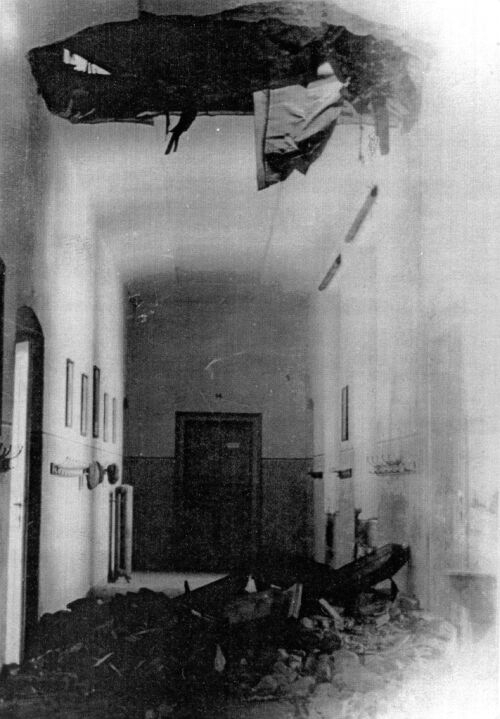
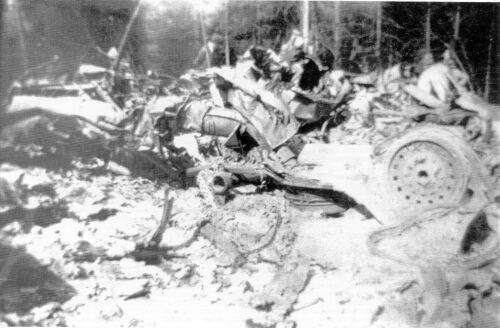
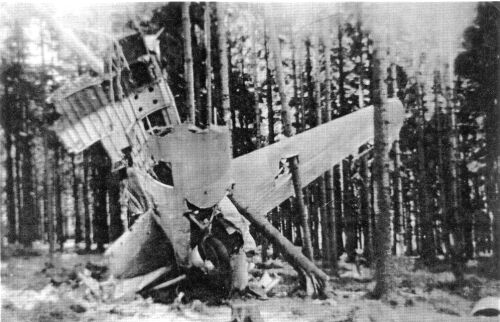
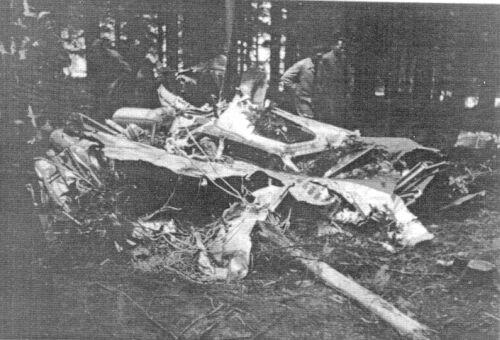
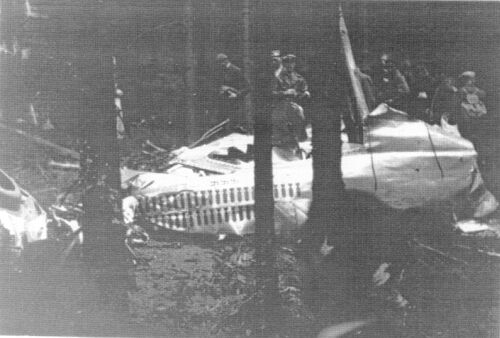
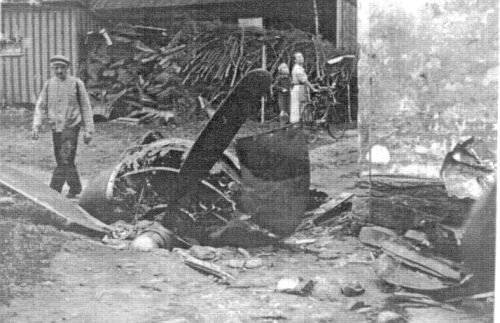
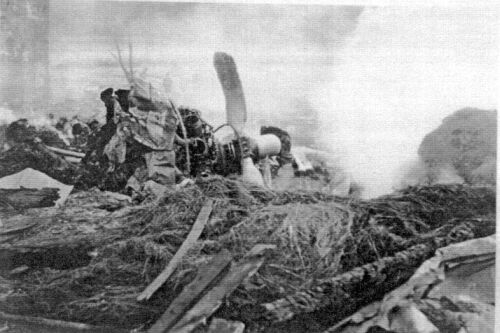
In Hugh Holladay’s Fortress, BOM Joseph Michaud tells us of the mayhem inside their aircraft. “We were attacked by approximately 60 FW 190s from 6 o’clock high into the sun… The first attack was made by one fighter on our plane, and he got direct hits in our tail, No.1 engine, batteries, bomb bays, and probably the radio room. Fire broke out in and around No.1 engine, and in the bomb bays. Our oxygen, radio, inter phone, and electrical system were all shot out on this first attack. The tail gunner (Duncan) was undoubtedly instantly killed when the tail was struck. Our plane started to slowly get out of control and left the formation in a left turn… At this time, several more FWs pounced on us and got many more hits in our plane. One 20mm hit #3 engine just as I was having the navigator pass the emergency oxygen bottles, or as I was trying to let him know that we were out of oxygen. This shell seemed to have blown up in our face, and the whole side of the plane was blown away. Shrapnel struck Lynch (NAV) in the face and stomach, and myself in the right side between pieces of my flak suit. This was a terrific blow and it knocked us out. I don't know how long I was dazed, but the next thing I remember is that the plane was going down in a spin, about 350 MPH. Just as I came to, I realized I had to get out, but the centrifugal force was so great that I couldn't move from my position in the nose. I reached over to put on my chute just the same and at this instant the plane blew up. The co-pilot went out through a hole in the side of the ship, and I went out through the wind screen by the force of the explosion. The plane broke just behind the radio room at the nose in front of the cockpit, at the tail, and both wings were ripped off. It is assumed the tail gunner (Robert Duncan) was killed instantly by a direct hit, and so was the navigator (William Pinson). The waist gunner (Nick DeSanto) went down in his section trying to help the ball turret man (Delbert Gadberry) get out of the turret, and the radio operator (Herlan Tarter) went down in his section, either unconscious, or disabled in some way if not dead at the time.”
More mayhem raged in the high element’s lead ship flown by twenty-four year-old Charles “Eddie” Baker. His copilot, Charles Chiles tells us, “After the enemy planes made their first attack, our inter-phone system was shot out. Lt Baker & myself tried to use alternate sources but it was impossible. A fire was raging in the bomb bay and the instrument panel was shot up badly. Lt. Baker rang the bell indicating that we were to abandon ship…” Their TTE, Eugene Damrel, who had turned twenty-one years-old five days earlier, had his hand shot off. Chiles, responsible for administering first aid to any wounded crew stated, “Damrel was in shock and we were getting hit hard by ME-109s….I put a turniquet on Damrel, snapped on parachute and pushed him out…saw his chute deployed.” With smoke filling the oxygen masks, Chiles continued, “Baker pointed at my chute so I put in on and I put his on him under his flak suit while he was fighting the controls to get the ship on an even keel. We were leading the squadron but by that time we were either the only one left or the only one I could see & we were still on fire & still being attacked by enemy fighters & our guns were still going, how many I don't know. Baker tried to set up the Automatic pilot but it was laying on the floor. He motioned for me to get out…and as I turned around to signal the other men to get out, I was blown out just a few feet above the hatch…” A 20 mm shell had hit a gas tank and after the tank burst into flames, “the wings shriveled and the fuselage snapped in the middle.”
Baker’s wingman, twenty-three year-old Orville Everitt, was killed in the plane from the attacks and his copilot John Manniello received head injuries. Their oxygen system was shot out and TG, William Kenney had serious lung wounds and was unconscious. Kenney didn’t remember how he got out but tells us, “I heard in Germany from a fellow flyer that the ship blew up…”
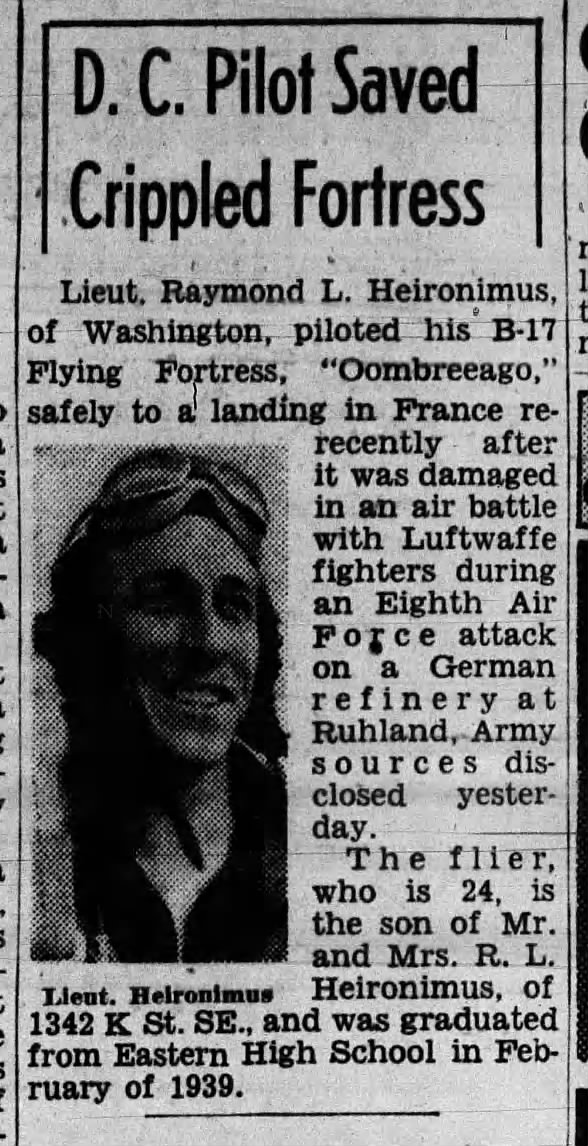
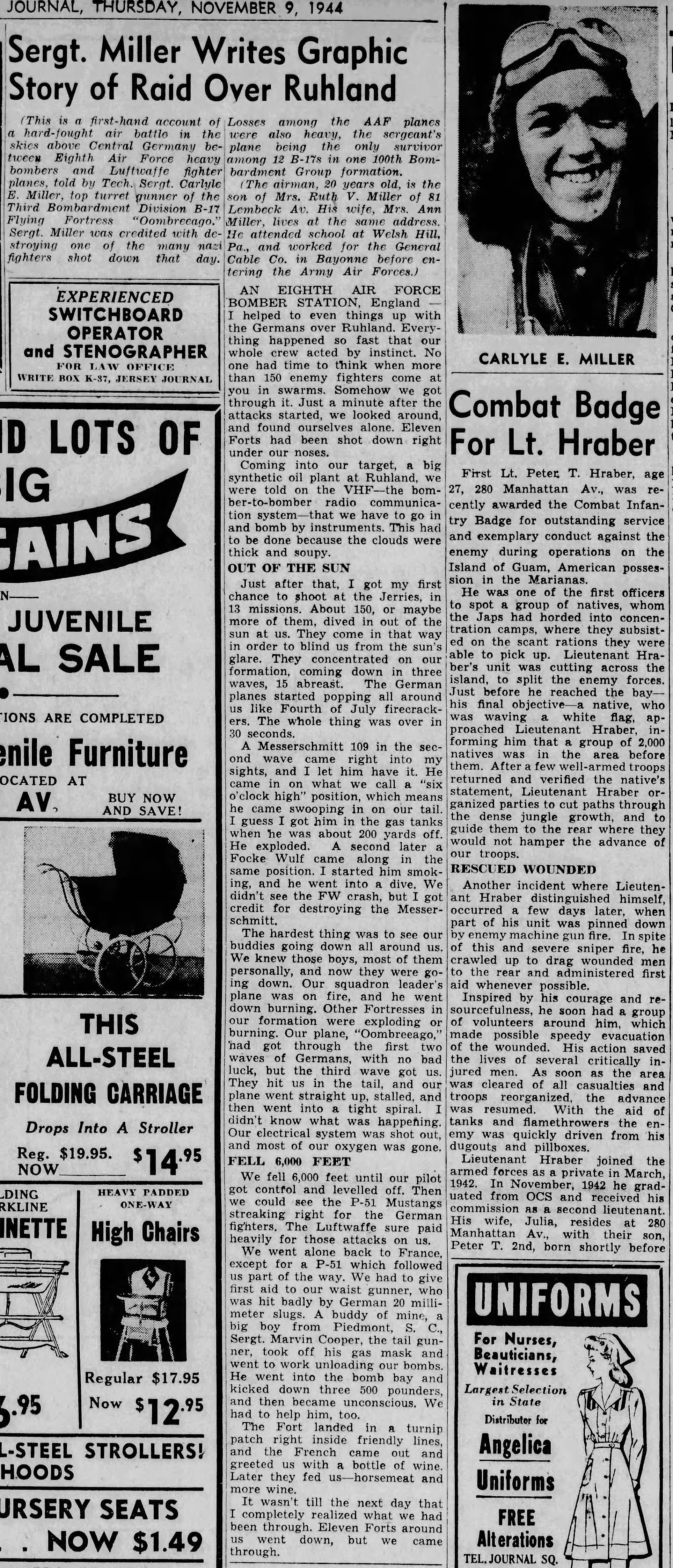
The gunners in Raymond Heironimus’ aircraft fought off three waves of German attacks. His TG Marvin Cooper tells us “Six E/A were stacked up at 6 o’clock low. They came straight in and at 600 yards I began firing on the lead E/A. It was a straight shot with no deflections and smoke began to come from his left wing. He came in to 300 yards without wavering where the plane suddenly exploded and disintegrated in mid air.” And his TTE Carlyle Miller reported, “FW 190 came in alone following the third wave of fighters. I picked him up at 6 o’clock high 500 yards out and fired on him as he came in and veered off to the left at 9 o’clock. As he passed from view I could see that fire was coming from the right wing root…then a single EA came in at 7 o’clock as I was trying to get on another EA on our right wing. I swung around to 7 o’clock and started firing at a range of 200 yards. I saw smoke come from the engine and the E/A fell off to 8 o’clock low and exploded.”
Heironimus’ BTG Richard Barnett tells us that on the third wave of fighters, their B-17 was “hit in the tail, and the plane went straight up, stalled, and then went down in a tight spiral. We lost 6000 feet of altitude before our pilot pulled out of the spiral. By then the P-51 Mustangs had come streaking in to chase the Jerries away. The whole three waves had come and gone in 39 seconds…” In the spin, their ROG, William Terry not waiting for a bailout bell was the only crew member to bail out. Miraculously, Heironimus and his copilot Glen Peavy regained control of their Fortress and headed for the front lines. WG Ray Carl had been wounded and another gunner had become unconscious while trying to kick the bombs out without his oxygen mask on. Preparing for a crash landing, Heironimus was heard over the radio to say that he would try for Paris with only seventy-five gallons of gas left.
With the entire Low group disappearing in a matter of minutes, the German fighters turned their sites on the low element in the Lead group but the remaining gunners stayed formidable defenders. In Donald Jones’ Fortress, TG Sam Foushee destroyed a FW-190 while BOM Ralph Farrell “nailed an e/a as it swept in from 11 o’clock.” Armstrong’s TTE Warren West and TG Charles Vogel destroyed another fighter while BTG Dale Ehlenfelt had a “probable” and TOG Beamer damaged another. Although in Harry Hempy’s Fortress, TG, Charles Emerson had been severally wounded when the tail was hit by a 20 mm and the ammo box exploded, Emerson would destroy one of the fighters. BTG Donald Farley would get a “probable” and damage another. Hempy’s B-17 would absorb four 20 mm hits in its left wing, lose its #1 engine, #2 booster pump, #4 prop and its oxygen system in the back of the plane but would continue to fly.
From 27000 feet, the High formation’s gunners blasted the fighters coming in from multiple directions and the smell of cordite rapidly filled each B-17. BOM Richard Tunnicliff in Roediger’s lead ship, manned the chin turret and destroyed one of the attackers. “FW 190 slipped up to within 150 yards of lead A/C without being seen because chin turret gunner was firing at E/A at 11 o’clock low. Command pilot called chin turret gunner’s attention to E/A level and 150 yards out. Tunnicliff gave several short bursts and E/A burst into flames just behind cockpit. EA went down flaming, with flames reaching back to empennage.”
In Walter Bailey’s B-17, his TTE Calvin Dollar tells us, “They really hit the boys below us. I saw 4 Forts and 2 FW’s go down so fast I was dazed. Next thing I saw was a FW coming in at 7:00 O’Clock on a pursuit curve on our tail. I put my sights on him and squeezed the trigger. I knew he was out of range but I fired any way. I was scared stiff to tell the truth. The attack lasted about 3-5 min. The P-51’s came in and the FW’s wouldn’t stay and fight. We didn’t get hit but ————. Flak was extremely heavy but I didn’t notice it because of the fighters.”
And Pilot, Harvey Dickert, on his #30 mission recorded, “At last it happened, we were hit by four waves of enemy fighters, about 120 in all. They wiped out our low Group completely, except for several ships limping towards Paris…We knocked down three confirmed and damaged three others. Humphrey (BTG), Collier (WG), Jack (BOM) and Monk did all the shooting. All four got one Me-109. Collier and Hump got (BTG) one extra Me 109 apiece. Jack and Monk damaged three others, two of these went down but we think Hempy’s tail gunner did the damage to those FW-190’s. I saw Monks tracers go into three of them – the two the tail gunner got and one of ours…Hit us when divisions split up for other similar targets. We really earned the DFC we got by completing this one.”
The 100BG still had a job to complete and what was left of the wing continued on, finally making the turn onto the dangerous bomb run. Flying through the moderate flak but thankfully inaccurate, the bomb bay doors were opened and at 1238 hours, bombs were away from the ships still remaining.
Making an immediate sharp one hundred eighty degree turn to the right, the 100BG headed to the Rally Point, without losing another ship. Following the briefed route out however, the Fory and Youngs lead PFF aborted due to two feathered engines. Roediger and Scott, as Deputy Lead took over and brought the formation home to Thorpe Abbotts.
Trailing, Fory was eventually able to get his engines restarted and remained in trail of the 100BG until the Belgian Coast was departed.
After a very long nine hour mission with many ships low on oxygen, the 100BG’s Fortresses landed at Thorpe Abbotts with flares indicating wounded aboard. Ambulances were sent out for the wounded and the numb fliers headed into Interrogation where the harrowing details tumbling from their mouths would be recorded.
The Low group’s crews of Giles, Raine, Trommer, Taylor, Schulte, Corley, Carlton, Holladay, Riegel, Baker and Everitt would never return, with all airmen either being KIA or becoming POWs. Heironimus and Peavy crash landed their B-17 in France, in a turnip patch, with all crew safe and
most of the crew returning to base, where they would continue to fly.
Crews scheduled to fly the mission: W Miller, Everitt, Daniels, Schulte, Bailey, Chamberlain, Shelly with Captain Giles, Corley, Furrer, Herres, Trommer, Raine, Baker, Heironimus, Taylor, Holladay, Kemp, Riegel, Carlton, Jenkins, Cumming, Simmons, Johnson, Fabian, Dickert, Kramp, Miller, Fory, Bennett, Darby, Hempy, Roediger, Ellison, Ivosevic, Armstrong, Hopkins, McLaughlin, Jones
In the early morning briefing of September 11, aircraft and position assignments were reviewed by the pilots. Leading the 100BG that day would be Major Maurice Youngs, flying with George Fory. The 418th’s John McLaughlin, Richard Miller, Murray Johnson, Wilbert Ivosevic and John Fabian would fly behind Fory in the Lead Squadron.
The 418th’s David Armstrong, Harry Hempy and Donald Jones would as its Low element while the 349th Squadron would supply the high element with Ferdinand Herres, Thomas Kemp and John Furrer.
The 351st would lead the High formation under the command of Neal Scott flying with Leslie Roediger in the second PFF. Robert Jenkins and Dale Darby would complete the first element while the 349th would supply the second element with Robert Chamberlain, Willis Miller and Walter Bailey. The 351st would supply the remainder of the crews of Edward Simmons, Oren Hopkins and Donald Ellison as the High’s high element and Ronald Cumming, Harvey Dickert, Luther Bennett and Paul Kramp flying as the High’s low.
The 350th Squadron would fly the majority of the Low group, led by John Giles as Command Pilot, flying with John Shelly. Completing the lead squadron would be Joseph Raine, Albert Trommer, Harold Taylor, Howard Schulte and Paul Corley. The Low’s low would be led by Wesley Carlton with Hugh Holladay and Lawrence Riegel as his wingmen. Cecil Daniels was assigned the dangerous ‘Tail End Charlie’ slot. The 349th would also supply the Low’s high element with Charles Baker, Raymond Heironimus and Orville Everitt.
The 3rd Division’s B-17s would be targeting three oil refineries located at Ruhland, Böhlen and Brux in Eastern Germany. The Division line, led by the 92CBW in the first wing would target Ruhland-Schwarzheid. The 100BG, flying as the 13A and the 95BG leading a composite wing in 13B would target Ruhland-Schwarzheid, thirty-seven miles northeast of Dresden as their Primary target.
Take-off and assembly was without incident, with good visibility and no clouds over England. Before entering the Divisional line, Cecil Daniels, fortuitously pulled his B-17 out of the Low formation due to a broken ball turret and returned to base.
Departing the English coast at Felixstowe, the 100BG continued its climb over the Channel’s clear skies. Across the Dover Strait, Ronald Cumming was the next to abort due to problems in his #3 engine. Jettisoning his bombs in the sea, he returned to base while Harvey Dickert took over his position as the element lead. After crossing the Belgian coast, Ferdinand Harris pulled his B-17 out of formation due to an engine fire. Heading back across the Channel, the crew was unable to extinguish the fire, so Herres rang the bail out bell. All of the crew, including Herres, parachuted safely into Southern England while his aircraft crashed on the Isle of Sheppey.
Clouds were encountered as the formation headed deeper into Germany. After climbing to 21000 feet, the 100th’s lead ship lost sight of the 92CBW. Continued on course, climbing to 25500 feet through the 8/10 cloud coverage, the 100th’s wing lead notified the formation that bombing would be “blind” due to the cloud coverage.
At 1210, as the 100BG neared its IP on the Czech-German border and with no forewarning from the VHF radio, a swarm of FW 190s and ME-109s began a mass attack on the 100th’s Low formation, firing away with 20 mm guns.
Flying in the Low group, nineteen year-old BTG Richard Barnett in Raymond Heironimus’ Fortress was expending his ammo fast. He tells us, “The Germans came in first on our lead bombers and I saw our squadron leader’s plane take a direct hit and go down burning…This happened during the first two waves which came down on us. I was firing my guns constantly. I had got an FW in my sights in the first wave, and he exploded just a little way out. Just a second or so later, another German fighter came straggling down and I opened fire at 600 yards. Our navigator said he saw this fighter go down burning, and so I was credited officially with the enemy fighters in the first two fighters destroyed.”
The Low’s lead ship was heavily damaged and John Giles hit the bail out bell as his wing tips burned and his fuselage broke up. All crew members including Giles jumped from 25500 feet. Behind Gile’s B-17, Joseph Raine’s Fortress “simply exploded.” Albert Trommer’s B-17 was on fire and his CP Timothy Bradshaw tells us, “We were set on fire in the right wing and the bomb bays. The order was given to bail out. I sent Sgt. Severson (TTE) down to make a double check on the Bombardier (Groce) and Navigator (Wright). When I reached the escape hatch Sgt. Severson was trying to release it but it was stuck. I also tried, but failed, to release it. Finally Sgt. Severson and I started kicking on it and finally it fell out. I told Sgt. Severson to go, but because I had been slightly wounded, he asked me to go ahead. As far as I know Sgt. Severson and Lt. Wright followed immediately.”
In the second element, Harold Taylor’s ship was hit in a second pass by the fighters and his plane doing “a wingover, with fiery gas tanks and parts falling off” disappeared into the clouds.
According to his WG Harry Everhart, “As I had received no word to bail out, I stayed with my guns. I heard S/Sgt. P.L.Olson (BTG) exclaim that he had shot a plane himself. When I was aware that our plane was going to crash it was too late to parachute out so I stayed where I was as I supposed the rest of the crew did…”
After being hit by 20 mm shells, pilot Harold Schulte was knocked unconscious and his CP Richard Kiern flew the plane as their gunners continued to fight off the attackers. Their NAV Jerome Hutcheson tells us “From the moment of the first fighter attack, the pilot, Lt Howard R. Schulte, was unconscious, presumably from lack of oxygen. . . After continuing flying, the co-pilot, who was in command of the ship, decided that further attempts to put out the fire and return of our base would be of no avail and the order to bail out was given. The pilot had returned to consciousness, stating he was all right and unwounded to the co-pilot's inquiry. He immediately confirmed the co-pilots decision to abandon ship. I bailed out later. The Bombardier, Lt. Kenneth R. Summers later told me that he saw the pilot, Lt Schulte, and believed him to be the last person aboard the aircraft. When last seen he was flying the aircraft at 7500 feet altitude going down fast. One wing was a mass of flames due to flak damage…”
Severely damaged in the first attack, Paul Corley and CP Howard Pfeffer couldn’t keep their Fortress airborne. With their Fortress ”put out of action and headed for a sure crash, the crew “hit the silk”.
Edward Neu, flying as twenty-three year-old Wesley “Wes” Carlton’s copilot in the lead of the low element tells us, “Our ship was badly hit and on fire. Lt Carlton, who was flying in the right seat suffered wounds on the right side of his face and head. Lt. Carlton had his chute fastened to his harness the last time I saw him. While I was trying to move the Engineer's (Bagdasian) body from the escape hatch the ship exploded and I came to on the ground. Due to the fire in the bomb bay no one from the front of the ship could go to the rear, also the interphone was shot out so no communications in the ship was possible. Lt. Carlton's wounds seemed to be serious from the way he was bleeding. S/Sgt Schaefer (WG) and Watrous (TG) were in the rear of the ship and due to fire and no inter phone we could not communicate with them, although they were ordered by Lt. Carlton and myself to leave the ship before our inter phone was shot out."
As Carlton’s wingman, Lawrence Riegel’s B-17 was also damaged on the first attack. His twenty-eight year-old BOM Charles Dolby recorded, “After the first attack we had our interphone knocked out and the oxygen supply under the pilots compartment was on fire. Due to lack of interphone we could not carry on a conversation and I know nothing of what took place in the rear of the ship. The Navigator, Lt. Prater and I jumped due to the burning condition of the plane.” Riegel’s vertical stabilizer and horizontal stabilizer had been blown off and his BTG, nineteen year-old Nestor Celleghin was blown out of his turret when the aircraft ultimately exploded.
In Hugh Holladay’s Fortress, BOM Joseph Michaud tells us of the mayhem inside their aircraft. “We were attacked by approximately 60 FW 190s from 6 o’clock high into the sun… The first attack was made by one fighter on our plane, and he got direct hits in our tail, No.1 engine, batteries, bomb bays, and probably the radio room. Fire broke out in and around No.1 engine, and in the bomb bays. Our oxygen, radio, inter phone, and electrical system were all shot out on this first attack. The tail gunner (Duncan) was undoubtedly instantly killed when the tail was struck. Our plane started to slowly get out of control and left the formation in a left turn… At this time, several more FWs pounced on us and got many more hits in our plane. One 20mm hit #3 engine just as I was having the navigator pass the emergency oxygen bottles, or as I was trying to let him know that we were out of oxygen. This shell seemed to have blown up in our face, and the whole side of the plane was blown away. Shrapnel struck Lynch (NAV) in the face and stomach, and myself in the right side between pieces of my flak suit. This was a terrific blow and it knocked us out. I don't know how long I was dazed, but the next thing I remember is that the plane was going down in a spin, about 350 MPH. Just as I came to, I realized I had to get out, but the centrifugal force was so great that I couldn't move from my position in the nose. I reached over to put on my chute just the same and at this instant the plane blew up. The co-pilot went out through a hole in the side of the ship, and I went out through the wind screen by the force of the explosion. The plane broke just behind the radio room at the nose in front of the cockpit, at the tail, and both wings were ripped off. It is assumed the tail gunner (Robert Duncan) was killed instantly by a direct hit, and so was the navigator (William Pinson). The waist gunner (Nick DeSanto) went down in his section trying to help the ball turret man (Delbert Gadberry) get out of the turret, and the radio operator (Herlan Tarter) went down in his section, either unconscious, or disabled in some way if not dead at the time.”
More mayhem raged in the high element’s lead ship flown by twenty-four year-old Charles “Eddie” Baker. His copilot, Charles Chiles tells us, “After the enemy planes made their first attack, our inter-phone system was shot out. Lt Baker & myself tried to use alternate sources but it was impossible. A fire was raging in the bomb bay and the instrument panel was shot up badly. Lt. Baker rang the bell indicating that we were to abandon ship…” Their TTE, Eugene Damrel, who had turned twenty-one years-old five days earlier, had his hand shot off. Chiles, responsible for administering first aid to any wounded crew stated, “Damrel was in shock and we were getting hit hard by ME-109s….I put a turniquet on Damrel, snapped on parachute and pushed him out…saw his chute deployed.” With smoke filling the oxygen masks, Chiles continued, “Baker pointed at my chute so I put in on and I put his on him under his flak suit while he was fighting the controls to get the ship on an even keel. We were leading the squadron but by that time we were either the only one left or the only one I could see & we were still on fire & still being attacked by enemy fighters & our guns were still going, how many I don't know. Baker tried to set up the Automatic pilot but it was laying on the floor. He motioned for me to get out…and as I turned around to signal the other men to get out, I was blown out just a few feet above the hatch…” A 20 mm shell had hit a gas tank and after the tank burst into flames, “the wings shriveled and the fuselage snapped in the middle.”
Baker’s wingman, twenty-three year-old Orville Everitt, was killed in the plane from the attacks and his copilot John Manniello received head injuries. Their oxygen system was shot out and TG, William Kenney had serious lung wounds and was unconscious. Kenney didn’t remember how he got out but tells us, “I heard in Germany from a fellow flyer that the ship blew up…”
The gunners in Raymond Heironimus’ aircraft fought off three waves of German attacks. His TG Marvin Cooper tells us “Six E/A were stacked up at 6 o’clock low. They came straight in and at 600 yards I began firing on the lead E/A. It was a straight shot with no deflections and smoke began to come from his left wing. He came in to 300 yards without wavering where the plane suddenly exploded and disintegrated in mid air.” And his TTE Carlyle Miller reported, “FW 190 came in alone following the third wave of fighters. I picked him up at 6 o’clock high 500 yards out and fired on him as he came in and veered off to the left at 9 o’clock. As he passed from view I could see that fire was coming from the right wing root…then a single EA came in at 7 o’clock as I was trying to get on another EA on our right wing. I swung around to 7 o’clock and started firing at a range of 200 yards. I saw smoke come from the engine and the E/A fell off to 8 o’clock low and exploded.”
Heironimus’ BTG Richard Barnett tells us that on the third wave of fighters, their B-17 was “hit in the tail, and the plane went straight up, stalled, and then went down in a tight spiral. We lost 6000 feet of altitude before our pilot pulled out of the spiral. By then the P-51 Mustangs had come streaking in to chase the Jerries away. The whole three waves had come and gone in 39 seconds…” In the spin, their ROG, William Terry not waiting for a bailout bell was the only crew member to bail out. Miraculously, Heironimus and his copilot Glen Peavy regained control of their Fortress and headed for the front lines. WG Ray Carl had been wounded and another gunner had become unconscious while trying to kick the bombs out without his oxygen mask on. Preparing for a crash landing, Heironimus was heard over the radio to say that he would try for Paris with only seventy-five gallons of gas left.
With the entire Low group disappearing in a matter of minutes, the German fighters turned their sites on the low element in the Lead group but the remaining gunners stayed formidable defenders. In Donald Jones’ Fortress, TG Sam Foushee destroyed a FW-190 while BOM Ralph Farrell “nailed an e/a as it swept in from 11 o’clock.” Armstrong’s TTE Warren West and TG Charles Vogel destroyed another fighter while BTG Dale Ehlenfelt had a “probable” and TOG Beamer damaged another. Although in Harry Hempy’s Fortress, TG, Charles Emerson had been severally wounded when the tail was hit by a 20 mm and the ammo box exploded, Emerson would destroy one of the fighters. BTG Donald Farley would get a “probable” and damage another. Hempy’s B-17 would absorb four 20 mm hits in its left wing, lose its #1 engine, #2 booster pump, #4 prop and its oxygen system in the back of the plane but would continue to fly.
From 27000 feet, the High formation’s gunners blasted the fighters coming in from multiple directions and the smell of cordite rapidly filled each B-17. BOM Richard Tunnicliff in Roediger’s lead ship, manned the chin turret and destroyed one of the attackers. “FW 190 slipped up to within 150 yards of lead A/C without being seen because chin turret gunner was firing at E/A at 11 o’clock low. Command pilot called chin turret gunner’s attention to E/A level and 150 yards out. Tunnicliff gave several short bursts and E/A burst into flames just behind cockpit. EA went down flaming, with flames reaching back to empennage.”
In Walter Bailey’s B-17, his TTE Calvin Dollar tells us, “They really hit the boys below us. I saw 4 Forts and 2 FW’s go down so fast I was dazed. Next thing I saw was a FW coming in at 7:00 O’Clock on a pursuit curve on our tail. I put my sights on him and squeezed the trigger. I knew he was out of range but I fired any way. I was scared stiff to tell the truth. The attack lasted about 3-5 min. The P-51’s came in and the FW’s wouldn’t stay and fight. We didn’t get hit but ————. Flak was extremely heavy but I didn’t notice it because of the fighters.”
And Pilot, Harvey Dickert, on his #30 mission recorded, “At last it happened, we were hit by four waves of enemy fighters, about 120 in all. They wiped out our low Group completely, except for several ships limping towards Paris…We knocked down three confirmed and damaged three others. Humphrey (BTG), Collier (WG), Jack (BOM) and Monk did all the shooting. All four got one Me-109. Collier and Hump got (BTG) one extra Me 109 apiece. Jack and Monk damaged three others, two of these went down but we think Hempy’s tail gunner did the damage to those FW-190’s. I saw Monks tracers go into three of them – the two the tail gunner got and one of ours…Hit us when divisions split up for other similar targets. We really earned the DFC we got by completing this one.”
The 100BG still had a job to complete and what was left of the wing continued on, finally making the turn onto the dangerous bomb run. Flying through the moderate flak but thankfully inaccurate, the bomb bay doors were opened and at 1238 hours, bombs were away from the ships still remaining.
Making an immediate sharp one hundred eighty degree turn to the right, the 100BG headed to the Rally Point, without losing another ship. Following the briefed route out however, the Fory and Youngs lead PFF aborted due to two feathered engines. Roediger and Scott, as Deputy Lead took over and brought the formation home to Thorpe Abbotts.
Trailing, Fory was eventually able to get his engines restarted and remained in trail of the 100BG until the Belgian Coast was departed.
After a very long nine hour mission with many ships low on oxygen, the 100BG’s Fortresses landed at Thorpe Abbotts with flares indicating wounded aboard. Ambulances were sent out for the wounded and the numb fliers headed into Interrogation where the harrowing details tumbling from their mouths would be recorded.
The Low group’s crews of Giles, Raine, Trommer, Taylor, Schulte, Corley, Carlton, Holladay, Riegel, Baker and Everitt would never return, with all airmen either being KIA or becoming POWs. Heironimus and Peavy crash landed their B-17 in France, in a turnip patch, with all crew safe and
most of the crew returning to base, where they would continue to fly.
Crews scheduled to fly the mission: W Miller, Everitt, Daniels, Schulte, Bailey, Chamberlain, Shelly with Captain Giles, Corley, Furrer, Herres, Trommer, Raine, Baker, Heironimus, Taylor, Holladay, Kemp, Riegel, Carlton, Jenkins, Cumming, Simmons, Johnson, Fabian, Dickert, Kramp, Miller, Fory, Bennett, Darby, Hempy, Roediger, Ellison, Ivosevic, Armstrong, Hopkins, McLaughlin, Jones
Bombing Results
Bombing Results: GOOD
Aircraft Lost: 12
Crew Lost: 100
Claims of Enemy Losses (CLS): 16
Aircraft Returned:
Media Articles
Use your thumb to scroll through the results box below.
| Media Item | Type | Page | Volume/Issue | Broadcast Source | Time | Description | File |
|---|---|---|---|---|---|---|---|
| Richard Barnett tells of crash Sept 11 1944 mission | The Star Herald November 16 1944 | 12:00 am | |||||
| Raymond Heironimus safely lands crippled Fortress | Ruhland Times Herald November 7 1944 | 12:00 am | |||||
| Carlyle Miller tells of Ruhland mission | The Jersey Journal November 9 1944 | 12:00 am |

Photos
Click here to see album - 17 items
Click here to see album - 17 items

Click here to see album - 17 items
Click here to see album - 17 items
Click here to see album - 17 items
Click here to see album - 17 items
Click here to see album - 17 items
Click here to see album - 17 items
Click here to see album - 17 items
Click here to see album - 17 items
Click here to see album - 17 items

Click here to see album - 17 items
Click here to see album - 17 items
Click here to see album - 17 items
Click here to see album - 17 items
Click here to see album - 17 items
Click here to see album - 17 items