Mission Date: October 6, 1944
BERLIN (SPANDAU), AC PARTS
100th BG Mission #: 208
Mission Summary
ON THIS DAY...OCTOBER 6, 1944
Many stressors weighed on airmen, not only in the sky but on the ground as well and the buzz bombs on the previous days brought a constant uneasiness to many at Thorpe Abbotts. On the 5th, buzz bombs were again over the base with four explosions close by at 0130, 1130, 1615 and 2000 hours. William B. Kennedy, a 351st pilot remembered the nerve wracking bombs. “From the ground, if the engine cut out after the bomb was past you, OK. If it cut out overhead, still OK. But if it cut out before it got to you, it was time to start sweating out the impact. So lying in bed one night waiting for the mission list to be posted on the door of our barracks, I heard the familiar hoarse, staccato sounds of an approaching Buzz Bomb. Quite sure that I was the only coward in the barracks who sweated these attacks and, wishing to conceal the fact that I was doing just that, I pulled the blanket over my head in order to secretly light a cigarette. That done, I propped up my pillow and leaned back to take a drag and wait. As I did, I looked up and down the barracks to make sure that I had not awakened anyone. There was a cigarette glowing in nearly every bunk.” Without much sleep that night, the twenty-one year-old pilot and the rest of his crew were awakened at 0330 for their #31 mission.
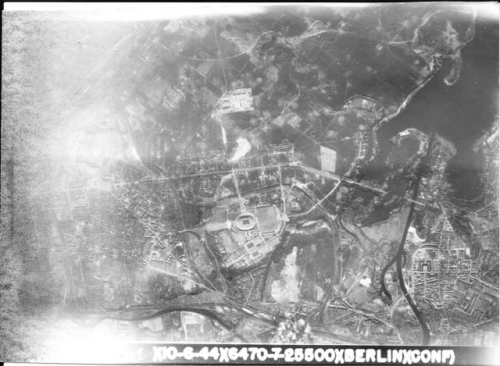
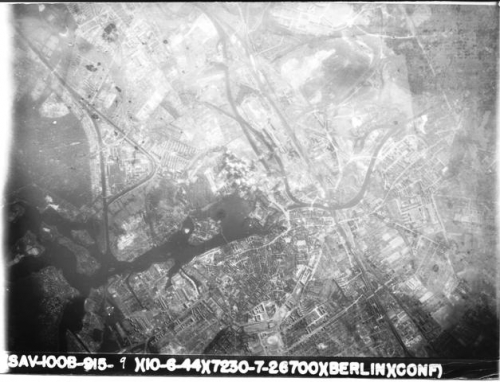
On October 6, under Field Order 441, the 3rd Division would be sending eleven combat wings to the western suburbs of Berlin where its primary targets would be the Spandau BMW aero engines plant, ordnance and military depots at Spandau and the Brosigwalde tank plant at Tegel.
At the 0430 briefing, the thirty-eight crews seated at Thorpe Abbotts listened intently as the S-2 Officer divulged the 100BG’s primary target as the aero engine plant at Spandau. CAVU conditions were expected and the Berlin target brought the expected groans and whistles from the men as they were briefed to expect heavy flak and enemy fighters.
Equally unnerved were those drawing Berlin as their #1 mission and those drawing it as a final one. They could argue which was worse on the nerves - the unknown of combat or what you knew combat reality to be? This would be the #1 mission for twenty-one year-old pilot Glenn Rojohn, his twenty-one year-old copilot William Leek and the rest of their crew who had been transferred from the 95BG to the 100BG a few weeks earlier. Arriving to Thorpe Abbotts a few days before Rojohn’s crew, the Frederick G. Reed crew was also scheduled for their #1. At the end of their tour of duty was the Lloyd Delaney crew and Delaney’s NAV George Tolbert tells us, “…We found ourselves in the tail end position and the Squadron Commander, who I think was Maj. Emberson at the time but may have been Maj Cruver, asked the Ops Officer Neil Scott, if he couldn’t do better for us on our last mission. He moved us into the upper squadron…” Replacing Delaney in the tail-end position was Frederick Reed and Tolbert continued, “Fate plays strange games.”
The 13CBW would fly three wing formations: the 13A made up of the 100BG, the 13B made up of the 95BG with the 385BG from the 4CBW flying as its low group, and the 13C made up of the 390BG. Flying as the 100BG’s command pilot would be twenty-nine year-old Major William H. Thompson, who would fly in the lead Pathfinder aircraft with James Seamans.
With take-offs commencing at 0725 hours, the 100BG formed into the 13A CBW without incident and proceeded to the Division assembly point at Great Yarmouth, falling in behind the 93rd CBW which was leading the Division column in two wings. Following, would be the 13CBW’s three wings, then the 45CBW and the 92nd with the 4th CBW flying last in line.
Flying over the North Sea, the enemy coast was visible for the first time in days. Having climbed to 24000 feet, the formations flew through the flak corridor between Cruxhaven and Bremerhaven where the flak was experienced as ‘meagre, inaccurate and barrage.’ The formations continued their climb to bombing altitude when Wilbert Ivosevic became the third 100th pilot to abort early, dropping his bombs near Hamburg before returning to base.
Reaching the IP at 1153 hours, the 100BG made its turn onto the bomb run, setting up for a visual bombing of their target. Fifty to seventy-five ME 109’s and FW 190’s were sighted throughout the area but the 100BG was lucky that day and none attacked. Robert Kazee, TG in Willis Miller’s B-17, on his #12 remembered, “This was our crew’s first mission to Berlin and the flak was very heavy and fighters showed up but P-51s were escorting today and they intercepted the German fighters and none got to the bombers in our group…”
However, Berlin’s defensive gunners were blazing away and the B-17s absorbed the heavy, intense and accurate flak throughout the bomb run. James Smith, WG on Walter Charles’ B-17 tells us, “Well today we hit the “Big B,” Berlin Boy, it was pretty rough. The flak was so thick over the target until the sky was black. The bomb run was 17 minutes long and we got flak the entire time. I got four holes in the waist – 3 about 1-1/2” in. diameter. I looked out my window and saw a half wing come pancaking by. We got 13 holes in our ship…”
The wing Kazee saw belonged to the B-17 piloted by twenty-five year-old Frederick Reed and his twenty-one year-old CP Edward Hesse. Flying in the B-17 named ’Happy Go Lucky,’ all had not been well between Reed’s twenty year-old WG Edward Ankli and twenty-nine year-old TG Joseph Burghardt that morning. The two crew members had been “constantly at each others throats” since the crew’s original TG Leo Soutaerd had been removed. Ankli and Burghardt were designated to take turns flying as the Tail Gunner and that morning, a panicked Burkhardt had refused to fly the TG position. Reed’s TTE, Roy Lomanno took his place, knowing that both Ankli and Burkhardt men would soon be transferred off the crew. Just before bombs away, their B-17 took a flak hit near its #1 and #2 engines, “the left wing was seen to break off and then the tail section was ripped off near the waist. The remainder of the aircraft was seen to spin down in flames.” The descending tail section held the lucky Roy Lomanno, who would be attached to the only chute seen as the two separated sections of ‘Happy Go Lucky’ plunged to the ground.
Glenn Smith, in Thomas Anderson’s B-17 recorded, “…And we crossed the city proper and got the hell shot out of us again. Two new crews out of our squadron here on field, one blew up on bomb run (Reed) and a gunner got shot on the other ship (Rojohn) - both on 1st missions…Got holes in ship.” In Glenn Rojohn’s B-17, his WG Roy Little had been wounded in the eye by exploding flak.
The 100BG had last completed a mission to Berlin on August 6 and except for a handful of the crews, this was the first time to Berlin for most of them. Walter Radke’s NAV Roland Hetrick on his #17 mission tells us, “Today we went to " Big B" for the first time. We have missed it all the other times and I was hoping we would miss it again this time. We were very lucky again. We got some holes in our wings but no one got hurt. I didn't mind it so much as the first Ludwickshaven raid because they didn't burst right in front of us. They were too close though. They were all right under us. The burst made the plane jump…I was afraid of it though. I fastened my parachute straps for the first time since we aborted.”
Continuing through to its target, the 100BG made a visual bombing at 1200 hours on the aero engine plant. Making a turn off the target, evasive action was taken to avoid the flak and rockets and the 100BG headed to the Rally Point where the briefed route out was followed toward home.
Meanwhile, the 4CBW, last in the Division line, was making its turn at its IP when its high group flown by the 385BG, was attacked by thirty-five German fighters. Making five mass attacks from the tail, the fighters were aggressive and closely pressed their attacks for five minutes, shooting down the entire high squadron and then attacking the low squadron. Ultimately, the 4CBW would lose sixteen B-17s.
Recrossing the English Coast at 1427 hours at 1500 feet, the 100BG was seen coming in over the field in formation at 1437 hours with one Fortress never returning. Pilot Walter Charles, CP Richard Ames and the rest of his crew were glad to be safely down. With a feathered #4 engine, they had been lagging behind the formation and James Smith tells us they had to “come in by ourselves all the way from the target – Did we sweat! This was our roughest one so far.”
The initial report at Interrogation was that the target was well hit, supported by a note received later by the 3rd Division’s General Partridge reading, “The Division did the best bombing it has ever done on a Berlin target.”
For the Reed crew, Roy Lomanno would be the only crew member to survive, becoming a POW and returning home to Philadelphia after the war. The other eight crew members were first buried in a communal plot in Falkensee, Germany. The remains of ROG Robert Bennett, NAV John Carmichael, BOM Edmund Rodhe and TG/WG Joseph Burghardt were eventually individually identified and were repatriated home while the others remain buried in the Ardennes American cemetery in Belgium.
Crews known to fly this mission: Seamans, Ivosevic, Kennedy, McLaughlin, Miller, Radke, Reed, Schaffhausen, Urban, Delaney, Anderson, Bailey, Charles, Darby, Downing, Dyatt, Fabian, Frazier, Furrer, Geller, Hempy, Hopkins, MacNab, Ricci, Spurgeon, Willoughby, Williams C, Rojohn, Fory, Grigg, Goodwin
Many stressors weighed on airmen, not only in the sky but on the ground as well and the buzz bombs on the previous days brought a constant uneasiness to many at Thorpe Abbotts. On the 5th, buzz bombs were again over the base with four explosions close by at 0130, 1130, 1615 and 2000 hours. William B. Kennedy, a 351st pilot remembered the nerve wracking bombs. “From the ground, if the engine cut out after the bomb was past you, OK. If it cut out overhead, still OK. But if it cut out before it got to you, it was time to start sweating out the impact. So lying in bed one night waiting for the mission list to be posted on the door of our barracks, I heard the familiar hoarse, staccato sounds of an approaching Buzz Bomb. Quite sure that I was the only coward in the barracks who sweated these attacks and, wishing to conceal the fact that I was doing just that, I pulled the blanket over my head in order to secretly light a cigarette. That done, I propped up my pillow and leaned back to take a drag and wait. As I did, I looked up and down the barracks to make sure that I had not awakened anyone. There was a cigarette glowing in nearly every bunk.” Without much sleep that night, the twenty-one year-old pilot and the rest of his crew were awakened at 0330 for their #31 mission.
On October 6, under Field Order 441, the 3rd Division would be sending eleven combat wings to the western suburbs of Berlin where its primary targets would be the Spandau BMW aero engines plant, ordnance and military depots at Spandau and the Brosigwalde tank plant at Tegel.
At the 0430 briefing, the thirty-eight crews seated at Thorpe Abbotts listened intently as the S-2 Officer divulged the 100BG’s primary target as the aero engine plant at Spandau. CAVU conditions were expected and the Berlin target brought the expected groans and whistles from the men as they were briefed to expect heavy flak and enemy fighters.
Equally unnerved were those drawing Berlin as their #1 mission and those drawing it as a final one. They could argue which was worse on the nerves - the unknown of combat or what you knew combat reality to be? This would be the #1 mission for twenty-one year-old pilot Glenn Rojohn, his twenty-one year-old copilot William Leek and the rest of their crew who had been transferred from the 95BG to the 100BG a few weeks earlier. Arriving to Thorpe Abbotts a few days before Rojohn’s crew, the Frederick G. Reed crew was also scheduled for their #1. At the end of their tour of duty was the Lloyd Delaney crew and Delaney’s NAV George Tolbert tells us, “…We found ourselves in the tail end position and the Squadron Commander, who I think was Maj. Emberson at the time but may have been Maj Cruver, asked the Ops Officer Neil Scott, if he couldn’t do better for us on our last mission. He moved us into the upper squadron…” Replacing Delaney in the tail-end position was Frederick Reed and Tolbert continued, “Fate plays strange games.”
The 13CBW would fly three wing formations: the 13A made up of the 100BG, the 13B made up of the 95BG with the 385BG from the 4CBW flying as its low group, and the 13C made up of the 390BG. Flying as the 100BG’s command pilot would be twenty-nine year-old Major William H. Thompson, who would fly in the lead Pathfinder aircraft with James Seamans.
With take-offs commencing at 0725 hours, the 100BG formed into the 13A CBW without incident and proceeded to the Division assembly point at Great Yarmouth, falling in behind the 93rd CBW which was leading the Division column in two wings. Following, would be the 13CBW’s three wings, then the 45CBW and the 92nd with the 4th CBW flying last in line.
Flying over the North Sea, the enemy coast was visible for the first time in days. Having climbed to 24000 feet, the formations flew through the flak corridor between Cruxhaven and Bremerhaven where the flak was experienced as ‘meagre, inaccurate and barrage.’ The formations continued their climb to bombing altitude when Wilbert Ivosevic became the third 100th pilot to abort early, dropping his bombs near Hamburg before returning to base.
Reaching the IP at 1153 hours, the 100BG made its turn onto the bomb run, setting up for a visual bombing of their target. Fifty to seventy-five ME 109’s and FW 190’s were sighted throughout the area but the 100BG was lucky that day and none attacked. Robert Kazee, TG in Willis Miller’s B-17, on his #12 remembered, “This was our crew’s first mission to Berlin and the flak was very heavy and fighters showed up but P-51s were escorting today and they intercepted the German fighters and none got to the bombers in our group…”
However, Berlin’s defensive gunners were blazing away and the B-17s absorbed the heavy, intense and accurate flak throughout the bomb run. James Smith, WG on Walter Charles’ B-17 tells us, “Well today we hit the “Big B,” Berlin Boy, it was pretty rough. The flak was so thick over the target until the sky was black. The bomb run was 17 minutes long and we got flak the entire time. I got four holes in the waist – 3 about 1-1/2” in. diameter. I looked out my window and saw a half wing come pancaking by. We got 13 holes in our ship…”
The wing Kazee saw belonged to the B-17 piloted by twenty-five year-old Frederick Reed and his twenty-one year-old CP Edward Hesse. Flying in the B-17 named ’Happy Go Lucky,’ all had not been well between Reed’s twenty year-old WG Edward Ankli and twenty-nine year-old TG Joseph Burghardt that morning. The two crew members had been “constantly at each others throats” since the crew’s original TG Leo Soutaerd had been removed. Ankli and Burghardt were designated to take turns flying as the Tail Gunner and that morning, a panicked Burkhardt had refused to fly the TG position. Reed’s TTE, Roy Lomanno took his place, knowing that both Ankli and Burkhardt men would soon be transferred off the crew. Just before bombs away, their B-17 took a flak hit near its #1 and #2 engines, “the left wing was seen to break off and then the tail section was ripped off near the waist. The remainder of the aircraft was seen to spin down in flames.” The descending tail section held the lucky Roy Lomanno, who would be attached to the only chute seen as the two separated sections of ‘Happy Go Lucky’ plunged to the ground.
Glenn Smith, in Thomas Anderson’s B-17 recorded, “…And we crossed the city proper and got the hell shot out of us again. Two new crews out of our squadron here on field, one blew up on bomb run (Reed) and a gunner got shot on the other ship (Rojohn) - both on 1st missions…Got holes in ship.” In Glenn Rojohn’s B-17, his WG Roy Little had been wounded in the eye by exploding flak.
The 100BG had last completed a mission to Berlin on August 6 and except for a handful of the crews, this was the first time to Berlin for most of them. Walter Radke’s NAV Roland Hetrick on his #17 mission tells us, “Today we went to " Big B" for the first time. We have missed it all the other times and I was hoping we would miss it again this time. We were very lucky again. We got some holes in our wings but no one got hurt. I didn't mind it so much as the first Ludwickshaven raid because they didn't burst right in front of us. They were too close though. They were all right under us. The burst made the plane jump…I was afraid of it though. I fastened my parachute straps for the first time since we aborted.”
Continuing through to its target, the 100BG made a visual bombing at 1200 hours on the aero engine plant. Making a turn off the target, evasive action was taken to avoid the flak and rockets and the 100BG headed to the Rally Point where the briefed route out was followed toward home.
Meanwhile, the 4CBW, last in the Division line, was making its turn at its IP when its high group flown by the 385BG, was attacked by thirty-five German fighters. Making five mass attacks from the tail, the fighters were aggressive and closely pressed their attacks for five minutes, shooting down the entire high squadron and then attacking the low squadron. Ultimately, the 4CBW would lose sixteen B-17s.
Recrossing the English Coast at 1427 hours at 1500 feet, the 100BG was seen coming in over the field in formation at 1437 hours with one Fortress never returning. Pilot Walter Charles, CP Richard Ames and the rest of his crew were glad to be safely down. With a feathered #4 engine, they had been lagging behind the formation and James Smith tells us they had to “come in by ourselves all the way from the target – Did we sweat! This was our roughest one so far.”
The initial report at Interrogation was that the target was well hit, supported by a note received later by the 3rd Division’s General Partridge reading, “The Division did the best bombing it has ever done on a Berlin target.”
For the Reed crew, Roy Lomanno would be the only crew member to survive, becoming a POW and returning home to Philadelphia after the war. The other eight crew members were first buried in a communal plot in Falkensee, Germany. The remains of ROG Robert Bennett, NAV John Carmichael, BOM Edmund Rodhe and TG/WG Joseph Burghardt were eventually individually identified and were repatriated home while the others remain buried in the Ardennes American cemetery in Belgium.
Crews known to fly this mission: Seamans, Ivosevic, Kennedy, McLaughlin, Miller, Radke, Reed, Schaffhausen, Urban, Delaney, Anderson, Bailey, Charles, Darby, Downing, Dyatt, Fabian, Frazier, Furrer, Geller, Hempy, Hopkins, MacNab, Ricci, Spurgeon, Willoughby, Williams C, Rojohn, Fory, Grigg, Goodwin
Bombing Results
Bombing Results: EXCELLENT
Aircraft Lost: 1
Crew Lost: 9
Claims of Enemy Losses (CLS): 0
Aircraft Returned:
Media Articles
Use your thumb to scroll through the results box below.
| Media Item | Type | Page | Volume/Issue | Broadcast Source | Time | Description | File |
|---|---|---|---|---|---|---|---|
| Edmund Rohde Roy Lomanno tells of Oct 6 1944 mission | Remsen Bell Enterprise May 24 1951 | 12:00 am | Edmund-Rohde-Roy-Lomanno-Oct-6-1944-mission-to-Berlin-Page-1-of-Remsen-Bell-Enterprisepublished-in-Remsen-Iowa-on-Thursday-May-24th-1951.jpeg |