Mission Date: December 25, 1944
KAISERLAUTERN, MY
100th BG Mission #: 236
Mission Summary
ON THIS DAY...December 25, 1944
On Christmas morning across Thorpe Abbotts, crews were awakened for the next mission. Heading outside in the frigid seventeen degree temperature, the walk to the mess hall kept them all shivering.
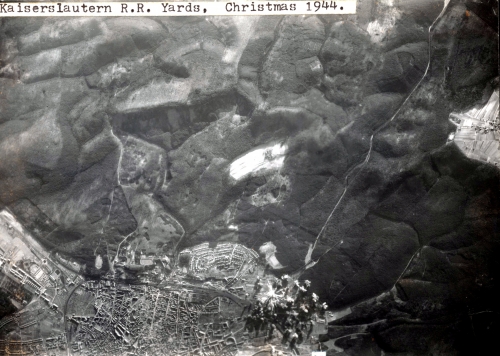
At briefing, the S-2 Intelligence officer informed the forty-one seated crews that their target for the day would be a railroad bridge west of Kaiserslautern. The 100BG would be leading the 3rd Division’s entire column of B-17s and the 100BG would fly as its ‘A’ group.
Leading the Hundredth’s formation would be Colonel Frederick ‘Gene’ Price, who would fly with Joe Trapnell on his final mission. The high squadron would be led by Colonel Channing Emberson and Paul Spurgeon while the low would be led by Elmer Ferbrache and LT Wilson.
The crews were briefed for clear weather at the target but due to limited visibility expected at Thorpe Abbotts upon their return, the men were told they were to land at Base A-70 in Paris, France, from where they would enjoy their Christmas dinner.
Loaded up with 2600 gallons of fuel, the 100th's B-17s took off from a foggy, icy runway between 0815-0851 hours. The squadron and group assemblies were made on time and without incident at an altitude of 14000 feet.
While en-route to the target, the ships’ radio operators received a welcomed message — the Paris landing was out and all ships were to return to Thorpe Abbotts after the mission for their Christmas dinner.
After flying an uneventful route in, the squadrons were bounced around when they encountered moderate and tracking flak at the target area. The beautiful clear day had provided the Germans an easier aiming target. Flying for his second day in support of the ground troops, Robert Fitzgerald remembered that they were almost to the target when thirty-two anti-aircraft guns “put their shells right into our formation. It was a cloudless day which makes for good shooting.”
The 100th’s formation made its turn at the briefed Initial Point. The 95BG, following behind, thought that the 100th’s Air Leader had overshot their briefed Initial Point. After radioing Colonel Price and a quick VHF conference with the wing, each Bomb Group’s lead ship learned that the three Groups in the wing had been assigned different targets, each with different IPs - information that had been kept from the Groups. In fact, the 95BG’s target was a rail bridge at Kreuznach while the 390BG had been assigned a rail bridge at Morscheid as its target.
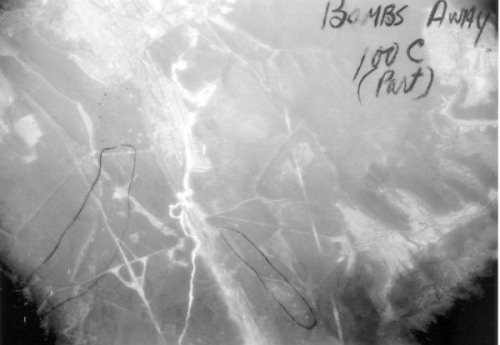
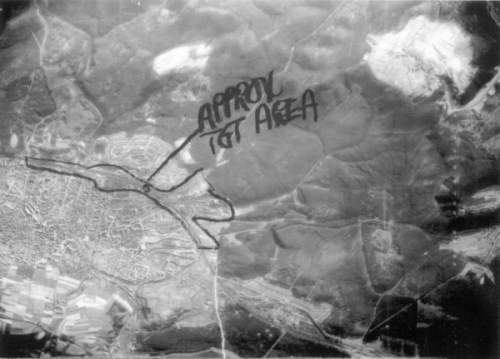
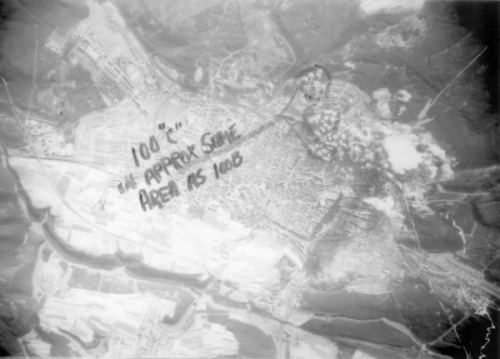
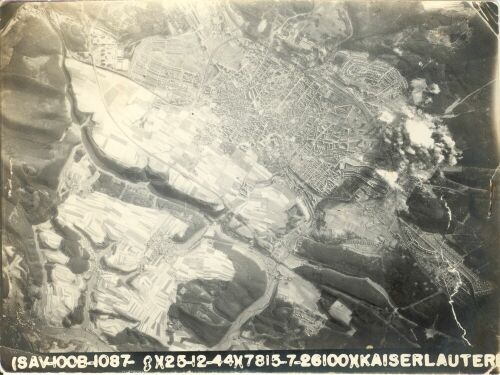
On its correct bomb run and flying through flak under unlimited visibility, the 100th’s lead bombardier picked up the target as well as a enemy train arriving into the marshaling yards.
Eugene Jensen was flying the #2 position in the low element of the low squadron and Richard Ayesh recalled, “We went around the front line flak. The weather was CAVU. Germany was covered with snow and we could see the results of the bombing the day before. Many little towns were wiped out. In many places, we could see where battles had been fought leaving prints in the snow. Flak at the target was accurate and intense. We hit the target beautifully. It was noon when we hit this town, probably just as they sat down for their Christmas dinner.”
Upon the squadrons bombs away, there was a large explosion and it was thought that the bombs had hit a loaded train carrying ammunition or V-2 rockets on a flat car. Navigator, Leon Schwartz, on Herman Streich’s crew recalled that the 100BG “scored a direct hit on an ammunition train blowing it to smithereens. It was the largest explosion I had seen. This mission is referred to as one of the few ‘perfect missions’ of the war.”
Upon returning back to Thorpe Abbotts at 1505 hours that afternoon, as briefed, the airmen found Thorpe Abbotts covered in a thick ground fog, requiring the pilots to circle until landing was possible. According to Walter Bailey’s engineer Calvin Dollar, “They put B-17’s along the runway and ran the engines up to 1800 RPM to try to blow the fog off. It helped some and we finally came in for a landing. Two crews of our Squadron finished up, Lucky stiffs, 6 more to go.”
The 95BG’s base was so fogged in that ten of its planes landed at the 390th’s base while another four landed at Woodbridge.
Although the crews and bombers escaped any encounters with Luftwaffe fighters on this mission, they had encountered enough flak to cause battle damage to fifteen out of the thirty-seven returning aircraft. Two of the 100th’s fortresses landed elsewhere; Leo Ross was forced down in Brussels and Harold Sherrard landed at the Paris base, A-70 in France after losing his #2 engine.
The men were grateful to come home to a special Christmas meal where they dined on turkey, cranberry sauce and other traditional dishes. In a letter written to his dear friends back home in Cleveland, Ohio, Tony Pecyk recounted, “My Christmas wasn’t bad — but it could have been a great deal better. We were over Germany and almost lost out on our turkey dinner. The field socked in and reduced our visibility to 300-500 yards. They tried to divert us to another field but we all landed despite their efforts — turkey was a calling.”
That evening, the entire Hundredth was stood down for the English Boxing Day holiday.
Bombing Results
Bombing Results: EXCELLENT
Aircraft Lost: 0
Crew Lost: 0
Claims of Enemy Losses (CLS): 0
Aircraft Returned:
Media Articles
Use your thumb to scroll through the results box below.
| Media Item | Type | Page | Volume/Issue | Broadcast Source | Time | Description | File |
|---|---|---|---|---|---|---|---|
| Battle damage for December 25 1944 | 12:00 am |

Photos

Click here to see album - 10 items

Click here to see album - 10 items
Click here to see album - 10 items
Click here to see album - 10 items

Click here to see album - 10 items

Click here to see album - 10 items
Click here to see album - 10 items
Click here to see album - 10 items
Click here to see album - 10 items

Click here to see album - 10 items