Capt
William A. CARLETON

Click here to see album - 5 items

Click here to see album - 5 items
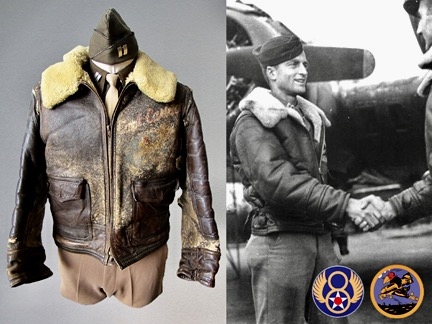
Click here to see album - 5 items
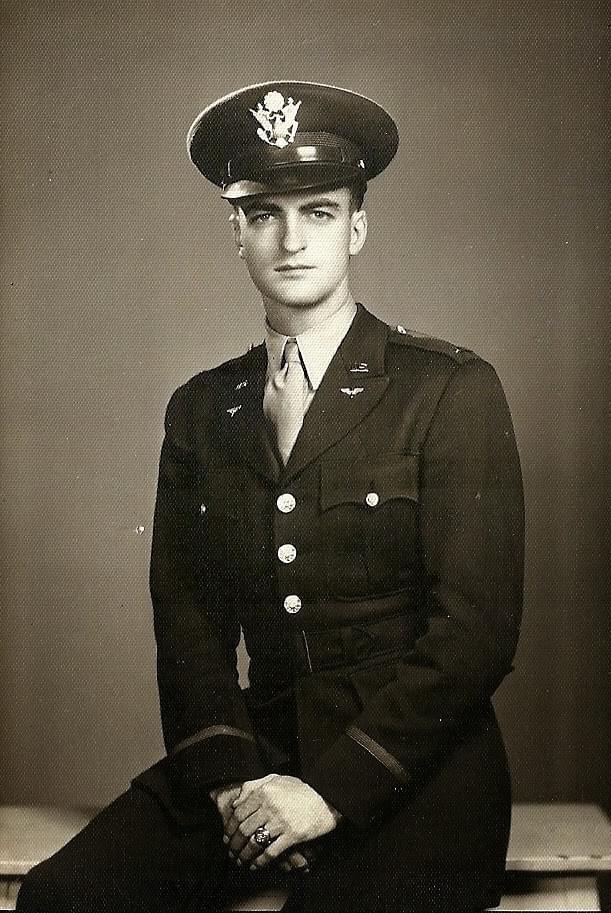
Click here to see album - 5 items
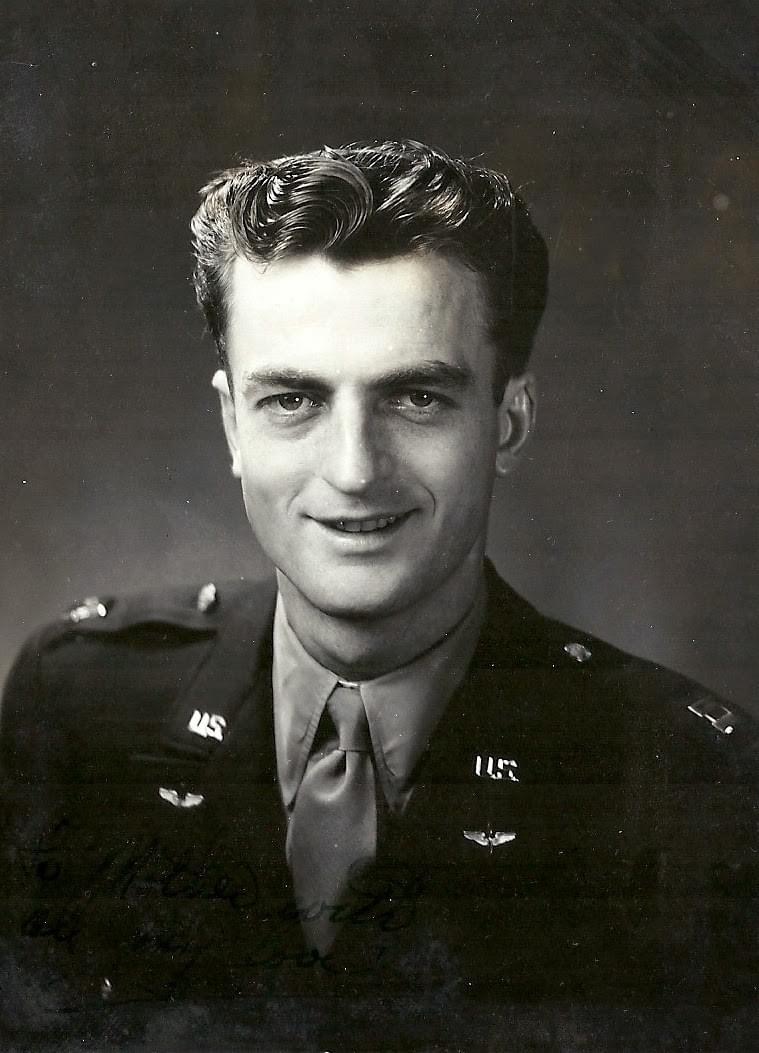
Click here to see album - 5 items
Army Serial Number: O-855260
Assigned to the 100th Bombardment Group
Location:
Unit: 351st Bombardment Squadron
Rank: Captain
Position: Ground personnel
Beginning Date of 100th Service: Unknown
Time of Service at Thorpe Abbotts: Unknown - Unknown
Additional 100th Service Notes
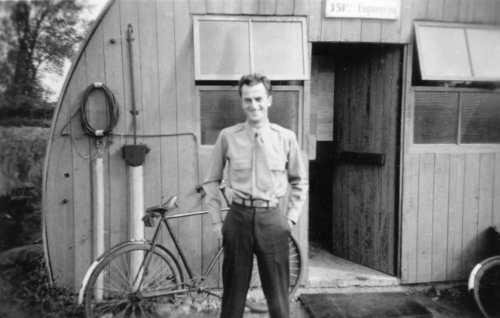
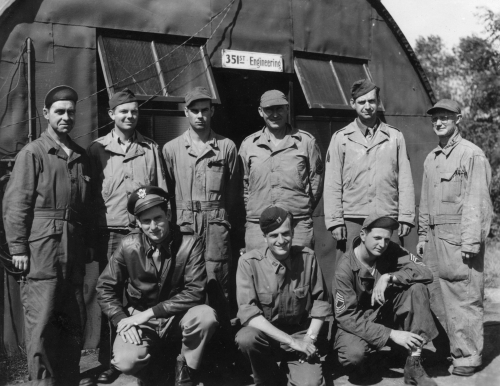
Comments: 351ST'S LEDGENDARY ENGINEERING OFFICER
Media Articles
Use your thumb to scroll through the results box below.
| Media Item | Type | Page | Volume/Issue | Broadcast Source | Time | Description | File |
|---|---|---|---|---|---|---|---|
| Charles Nekvasil and William Carleton fire back on editorial | Plain Dealer Nov 30 1982 | 12:00 am |
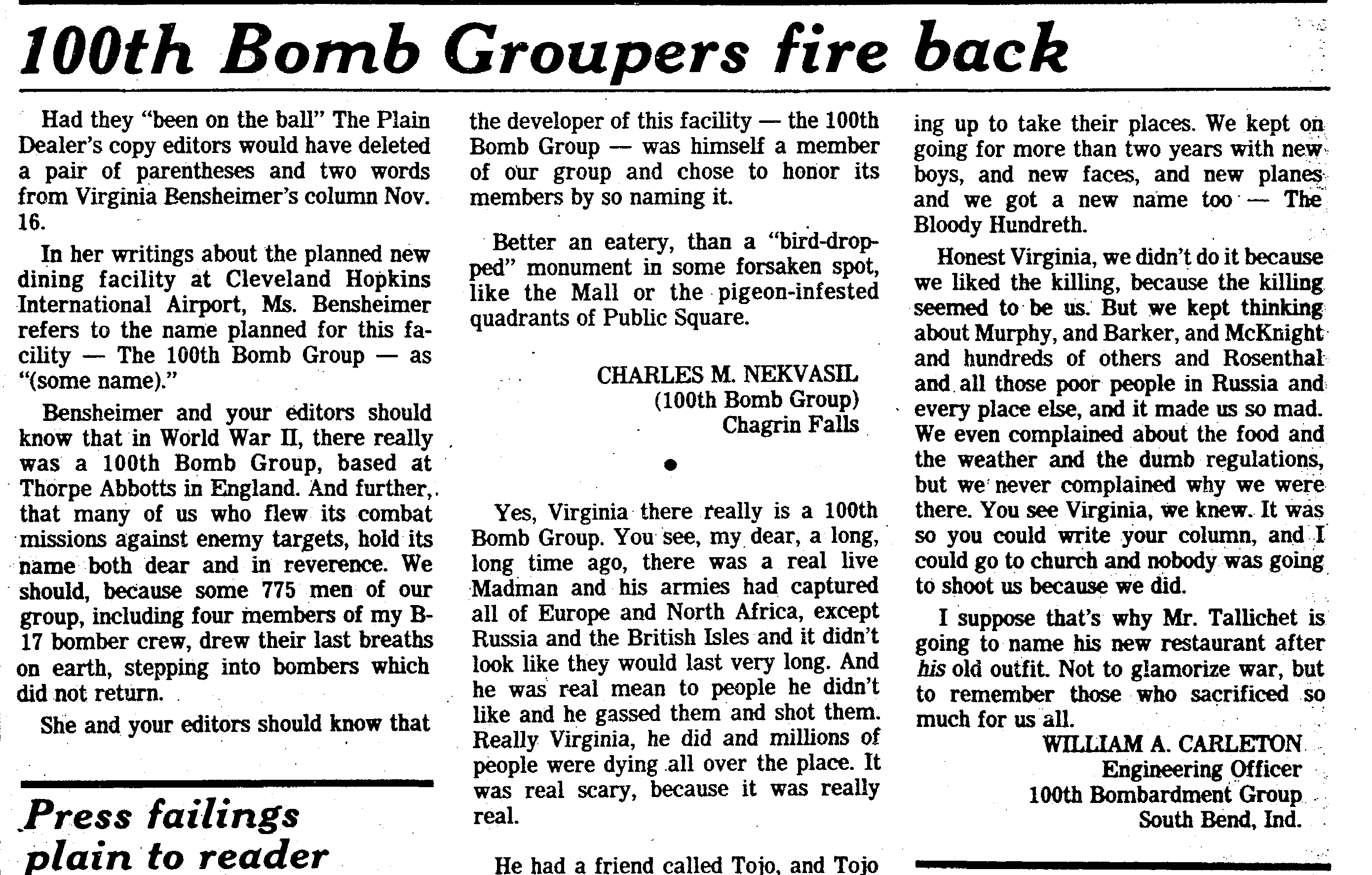
Comments and Notes
Memo 1:
MEMO:


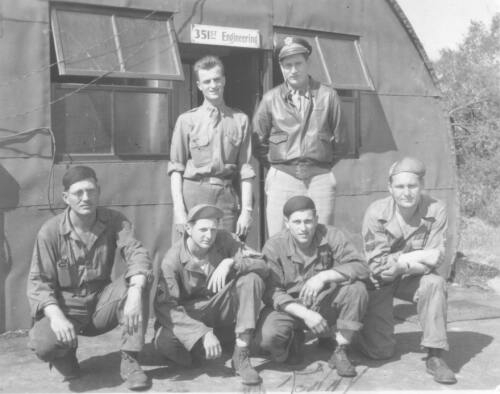
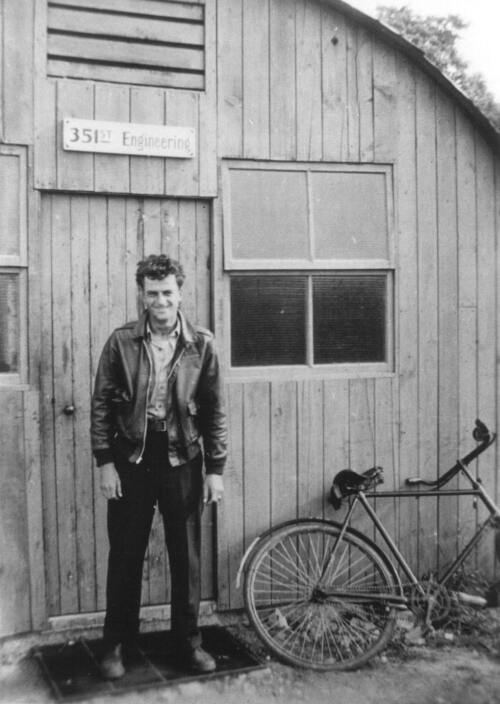
Captain William Carleton

sn# O-855260,

351st Engineering Officer and later 100thBG Engineering Officer.

Assigned to the 100th BG October 27, 1942.

Most vivid memory-"The Munster return, 1 ship-Rosenthal" (mpf 2001)


ALL DATA BELOW COURTESY OF CAPT. WILLIAM CARLETON.


CARLETON  REMEMBERS HIS BOSS, GROUP ENGINEERING OFFICIER EUGENE REVEGNO


                       MAJOR RAVEGNO AND THE INSPECTION

                                        by Bill Carleton


 Major Eugene Ravcgno of Nashville, Tennessee, was certainly one of the most memorable characters of the 100th Bomb Group, if not the Eighth Air Force. He had been a Marine pilot in World War I and the time between the wars was spent in sales and marketing.  Thus he came to us as commissioned "retread", with an outgoing personality, well tuned by a basic knowledge of human behavior. The "Major" was in his early fifties, dark complexion with a prominent nose that he utilized to his advantage with his hands and facial expressions.


 As our Group Engineering Officer he was the "boss" of approximately eight hundred enlisted men and four young Squadron Engineering Officers. Maintenance of our aircraft was the care of the umbilical cord in a life and death struggle in the skies above Europe.


 Shortly after General Le May became our Air Division Commander, we were alerted for an inspection by the Division Engineering Officer, a Colonel Fulkrod. The grapevine had it that this inspection would make fraternity hell - week seem like a picnic. Colonel Fulkrod (full bird) was a barrel chested "retread" who had the good fortune to have been Le May's crew chief before Pearl Harbor.  His rapid rise to "Colonel ship" laid more emphasis on the practicality of mechanics and less on engineering and ninety day wonders. He had little patience with those who didn't know a rocker - arm from a relief tube, and that attitude made our Squadron Engineering Officers nervous.


 One of the announced objectives was to inspect our records and Tech Supply for compliance with the Table of Organization. (T. O.)


 Now you cannot fight a war without SPARE PARTS, and we at the 351st were prepared for a very long conflict. With the INSPECTION at hand it was evident more storage room was required if we were to  have a neat display for the Inspector. Fortunately, an English barn, with a bull as it's sole occupant, was only 100 yards away. It offered additional room and Mr. Draper, anxious to help the "war effort" readily gave us permission. This, by the way, was the same bull that later gave his life for the cause, when Lt Valesh drove his plane "Hang the Expense" through the side door.


 The Inspector was very impressed with the presentation of parts at Tech Supply and gave us a very good report.


 Meanwhile back at Ravegno's puzzle palace, we were in Class A uniforms awaiting the coming (first not second) of the Colonel. The Colonel's chest was emboldened with several ribbons including, Victory World War I, Good Conduct, E.T.O. and the American Theater. I never knew what the American Theater meant, but figures we earned it at Windover. He had in addition to ribbons a strong jaw, a prominent nose, large ears, thinning hair and what we would now call a Schwartzhoff waist. He seemed to me to be a Russian general in pinks.


 The Colonel strode in, with piercing eyes and his hand out stretched for a knuckle busting handshake. As we shook our hands to regain circulation, Ravegno grabbed the bridge of his nose, jumped back and stared at the Colonel. Then in his best Tennessee drawl said, "Kur-null, how could a "handsome" - ah - man lah you break away form those beautiful gals at Headquarters, just to be with us? Then quickly, "But we are sooo glad you came." Colonel Fulkrod beamed. We were off and running, with Ravegno the ring master on the high wire. All chit chat was between the two World War I veterans, as we had been warned, by Ravegno, to keep quiet or in his words, "we would be off the plantation."


 After twenty or thirty minutes of pleasantries Ravegno looked serious, squeezed his mouth so his nose stood up and announced he had a solution for our planes running off the runways. He said Colonel Jeffrey had told him he had a face that could stop a clock, and he was sure that Jeffrey would be happy to include Fulkrod in that category. Therefore, the solution was simply for the two of them to stand at the end of the runway to see if they couldn't stops planes as well as clocks. The Colonel thought this was hilarious -- so we all laughed -- and soon it was time to go. Major Ravegno thanked "you-all" for coming "and for heaven sakes don't stay away so long." "You -all are always welcome ! We loved having you."


 Waving good-byes as they rounded the curve Ravegno said, "We'll never see them again." and he was right.  Ravegno ran the show.


       GROUP COMMANDERS COMMENDATION TO THE 351ST ENGINEERING SECTION FOR EXCELLENCE IN MAINTENANCE..

                                          The 351st Engineering Officer was, Capt Bill Carleton..


HEADQUARTERS

AAF STATION #139

APO 559


26 April 1944


SUBJECT: Commendation.


To : Commanding Officer, 351st Bombardment Squadron, APO ,#559.


1.  The official records of the Headquarters 3rd Bombardment Division indicate that during the month Of January, February, and March 1944 the 100th Bombardment Group led a11 other groups in the Division in the following respects:


(a)  Percent of aircraft on hand on station per day which were operational.  The 100th Group was 7% higher-than the division on average


(b) Percent of aircraft on hand on station per day which were non- operational because Or battle damage. The 100th Group was 6%  lower than the Division average.


(c) Percent of aircraft on hand on station per day which were non-operational because of maintenance and repair. The 100th Group was; 3% lower than the Division average


2.  The above outstanding accomplishments are the direct result of efficient performance of maintenance activities under your supervision.


3.  I desire to commend you and all the personnel under your direction who shared in the responsibility for this excellent record.  It is further desired that you personally bring this commendation to the attention of the engineering officer and enlisted personnel under your jurisdiction.


                                                     R. H. KELLY

                                                    Colonel, Air Corps

                                                    Commanding


GENERAL Le MAYS TRIBUTE TO THE 100TH AFTER ONE HUNDRED MISSIONS  (13 APR 1944)


RESTRICTED


HEADQUARTERS 3D BOMBARDMENT DIVISION

APO 559

23 April 1944


SUBJECT: Commendation


TO:  Commanding Officer, 100th Bombardment Group (H),

  AAF Station 139,  APO 559. U. S. Army


 It is my pleasure and privilege officially to commend the officers and men of the 100th Bombardment Group (H) and all units serving therewith for their outstanding achievement in successfully completing between  25 June 1943 and 13 April 1944 one hundred (100) heavy bombardment missions against the enemy.  Carrying the war home to Germany with unprecedented fury in spite of the world's most concentrated anti-aircraft and fighter defenses, our bombers and crews are gradually, but inevitably, breaking the Nazi war machine and the enemy's will to fight.


 In less than three weeks,  from 4 to 24 July 1943, your bombers wrought considerable destruction on the U-boat pens at La Pallice, the repair factory and air depot at Le Bourget, Paris, and the U-boat and refueling base at Trondhein, Norway, where in on minute three years of the enemy's work was blasted to ruin. At Regensburg, on 17 Aug 1943, the ME-109 plant, producing one-third of Germany's fighter planes, was destroyed. Results on the Arado FW-190 factory on 9 October 1943 proved that Marienburg was one of the best daylight bombings jobs of the war.  Accuracy again characterized your bombing at Schweinfurt on 14 October 1943, wrecking the works producing about sixty-five percent (65%) of Germany's ball bearings. Requiring expert navigation to strike a small, distant target, on 16 November 1943, the 100th Group combined with others in crippling seriously the hydro-electric plant at Rjukan, Norway, an important source of vital chemicals for Nazi munitions.  With utmost skill, severe damage was inflicted upon the Bauer and Schauerte works, a target of opportunity, at Nouse, on 5 January 1944, which supplied the enemy with about fifty percent (50%) of its high quality bolts and nuts.  On 4 March 1944, refusing to be turned back when all the 1st Bombardment Division and twelve (12) Groups of this Division were unable to get through, the 100th Group with three others pushed on to Berlin for the first dayligh bombardment of that target by American heavy bombers, a feat which already has been heralded as a turning point in the devastating aerial assault against Germany. After participating in four additional attacks on Berlin on 6, 8, 9 and 22 March 1944, the 100th proved its great endurance and fortitude from 26 March to 13 April 1944 by sending its bombers and crews aloft for ten (10) successive missions in eighteen (18) days.


 The success of your bombing operations testifies indisputably to the meticulous care with which the missions have been planned and executed and to the discipline, skill and gallantry of your combat and ground personnel.  Commended alike are the officers and men now present for duty and those whose absence is keenly regretted.  To you and them are due eternal praise and gratitude for heroic accomplishment in battles well fought, worth of the highest traditions of the Army of the Unites States.


 I am confident that you will bring added honor to yourselves and your country in the future great air engagements which must be fought to bring our common endeavor to a victorious conclusion.


CURTIS E. Le MAY

Major General, U.S. Army

Commanding

RESTRICTED


THE FORGOTTEN MAN

(AUTHOR UNKNONW)


THROUGH THE HISTORY OF WORLD AVIATION

 MANY NAMES HAVE COME TO THE FORE.

GREAT DEED OF THE PAST IN OUT MEMORY WILL LAST

 AS THEY ARE JOINED BY MORE AND MORE.


WHEN MAN FIRST STARTED HIS LABOR

 IN HIS QUEST TO CONQUER THE SHY

HE WAS DESIGNER, MECHANIC AND PILOT,

 AND HE BUILT A MACHINE THAT WOULD FLY.


THE PILOT WAS EVERYONE'S HERO.

 HE WAS BRAVE, HE WAS BOLD, HE WAS GRAND,

AS HE STOOD BY HIS BATTERED OLD BI-PLANE

 WITH HIS GOGGLES AND HELMET IN HAND.


TO BE SURE, THESE PILOTS ALL EARNED IT,

 TO FLY THEN YOU HAD TO HAVE GUTS.

AND THEY BLAZED THEIR NAMES IN THE HALL OF FAME

 ON WINGS WITH BAILING WIRE STRUTS.


FOR EACH OF OUR FLYING HEROS

 THERE WERE THOUSANDS OF LITTLE REKNOWN.

AND THESE WERE THE MEN WHO WORKED ON THE PLANES

 BUT KEPT THEIR FEET ON THE GROUND.


WE ALL KNOW THE NAME OF LINDBERGH,

 AND WE'VE READ OF HIS FIIGHT INTO FAME.

BUT THINK, IF YOU CAN, OF HIS MAINTENANCE MAN,

 CAN YOU REMEMBER HIS NAME?


AND THINK OF OUR WARTIME HEROES,

 GABRESKI, JABARA, AND SCOTT.

CAN YOU TELL ME THE NAMES OF THEIR CREW CHIEFS?

 A THOUSAND TO ONE YOU CANNOT.


NOW, PILOTS ARE HIGHLY TRAINED PEOPLE

 AND WINGS ARE NOT EASILY WON.

BUT WITHOUT THE WORK OF THE MAINTENANCE MAN

 OUR PILOTS WOULD MARCH WITH A GUN.


SO WHEN YOU SEE THE MIGHTY JET AIRCRAFT

 AS THE MARK THEIR PATH THROUGH THE AIR,

THE GREASE STAINED MAN WITH THE WRENCH IN HIS HAND

 IS THE MAN WHO PUT THEM THERE..


3rd AIR DIVISION COMMENDATION


CONFIDENTIAL


HEADQUARTERS 3RD AIR DIVISION

Office of the Commanding General

APO 559


GENERAL ORDERS (NO.4)


3 January 1945


COMMENDATION


 The 351st Bombardment Squadron (H), is commended for outstanding performance of duty in action against the enemy during the period 31 July to 2 November 1944. During this period, the squadron participated in fifty-two (52) consecutive missions without the loss of a single crew or aircraft. On these missions operations, more than 400 aircraft were dispatched and only eleven (11) aircraft aborted. Eight hundred and forth three (843) tons of high explosive and incendiary bombs were dropped on enemy targets which included Venlo, Hamburg, Berlin, Ludwigshaven, Bremen, Madgeburg, Munster, Merseburg; as well as Szolnok, Hungary and the supply mission to Warsaw, Poland. Although many of the aircraft returned from these missions with extensive battle damage, highly efficient maintenance crews expeditiously repaired the crippled bombers and enabled the courageous airmen to resume operations in the shortest possible time. The skill in operational and planning and the courage displayed by the combat crews in all attacks have not only insured the high degree of efficiency necessary to establish this record, but have also resulted in a material contribution to the successful prosecution of the war against the enemy.


 This splendid teamwork, courage and devotion to duty displayed by the  Officers and Men of the 351st Bombardment Squadron reflect the highest credit upon themselves and the Unites States Army Air Forces:


By command of Major General Partridge:


N.B. HAROLD

Brigadier General, U.S.A.

Chief of Staff

OFFICIAL:

 (SIGNED)

 F.E. FITZPATRICK

 Captain, Air Corps

 Acting Asst. Adjutant General


CREW


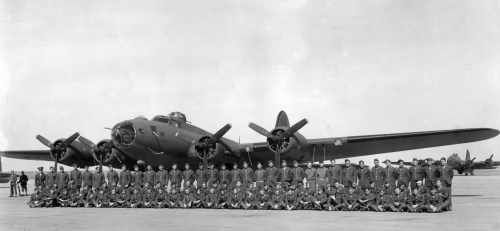
ONE OF THE LAST AIRCRAFT TO LEAVE THORPE ABBOTTS AT THE CLOSE OF HOSTILITIES. DEPARTED 25 SEP 1945


 On the 15th of August 1945, Colonel Jack Wallace, Commanding Officer of the 100th toured the base personally announcing the 100th was scheduled to return to the U.S.A. The last six (6) aircraft to leave with passangers did so under Special Order No #1 dated 25 Sep 1945. Destination was Greinier Field at Manchester, New Hampshire.

 The lead aircraft, B-17G #44-8912 was flown by Major Johnson R. Staples. Aboard were five (5) crew members and five (5) passangers. Those aboard are listed below..


Maj Johnson R. Staples       Aircraft Commander 418th Sqdn.. CO  Taps March 1988

Maj J.S. Robinson                       Co-pilot   418th Sqdn.  Commander of 24 Dec 44 Bulge Relief.

Capt E.C. King                         Navigator     351st Sqdn.  Flew periless 24 May 1944 Berlin Mission.

T/Sgt E.W. Miller              Flight Engineer     418th Sqdn  Flying at the end of hostilities.

T/Sgt F. Kocher               Radio Operator     418th Sqdn  Completed Tour 05 Jan 1945 Frankfurt.


M/Sgt J. Klingenstein    Passenger  Flight Line Chief

Maj  Horace L. Varian      Passenger  Gnd Execitive Officer

Capt William A. Carleton  Passenger  Group Engineering Officer

Capt A.J. Tong            Passenger  349th Sqdn.Bombardier

F/O S.E. Wood            Passenger  350th Sqdn.Co-pilot


Captain William Carleton sn# 0-855260, 351st Engineering Officer and later 100thBG Engineering Officer.  Assigned to the 100th BG October 27, 1942. Most vivid memory-"The Munster return, 1 ship-Rosenthal" (mpf 2001)


Letter to Mr. Ron Leigh

52 Grosvenor Way,

Horwich BL6 8DJ  England


Bill Carleton

1112 E. Eckman

South Bend, IN

August 5, 1996


Dear Ron,


We did have, as I recall, and Armament Officer who had the nick-name of “Bolt Stud” and his Spaniel dog was called “Sear - Spring,” I suppose you could say they looked alike. (They did) He was older and returned to the States earlier and wanted to take the dog home. So he trained Sear - Spring to lie in his barracks bag and not make a sound no matter what. I do not know if Sear - Spring arrived safely or not.


As to the Regensburg Shuttle Raid I would suggest that you check your library for any writings by Bernie Lay. This author wrote an article or two for the Saturday Evening Post and Readers Digest.  I recall one was entitled, “I saw Regensburg Destroyed.’  He flew with the 351st in Piccadilly Lily and Murphy was the pilot. It was from his article that the movie Twelve O’ Clock High was drawn. They flew in plane 42-5864 EP-A and John Hermann was the Crew Chief.


With reference to the ball turret incident, the Base was having an inspection by, I believe, General Partridge. The planes from the mission were in, and there were possibly 100 or more men in and around the 5 dispersal points and the tower next door. The ball turret made two revolutions hitting the gunner, catching M/Sgt Piccard’s ship on fire and stitching the Tower twice.  No one else was hurt but M/Sgt Lemmons had the back of his sheep skin jacket creased and Sgt. Picard had a bullet hit the heel of his shoe.


In the tower all but the General “hit the deck” on the first pass and he shouted, “What the hell is going on here,” just as pass number two went through. The story is he joined those on the floor.


Our fire department was called to douse the planes burning next to the tower but they were reluctant to get too close and stayed at the far end of the hose.  While-upon their fearless leader, “Shivering John” grabbed the hose and started up the ladder against the wing. Unfortunately he went up too fast and the ladder was too straight. As his weight neared the top the ladder straightened and then tipped dumping “Shivering John’ on the tarmac and breaking his shoulder.


“Shivering John” was so called because he wore his long handled underwear all summer long. He said it was because he was from Tennessee, but others thought his shivers were brought on by cheap booze.


We were now ready for Phase II.  Lt. Colonel Rosenthal, in full regalia for the general inspection was hoisted upon the trailing edge. Rosie called for the fire hose and just as he reached for the nozzle the helpful firemen back at the other end of the 200 foot hose turned on the foam. Rosie looked like a Santa Claus who had fallen out of his sleigh.  Some how he got down and with foam still dripping from the wings we brought up our tow bars and the Cletrac tractor. I then drove it into the middle of the field where we let the fire take it’s course.


Later I thought we should have cleared the area and let it burn out at the dispersal point, but it was very close to the Tower had it blown.


September 15, 1996


Called away from my desk and delayed in picking up with your letter - nothing serious.


As I recall there were approximately 216 odd shell casings on the ground. The debacle was caused by not clearing the guns and then when the one gun began firing, the young man backed or crawled out of the turret and with only one gun firing it spun and killed him. Colonel Utley, our Ground Executive Officer was thankful there were no other casualties, however it seems several farm animals paid the ultimate price,


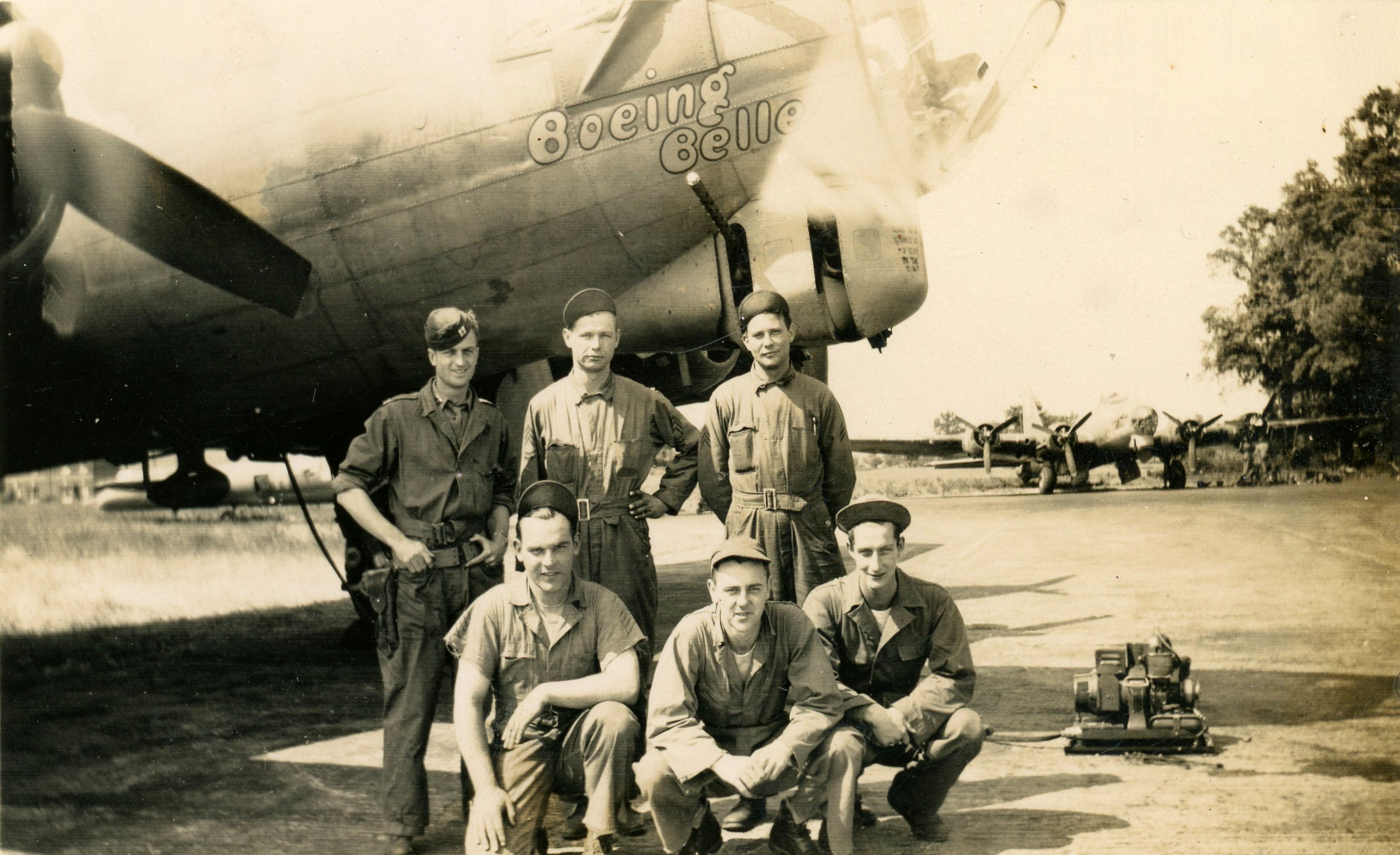
The “Boeing Belle” completed 130 - 135 missions. On January 24th 1944 it crash landed at Eastchurch following a raid on Frankfurt. I have enclosed a copy of pictures that appeared in most papers in the United States and we thought it would have to be salvaged. The plane was flown by Frank Valesh of Hang the Expense fame. Consequently we received another plane and it was assigned the same call code EP-E. When 42-39867 was returned it was renamed the Boeing Belle but kept the same code EP-E which should not have happened - but it did. The replacement plane was 42-31767 and named “Our Gal Sal” by Bob Shoens. It too completed 130 - 135 missions prior to returning to the U.S.


In response to your inquiry our “She - Has - Ta”, plane 42-107007 EP-B was lost on July 29, 1944 on the raid to Merseburg. The machine gun incident occurred following the mission to Munich on July 11, 1944. The man killed was Homer Parish.


Sincerely,

Bill Carleton

Engineering Officer
Memo 2:
ORIGINAL 100th


William Carleton

Obituary


 William A. Carleton Nov. 10, 1917 - Jan. 25, 2015 NOTRE DAME - William Arthur Carleton, 97, of South Bend, Indiana, passed away peacefully at home on January 25, 2015. Bill was born November 10, 1917 on a farm near Mindoro, Wisconsin to Guy Arthur Carleton and Isabelle Victoria Knudson Carleton. Bill was preceded in death by his wife, Mary Geyer Carleton, their beloved son, Mark G. Carleton and parents, Guy and Isabelle Carleton. He is survived by his sons, William A. Carleton, Jr. (Gail) and Eric A. Carleton (Kathleen); his grandchildren, Loran Carleton Parker (Matthew), Andrew G. Carleton, Sarah A. Carleton, Peter E. Carleton (Jamie) and Elizabeth C. Carleton; and his great-grandchildren, Caitlyn R. and Rhys E. Parker. Bill grew up in Aberdeen, South Dakota, where he attended school, including three years at Northern State University. In 1941, he graduated from Iowa State University a Tau Beta Pi with a Bachelor of Science degree in Civil Engineering. That same year, Bill joined the Milwaukee Railroad Engineering Department in Marion, Iowa. Following Pearl Harbor, he enlisted as an Aviation Cadet with the Army Air Corps. He received his commission in September of the next year and was assigned as an engineering officer with the newly formed 100th Bomb Group of B-17s at Boise, Idaho. In April 1943, the 100th Bomb Group moved to Station 139 at Thorpe Abbotts, England and shortly thereafter went on combat status. Engineering officers did not fly on combat missions, but were responsible for the preparation, repair and maintenance of the seventy B-17 airplanes on 306 combat missions conducted by the group. He later was active in the 100th Bomb Group Foundation and served as president for five years. In October 1945, Bill was discharged from the Army as a Major and accepted the position of Sales Engineer with the Armco Steel Corporation of Middletown, Ohio. In 1948, he was transferred to South Bend, Indiana, where he met Mary Geyer. They fell in love and were married March 19, 1949. Bill continued his career with Armco and retired in December 1982, as an Assistant to the President of the Metal Products Division. Bill was active in civic life both before and after his retirement. In South Bend, he was a strong supporter of the Stanley Clark School and served on its board for nine years. He served on the Board of Memorial Hospital and was Chairman for four years, later being named Chairman Emeritus for life. He served on the board of Directors of the Tower Federal Bank and was the Chairman from 1982-1987. Bill was also active in the Junto Goose and Duck Club, a group that is dedicated to the preservation of wildlife, and served as its president for a number of years. A lifelong Presbyterian, Bill was active in the governance of First Presbyterian Church of South Bend and served as President of the Board of Trustees for three years. Bill enjoyed entertaining friends and family with humorous stories about growing up in South Dakota, he cherished his time with his grandchildren and great grandchildren and he relished relaxing at his winter home in Naples, Florida. He was an avid chronicler and collector. He published several narratives of his time in England during the war and documented family genealogy back into the 11th century. The family fondly remembers Dad as a kind and wise man. They would like to thank his caregivers, Chrissy, Sybena, and all the Senior One Care staff for their loving care and assistance during Bill's illness. Per his wishes there will be a private burial service at North Liberty's Eastlawn cemetery.

- See more at: http://www.legacy.com/obituaries/southbendtribune/obituary.aspx?n=william-carleton&pid=173991983&fhid=5664&eid=sp_shareobit#sthash.Q8ogVOT1.dpuf
Photos
Click here to see album - 22 items
Click here to see album - 22 items
Click here to see album - 22 items

Click here to see album - 22 items
Click here to see album - 22 items
Click here to see album - 22 items
Click here to see album - 22 items
Click here to see album - 22 items
Click here to see album - 22 items
Click here to see album - 22 items
Click here to see album - 22 items
Click here to see album - 22 items
Click here to see album - 22 items
Click here to see album - 22 items
Click here to see album - 22 items
Click here to see album - 22 items
Click here to see album - 22 items
Click here to see album - 22 items
Click here to see album - 22 items
Click here to see album - 22 items
Click here to see album - 22 items
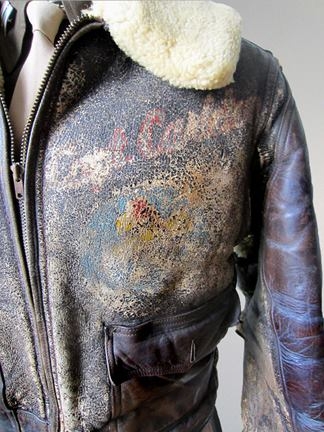
Click here to see album - 22 items
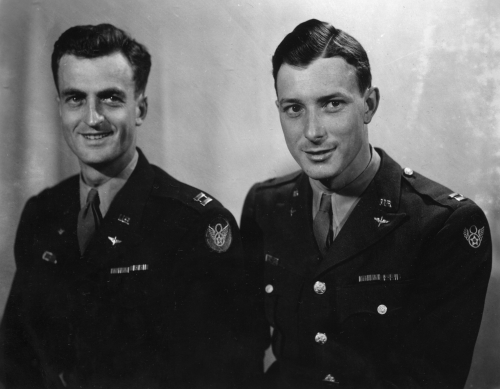
Click here to see album - 13 items
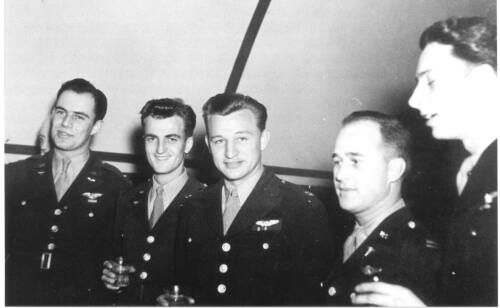
Click here to see album - 13 items
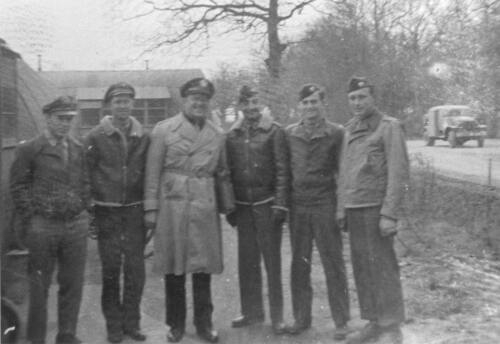
Click here to see album - 13 items

Click here to see album - 13 items
Click here to see album - 13 items
Click here to see album - 13 items
Click here to see album - 13 items
Click here to see album - 13 items
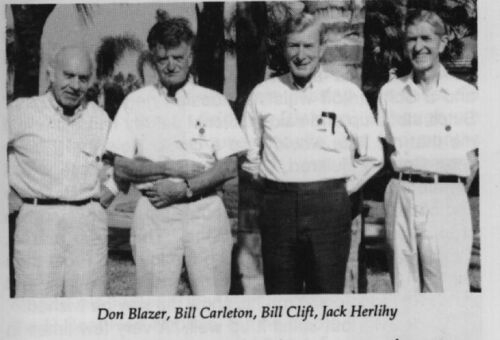
Click here to see album - 13 items
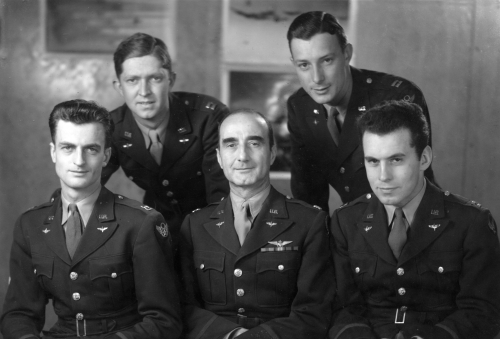
Click here to see album - 13 items
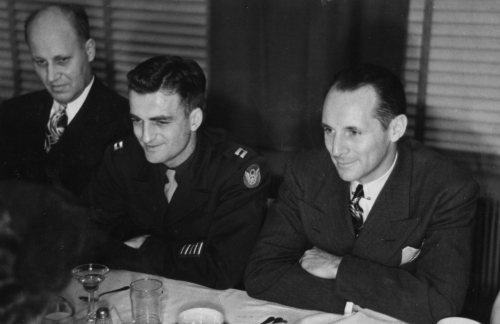
Click here to see album - 13 items

Click here to see album - 13 items
Click here to see album - 13 items