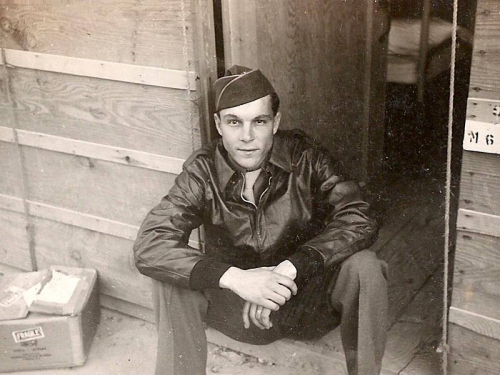
T/Sgt
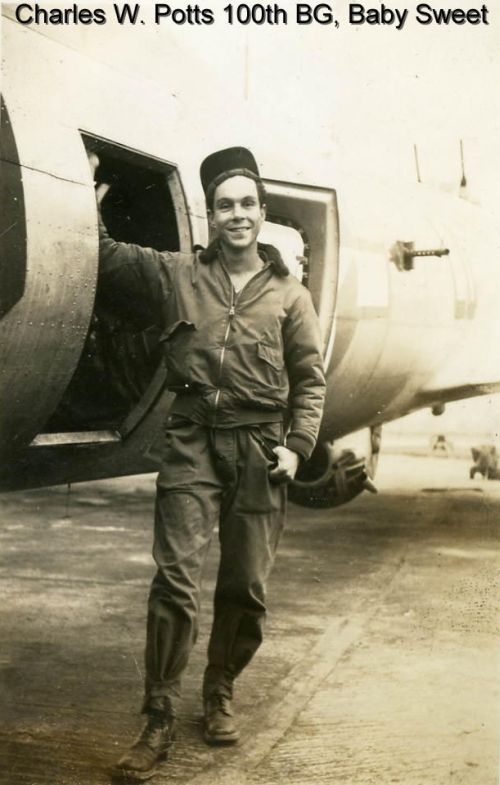
Charles W. POTTS
Click here to see album - 5 items
Click here to see album - 5 items
Click here to see album - 5 items
Click here to see album - 5 items
Click here to see album - 5 items
Hometown During Time of Service: Knoxville, TN
Army Serial Number: 14123191
Assigned to the 100th Bombardment Group
Location:
Unit: 418th Bombardment Squadron
Rank: Technical Sergeant
Position: Radio Operator / Gunner
Beginning Date of 100th Service: Unknown
Time of Service at Thorpe Abbotts: Unknown - Unknown
Additional 100th Service Notes
Status: CPT
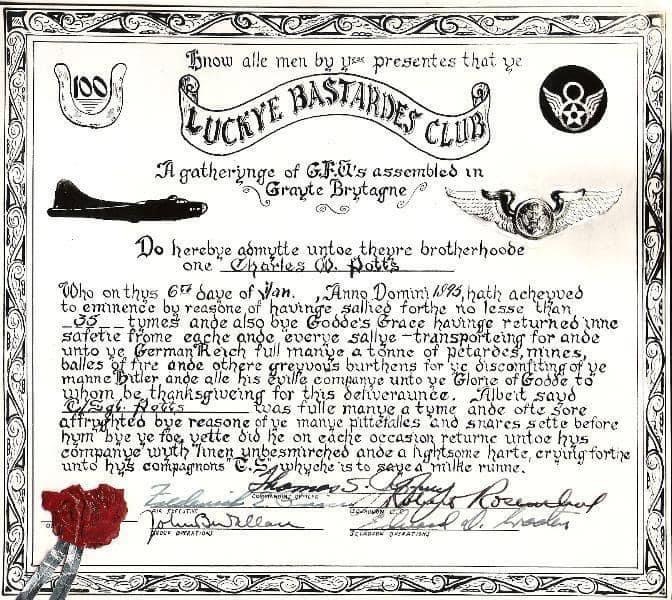
Comments: 6 JAN 45 ANNWIELER
Media Articles
Use your thumb to scroll through the results box below.
| Media Item | Type | Page | Volume/Issue | Broadcast Source | Time | Description | File |
|---|---|---|---|---|---|---|---|
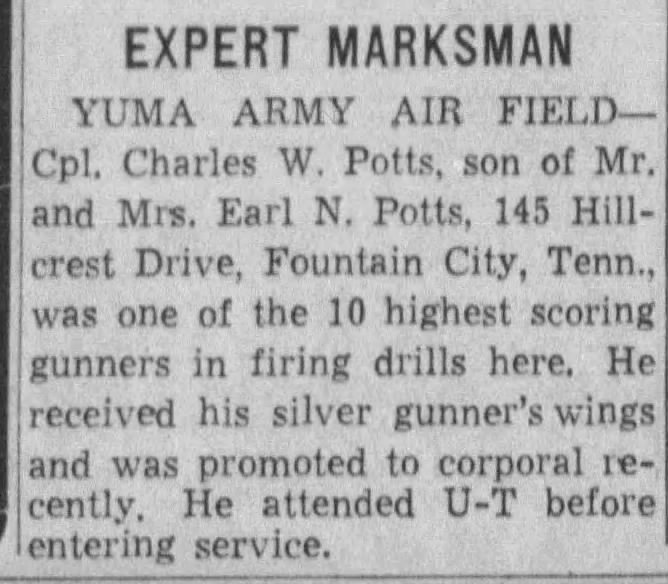
| Charles Potts expert marksman in training | The Knoxville News Sentinel March 2 1944 | 12:00 am | |||||
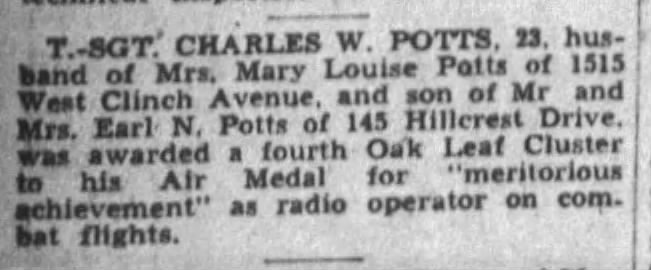
| Charles Potts earns 4th Oak Leaf | The Knoxville Journal February 27 1945 | 12:00 am |
Comments and Notes
Memo 1:
CREW


2ND LT WILBERT C. IVOSEVIC            P CPT 06 JAN 45 GERMERSHEIM, AF & ANNWEILER, CITY

2ND LT JOHN R. REESE                    CP NOC   TAPS: 15 FEB 1952

2ND LT DUNCAN C. GRAY               NAV CPT 06 JAN 45 GERMERSHEIM, AF & ANNWEILER, CITY

2ND LT FREDERICK V. HERNANDEZ  BOM CPT 06 JAN 45 GERMERSHEIM, AF & ANNWEILER, CITY TAPS: 18 SEP 1966

T/SGT CHARLES W. POTTS            ROG CPT 06 JAN 45 GERMERSHEIM, AF & ANNWEILER, CITY

T/SGT WILLIAM L. HARRIS             TTE NOC   TAPS: 04 NOV 1976

S/SGT RICHARD J. KING                 BTG CPT 06 JAN 45 GERMERSHEIM, AF & ANNWEILER, CITY

S/SGT LEVIN W. BEASLEY              WG CPT 06 JAN 45 GERMERSHEIM, AF & ANNWEILER, CITY

S/SGT FRED W. KNEIPP, JR             WG NOC   TAPS: 17 MAY 1972

S/SGT COYTE S. HELLARD               TG CPT 06 JAN 45 GERMERSHEIM, AF & ANNWEILER, CITY TAPS: 26 JUN 1981


418TH SQDN.. CREW JOINED THE 100TH ON 04 AUG 1944


CREW ROSTER OF 30 SEP 44 LISTED AS CREW #73; F.W. KNEIPP IS NOT LISTED, POSSIBLY BEING REMOVED TO REDUCE TO NINE MAN CREWS.


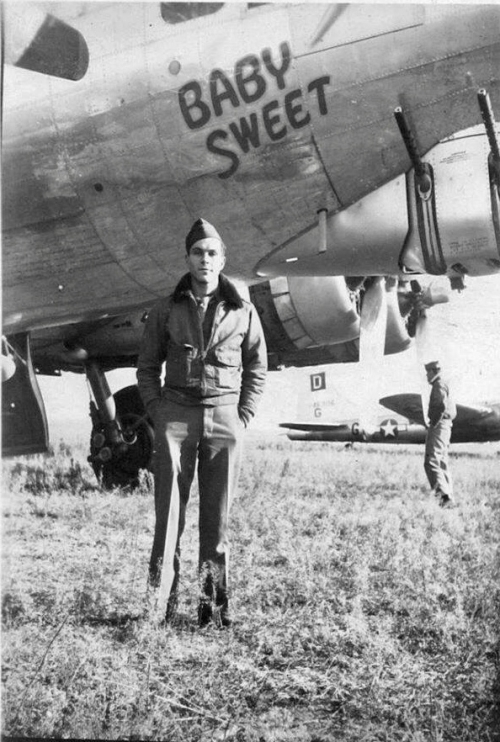
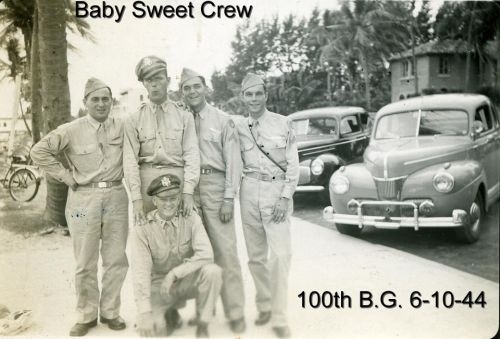
Crew flew A/C 43-37811 "BABY SWEET" LD-D.  This crew was responsible for naming the plane (email from relative of Charles Potts who said Potts and crew named A/C). Mpf 2001


Regarding F.W. Kneipp, Mr. Potts said " When we arrived in London we learned

that it had been decided that the Radio Operator didn't have enough to do,

so Kneipp was taken off of the crew and I was given responsibility for the

right waist gun. We never say Kneipp again. He mentioned that the crewman

named William Harris was "called "Pop because he was the oldest." (mpf 2001)


 MISSIONS/PERSONAL NOTES OF T/SGT CHARLES W. POTTS sn# 14123191  (mpf 2001)


1. 26/08/44 Brest, Fr 7:00hrs  No Flak, no Ftrs-bombs not dropped

2. 27/08/44 Berlin, Ger. 6:40hrs  Distant flak, no Ftrs-recalled

3. 30/08/44 Bremen, Ger 7:15hrs  Moderate Flak, no ftrs

4.   1/09/44 Mainz, Ger 7:30hrs  No flak, no ftrs-recalled

5.   3/09/44 Brest, Fr 7:35hrs  Distant flak, no ftrs-3 runs 12,10 & 8,000 feet

6.   8/09/44 Mainz, Ger 7:50hrs  Light Flak, no ftrs, brought bombs back

7.   9/09/44 Dusseldorf 6:25hrs  Heavy flak-hole in ferring, no ftrs, brough bombs back

8. 10/09/44 Nurnburg,Ger 7:35hrs  Heavy flak-hole in left wing & waist, no ftrs, direct hit on target

9. 11/09/44 Ruhland  8:45hrs  Ftrs hit low group,12 a/c lost, Hellard got on probable,Terry&Tarter went down

10. 12/09/44 Magdeburg 8:15hrs  Med flak-2 holes in tail, 1 in waist

11. 13/09/44 Sindelfingen 7:25hrs  Milk Run, no flak no ftrs

12. 18/09/44 Warsaw  10:30hrs Ftrs-Flak hole in Radio room (start of 2nd Russian Shuttle Mission) (1.)

12B 19/09/44 Szolnok,  7:15hrs  Budapest-no ftrs, medium flak, 9 holes  (2.)

14. 28/09/44 Merseburg 8:30hrs  Ftrs-Jet Propelled seen, No Damage

15. 30/09/44 Bielefeld 6:30hrs  One Jet attacked us-no damage-Group 200 Mission Party

16.   2/10/44 Kassel  8:10hrs  No ftrs, moderate flak, no damage, flew Sqdrn lead, prop wash hell

17.   3/10/44 Nurnburg 8:25hrs  No ftrs, moderate but accurate flak, no damage

18.   6/10/44 Berlin  6:30hrs  Aborted, bombs dropped near Hamburg #3 eng. Out, #4 & #2 rough

19.   7/10/44 Boheln  8:50hrs  Heavy flak, ftrs hit 95thBG, No damage to us. Flew 673 Lucky Lass

20.   9/10/44 Mainz  7:00hrs  Milk Run, light flak, inaccurate. Flew 090 Silver Dollar

21. 12/10/44 Bremen  7:00hrs  No ftrs, light flak, inaccurate

22. 17/10/44 Cologne  7:00hrs  No ftrs, no flak, Milk Run

23. 19/10/44 Ludwigshaver 6:30hrs  No ftrs, moderate flak, no holes, #1 engine out over target

24. 22/10/44 Munster  6:50hrs  No ftrs, distant flak, no damage, flew 071 Andys Dandys

25. 30/10/44 Merseburg 5:00hrs  Recalled over Holland, Two Rocket seen

26.   5/11/44 Ludwigshaven 8:55hrs  Heavy Flak, weather closed in, landed at 390th (home in truck)

27. 16/11/44 Aachen  8:30hrs  Front lines at request of ground troops. Light flak

28.   4/12/44 Friedburg 7:30hrs  (Giessen) Mod flak, Pop hit in face, no ftrs, Opportunity target hit

29. 11/12/44 Koblenz  7:30hrs  Light Flak, Secondary Target hit, 10/10 coverage

30. 12/12/44 Darmstadt 8:20hrs  Light Flak, visual bombing, bullseye

31. 18/12/44 Mainz  7:15hrs  No flak, no ftrs, thick clouds to 30,000 feet, brought bombs back

32. 24/12/44 Biblis  8:15hrs

33. 31/12/44 Hamburg 8:45hrs  Heavy flak, accurate, Ftrs attack-Pop & King got one each. Morons went

       down. Lost 13 ships (12 actually mpf) out of 38

34.   5/01/45 Frankfurt 10:00hrs Light flak accurate. One hole in trimtab.

35.   6/01/45 Annweiler 6:15hrs  #3 engine out, #2 almost out, turned back 20 min from Target


Footnotes:

 (1.) Parks went down

 (2.) Russian bombs dropped.  Landed in Foggia Italy


*************************************************************************************************************


Hey Michael,


Hope the pictures come through OK and are of some use to you. Charley has others that I hope to scan sometime. Here are a few memories that I collected from Charley. This material isn't the version that he made me promise to keep until he was gone. So I have to honor that request. I still hope to collect more interesting memories. Beasley was to send me some information, but I think his wife has been in poor health. Have you talked to Beasley. I know he's in North Carolina.


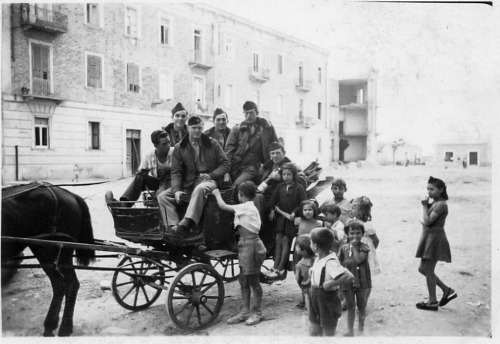
The picture of Beasley is with a Russian soldier who was a guide while they were there. Charley said, "He told us where to go and what to do." Charley said his crew stayed at a girls school at this place, but there weren't any girls there. He couldn't remember the name of the town in Russia. He said this was a shuttle run to Warsaw, they then took bombs to Yugoslavia, he thinks, and then went to Italy. He's kind of sketchy now on the route. Perhaps you can figure out the route they took.


Charley said that while he was in Cambridge, England waiting on a boat home V.E. Day came. Said he never went to Germany, on foot, but did go to France to pick up American and English P.O.W.’s. He said that he didn’t like the French. He said that the French that he learned didn’t do him much good there, they would point, but he did remember what “yes” was in French.


Regarding his war experiences, he said that he still liked to fly and often did because of his work. He said that he didn’t have to fire his machine guns too often, maybe a couple of times and once for a while, because of the placement of his plane within the bomber formation. He said they were often put on the inside of the formation where fighter planes could not get to them. He described the formation and how many fighter squadrons, maybe ten or twelve, would be placed around and within the bomber formation for protection. The most dangerous positions on the plane were “the tail-gunner and the ball-turret gunner, they had it bad,” he said. I asked him if the missions ever became routine and he said “Oh no, they were never routine.” He said, regarding thoughts of not making it back, “We tried not to think about it, we just didn’t think about it,” but recalled seeing enemy fighter planes blow up. “They must have been hit in the fuel tanks,” he said and said he will also always remember seeing a plane within in his own group, “one of our planes,” blow up and not seeing any parachutes. I think Charley met brother Ernest in London and said, “Then Ernest (Potts) came up to see me, but I had to go on a mission and he (Ernest) had to stand around and wait for me with the ground crew.” I asked Charley if the mission was a memorable one and he said, “No, it was pretty easy, but I remember showing Ernest the holes in our plane.”


We had a Russian waitress at Olive Garden and Charlie said, “I’ve been there, we were shipping supplies to Warsaw, Poland and we spent the night in Russia, stayed in a girls dormitory. The girls weren’t there though.” Jacob Mode, Charlie's great nephew asked him if he got any phone numbers. I asked him what he thought of the Russians. He said, “They didn’t have a boom or lift to hoist the bombs into the airplane and one man would get on one side and another man on the other side of the bomb and throw it up to two other men in the airplane. The bombs weighed 500 pounds.” He said, “I didn’t like them because of that.” He said he also went to Foggia, Italy and that he liked the Russian food alright. He said the English food was good and that the bread was almost black.


If you have any connections regarding records and mission logs, etc. I am still trying to find more information on my great uncle William Robert Bowers (Bill) who was a tail gunner with the 97th Bomb Group, 340the Bomb Squadron. He was in Polebrook, then North Africa. Wounded three times. I have some papers for him with more information.


Take care,


Joe Mode


-----Original Message-----

From: mpfaley@aol.com

Sent: Sep 28, 2009 4:04 PM

To: Joe

Subject: Re: Pictures-Charlie Potts-Baby Sweet


Yes you can. Send them to mpfaley@aol.com.

Sent via BlackBerry by AT&T


--------------------------------------------------------------------------------

From: Joe

Date: Mon, 28 Sep 2009 15:11:06 -0400 (EDT)

To:

Subject: Re: Pictures-Charlie Potts-Baby Sweet


Michael,


The pictures, etc., have been scanned and are on my flash drive. Can I email them to you?


Joe


-----Original Message-----

From: MPFaley@aol.com

Sent: Sep 25, 2009 4:22 PM

To: jmode@mindspring.com

Subject: Re: Pictures-Charlie Potts-Baby Sweet


Joe

SEND IT ALL, we could use the interviews about his time in the War and any and all photos you may have on Charlie.  Thanks


Please send too


Michael Faley

12400 Ventura Blvd

#113

Studio City, CA  91604


In a message dated 9/25/2009 1:11:41 P.M. Pacific Daylight Time, jmode@mindspring.com writes:

Hello,


I was wondering what additional pictures you may be interested in that I have scanned lately belonging to Charles Potts of the 100th.


He has some early ones from his days in Yuma, Arizona and the guys he trained with, several that include his patches and memorabilia from the 8th and 100th, plus others of himself in uniform at various times and places. Would be glad to send these along and let you decide if you would like to include them on the 100th site. Charley is doing fine and I occasionally pick his brain for information about his service and record it; all of which will be sent to you as per his wishes.


Just let me know. Thanks and I remain


Respectfully yours,


Joe Mode


*******************************

Name:  Charles W. Potts

Parents:  Earl N. and Henrietta Potts

Paternal Grandparents:  Elisha H. and Flora M. Potts

Maternal Grandparents:  Wm. Winston and Dora R. Eads


My father worked at Old Hickory Powder Plant during World War I and was employed by the U.S. Postal Service for 50 years before he retired.  My Grandparents were farmers in Bedford County Tennessee.


I graduated from Forrest High School, Chapel Hill, Tennessee in 1939 and attended U.T. Jr. College at Martin, Tennessee.  The school year ’39 – 40’.  My parents moved to Knoxville in August 1940 and I attended U.T. Knoxville the year ’40 – ’41 and fall of 1941.  Adolph Hitler was in the process of taking over Europe and the United States was helping England by providing them with supplies and equipment so they could defend themselves.  I quit school after the fall quarter of 1941 and began working at the Alcoa Aluminum Company.  I was a member of a Layout Machinist crew and the Forman, Jack Franklin and I became good friends, double dating on weekends.  He introduced me to Louise Pearson, a friend of his, and I introduced him to a friend of mine, Elizabeth Roberts.  Jack later married Elizabeth and Louise and I were married February 12, 1944.


Sunday morning, December 7, 1941, my mother, father, sister and I arrived at Fountain City Methodist Church to find people standing around talking as usual before services started.  Someone came in and announced that Japan had attacked Pearl Harbor.  My Friends all felt that the U.S. would enter the war but none of us expected to be attacked by Japan.  The draft was already in effect and in June 1942, I received my classification, I-A.


Since I didn’t want to be drafted and have to walk all over Europe, I volunteered for the Army Air Force on July 6, 1942.  I was accepted and placed in reserve to be called when needed.  I continued working at Alcoa and dating Louise until I was called to report for duty January 18, 1943 at the Classification Center in Nashville, Tennessee.  At the Center, enlistees were tested both physically and mentally to determine which school we were qualified for.  I qualified for Pilot training and was issued orders to report to the Santa Ana Army Air Base, Santa Ana, California on February 6, 1943 for pre-flight training.  There we learned about Aerodynamics, Aeronautics, and many other things about flying.  We had physical education classes daily as well as close order drill and parades for hours and hours.


After about ten weeks of Pre-Flight training, I was sent to Hancock College of Aeronautics in Santa Ana, California to learn to fly.  We flew PT13’s a Stearman, single engine biplane that was very stable and very easy to fly.  It turned out to be very easy for me to fly but very difficult for me to land correctly.  So difficult that after 21 hours of flight instruction plus 2 hours solo time and many attempts to make a smooth landing, I was eliminated “washed out,” and sent to reclassification center in Fresno California.


From Fresno, I was sent to an Army Air Force Training School in Sioux Falls, South Dakota to learn radio operation including sending and receiving Morse Code, performing minor repairs, operation of the radio compass and the “Gibson Girl.”  It was an emergency transmitter operated by turning a hand generator.


While in Radio School, I learned that my mother was to undergo major surgery.  The American Red Cross arranged with the Army for my leave and helped with travel arrangements in order for me to be present for the surgery.  After returning to the base, I was moved back to the next class and my graduation was delayed about two weeks.


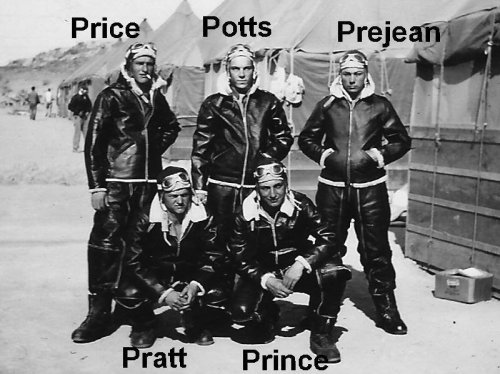
Next, I was sent to AAFF Flexible Gunnery School at Yuma, Arizona arriving there on December 22, 1943.  There we learned to hit a moving target from a moving vehicle by firing skeet guns on a skeet range while riding in the bed of a moving pickup truck.  Then we moved on to a Colt 45 Caliber semi automatic handgun and the 50 Caliber automatic machine gun mounted in the waist of a B 17 bomber.  The target was being pulled by another plane flying alongside of us a short distance away.  We learned all the parts of the machine gun and had to be able to take it apart and put it back together in 30 seconds.  The purpose was to enable us to remove a jammed round in flight and in combat.  Upon graduation, I received my Gunners Wings and an expert marksman medal.


I was granted a 10 day delay in route to my next post, Plant Field, Tampa, Florida.  I asked Louise if she wanted to go to Florida with me and she said yes.  We were married on Saturday, February 12, 1944.  Near the end of my delay in route, we boarded a Greyhound bus to Tampa.  Plant Field was a Third Air Force Replacement Depot where a crew of 10 combat, B-17 heavy bomber crewmembers met for the first time.  I was joined there by the following members:


2nd. Lt. Wilbert C. Ivosevic, Pilot, Pittsburgh, Pa.

2nd. Lt. John R. Reese, Co-Pilot, Baltimore, Md.

2nd. Lt. Ducan C. Gray, Navigator, New York, N.Y.

2nd. Lt. Frederick V. Hernandez, Bombardier, Texas

Cpl. Wm. L. Harris, Engineer, Charleston, W. Va.

Cpl. Levin W. Beasley, Armorer-Gunner, Coats, N.C.

Cpl. Richard J. King, Ball Turret Gunner, Racine, Wis.

Cpl. Coyte S. Hellard, Tail Gunner, Mt. Holly, N.C.

Cpt. Fred W. Kneipp, Jr., Waist Gunner, Louisianna


While at Plant Field, we spent our time getting to know each other and watching training films.  We were tested for our tolerance of the low pressure at altitudes as high as 38,000 feet.  Louise located a place for us to live and I was allowed to go home every night.  After about three months, we moved to Avon Park Army Air Field.  Louise found us another home in Avon Park where we had a bedroom with kitchen privileges.  At the Air Field, our crew practiced flying B-17’s with each crewmember getting familiar with his responsibility for successful operation of the aircraft on a combat mission.  During our stay at Avon Park, our weekends were spent going to Palm Beach only a few hours away by train.  Several of my crewmembers went with us on these trips.  Harris, who we called “Pop” because he was the oldest, Beasley, King, and Reese, the Co-Pilot, became very close friends during these trips.  These months at Tampa and Avon Park were the happiest of my Army career.


On July 14, 1944, orders were received to report to Hunter Field, Savannah, Ga.  Louise and Retta (Kings wife) accompanied us on the train.  Our wives went to a hotel while the crew went to the base where we were given sealed orders to takeoff from Savannah on the 20th.  Our orders were not to be opened until we became airborne.  We took off with Louise and Retta watching us from behind the fence surrounding the airbase.  After we became airborne, Ivosevic opened our orders and told us on the intercom that we were going to England.


We had overnight stops at Grenier Field, Manchester, New Hampshire, Goose Bay, Lagrador and Reykjavik, Iceland.  We landed at Belfast, Ireland and were immediately taken by bus to a boat for transporting to London.  Although we were in Belfast overnight, we were not allowed off the boat because some of the Irish were not friendly to Americans.  When we arrived in London, we learned that it had been decided that the Radio Operator didn’t have enough to do, so Kneipp was taken off the crew and I was given responsibility for the right waist gun.  We never saw Kneipp again.


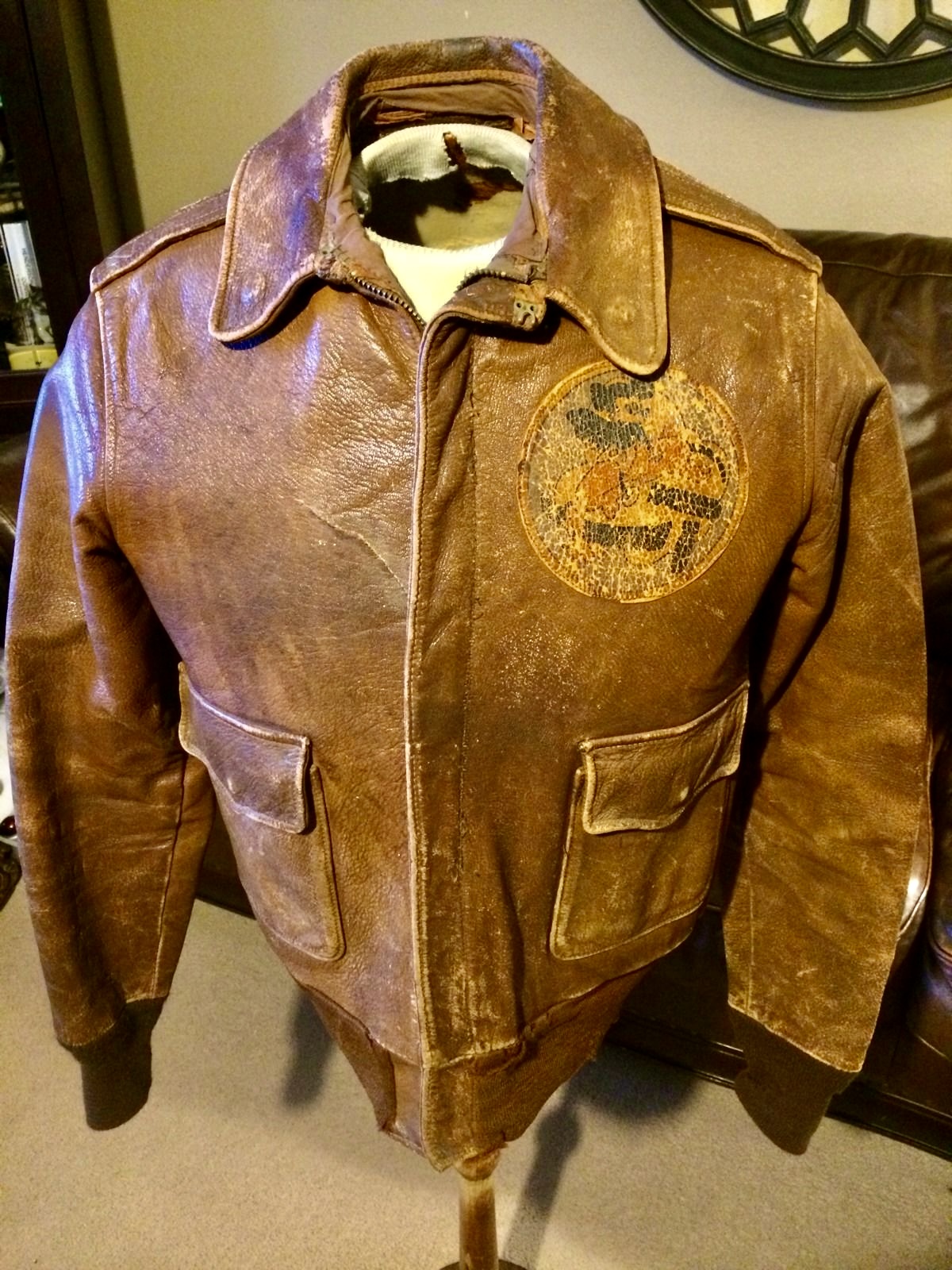
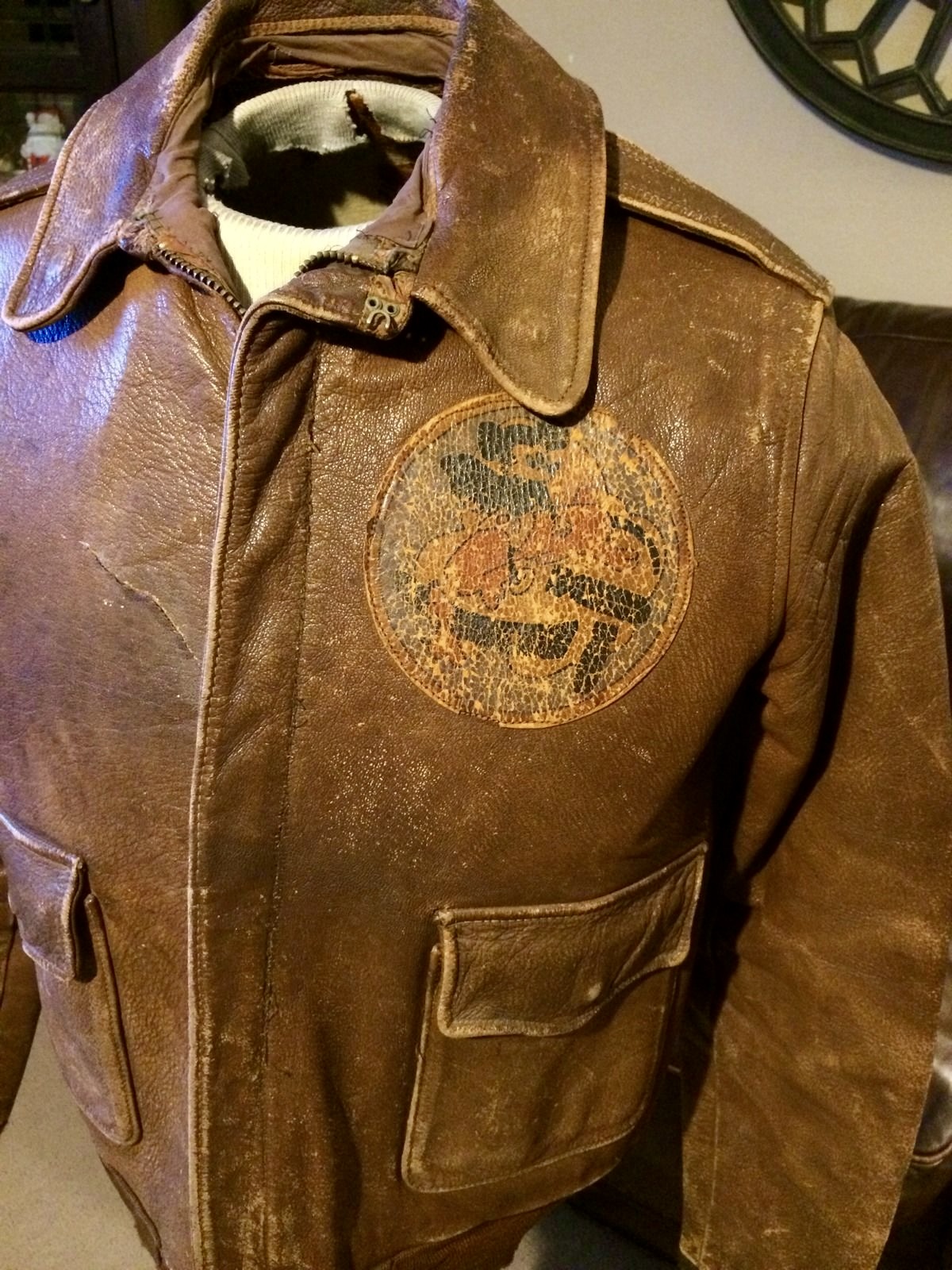
From London, we were transported by truck to our permanent base, Thorpe Abbotts, where we were assigned to the 418th Squaddron, 100th Bomb Group, 8th U.S. Army Air Force.  The 100th Bomb Group had become famous and was called the “Bloody Hundredth” because of its many losses in combat.  Particularly one on October 10, 1943, from which only one plane from the entire group of 20 planes returned to Thorpe Abbotts.  The pilot of that plane was Robert Rosenthall who was my Squadron Commander during my stay at Thorpe Abbotts.  After getting settled in our new “home,” we went to headquarters supply room were we were issued our combat equipment, electrically heated coveralls, boots and gloves.  Since the temperature sometimes reaches minus 50 degrees Fahrenheit at high altitudes, we were also issued thin silk gloves to wear under our heavy ones because bare fingers touching bare metal at minus 50 o will stick to it.  There were lots of bare metal inside a B-17.  Other equipment included steel helmet, bullet proof vest, parachute and a survival kit containing maps, rations and booklets of French, Dutch, German and Spanish phrases.


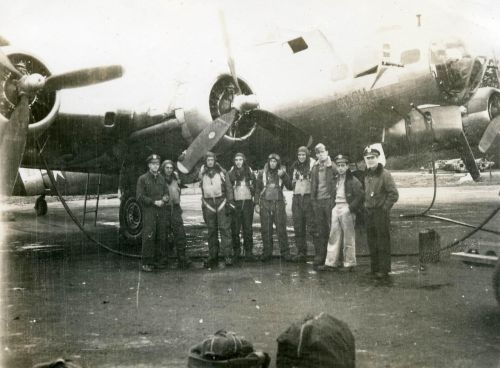
Next we went to the flight line where we were introduced to our ground crew.  Their job was to see that everything about the plane was in perfect running order.  Our lives depended on them doing their job well.  Then we went to our plane, a fairly new B-17G.

The entire crew, officers and enlisted men got together and agreed on the name “Baby Sweet” and we had it painted on both sides of the nose.


We flew several times on practice missions to familiarize ourselves with all the equipment and the area surrounding the base as it looked from the air.  My job was to record all radio transmissions received on the “Command” set.  All messages were in Morse code in groups of five letters coded so that I never knew what was being said.  My written transcript was turned in to the De-Briefing Officer after each mission.  Another of my responsibilities was to open and drop packages of aluminum strips called “Chaf” into a slot in the radio room floor.  The Chaff as it spread through the air would jam the radar on anti-aircraft guns on the ground.  In other words, the Germans would shoot at the Chaff instead of the plane.  This worked well when we were above cloud cover, but was worthless on clear days.  I also fired the right waist gun when fighters came in range.


Our tour of 35 missions began August 26, 1944 with a flight to Brest, France in support of our ground troops.  It was supposed to be a visual bomb drop, but cloud cover came over the target and our bombs were not dropped because of the danger of hitting our troops.  Our missions averaged nearly eight hours, the longest being 10 hours and 30 minutes and the shortest 5 hours.  We encountered antiaircraft fire on 25 missions and fighters six times.  We were credited with three missions deep in enemy territory that were recalled due to bad weather conditions.  Also, we aborted two missions due to engine failures.  On one of these, we barely made it back across the channel.  We landed at a base nearest the coast with only one engine operating at full power.


The first of our major encounters with enemy fighters came on a mission to Ruhland on September 11th.  Our group lost 12 planes that day.  Hellard, our tail-gunner got credit for one enemy fighter.  Fighters hit again on December 24, 1944 and December 31, 1944.  Pop and King each shot down an ME 109.  On Dec. 31st, we lost 13 planes, one of which exploded just off of our left wing tip.  The concussion jarred us but caused no damage.  We encountered moderate to heavy flak on 19 of our missions with holes varying in size from softballs to golf balls.  Pop was the only member of our crew to get hit and receive a Purple Heart medal.  He was hit in the face by a small piece of flak.  One piece through the Radio roof, hit me on the head and bounced around before falling to the floor.  I was wearing a steel helmet.


One morning we were taking off to go on a mission carrying four 2000 lb. Bombs, two in the bomb bay and one under each wing.  The two in the bomb bay had pins that had to be removed by the armorer before they would explode.  The two under the wings had no pins and would explode on contact.  About halfway down the runway, one engine stopped running and seconds later another stopped.  We barely made it over the fence at the end of the runway and above the trees out to the channel where the two outside bombs were dropped.  Fortunately, only one exploded and we made it back to the base on two engines.  Ivosevic received the Distinguished Flying Cross for that takeoff.


In September 1944, Americans and British offered to help the Polish Home Army in its efforts against the Germans.  One hundred and ten planes took off on September 18 loaded with ammunition, weapons, rations and other supplies in our bomb bay instead of bombs to be dropped to the Poles in Warsaw.  When we dropped the supplies, we noticed that the wind had changed directions and many supplies fell to the Germans.  Anyway the Poles appreciated the ones they did get.  We landed at a Russian Air Base and spent the night.  The next morning, Russian Soldiers refueled our planes, loaded Russian bombs for us and we took off to Budapest, Hungary.  Our bombs were dropped at Szolnok, near Budapest.  We continued on to Foggia, Italy where we spent the night at an Army air base.  The next morning, we were refueled and we returned to Thorpe Abbotts over friendly territory all the way.


After completing our missions on January 6, 1945, six members of my crew returned to the States.  Ivosevic, Pop, and I were sent to a Headquarters base near Cambridge where we participated in numerous airlift flights to Paris.  We would take a load of supplies to Paris and bring downed airmen back to England.  Some of these were overnight trips.  Pop and I went sight seeing in Paris on one of these trips.  Finally, on May 2, 1945 Pop and I received orders to return to the States.  While we waited for space on a ship, Germany Surrendered and the war in Europe ended on May 8, 1945.  We boarded a troop-ship on May 12, and after eleven uneventful days crossing the Atlantic, we sailed by the Statute of Liberty, arriving at Camp Kilmer, New Jersey May 24, 1945.


I was granted thirty days leave and I was ordered to report to Miami Beach, Florida for rest and recuperation.  Louise accompanied me to Miami.  I had to pay for her lodging at a hotel on the Beach, one dollar per day for thirteen days.  My only duty while there was to report in at Headquarters each morning.  After that, Louise and I spent our time sightseeing and lounging on the beach.


After Miami, I was sent to Fort McPherson, Georgia where I was discharged on July 13, 1945.
Memo 2:
Charles William Potts, age 92, passed away in Knoxville on June 13, 2014. A WWII veteran, he retired from government service after 36 years of faithful service. Charles was a member of Fountain City United Methodist Church for over 71 years. He also enjoyed his membership at Fountain City Sportsmen’s Club for many years. He was preceded in death by his beloved wife, Louise; his parents, Earl and Henrietta Potts; and his brother and sister, Earnest Potts and Florabel Poore. He is survived and will be greatly missed by his sons, Bill (Vicki) Potts, and Jack (Donna) Potts; grandchildren, Daniel Potts, Shannon (David) McMahon, Bryan Potts; and great-grandchildren Alibelle and Declan.
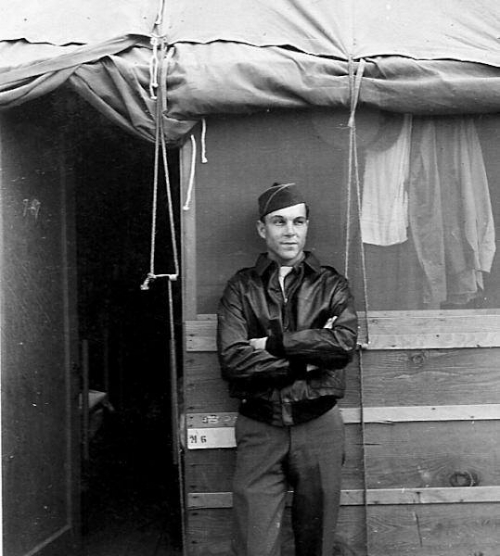
Photos

Crew List
1st Crew List
Use your thumb to scroll through the results box below.
| Rank | Name | Pos | Status |
|---|---|---|---|
| Lt | IVOSEVIC, Wilbert C. | P | CPT |
| Lt | REESE, John R. | CP | NOC |
| Lt | GRAY, Duncan C. | NAV | CPT |
| Lt | HERNANDEZ, Frederick V. | BOM | CPT |
| T/SGT | HARRIS, William L. | TTE | NOC |
| T/Sgt | POTTS, Charles W. | ROG | CPT |
| S/SGT | KING, Richard J. | BTG | CPT |
| S/Sgt | BEASLEY, Levin W. | WG | CPT |
| S/SGT | KNEIPP, Fred W. | WG | NOC |
| S/SGT | HELLARD, Coyte S. | TG | CPT |